Black-Headed Caique Profile & Care Guide
| Common name: | Black-Headed Caique, Black-Headed Parrot, Black-Capped Parrot |
| Scientific name: | Pionites melanocephalus |
| Length: | 23 cm/9" |
| Weight: | 130 - 170 grams |
| Lifespan: | 25 - 40 years |
| Range: | Northern South America, including Brazil, Colombia, Ecuador, French Guiana, Guyana, Peru, Suriname and Venezuela |
| Noise level: | Medium to high |
BLACK-HEADED CAIQUE NATURAL HABITAT
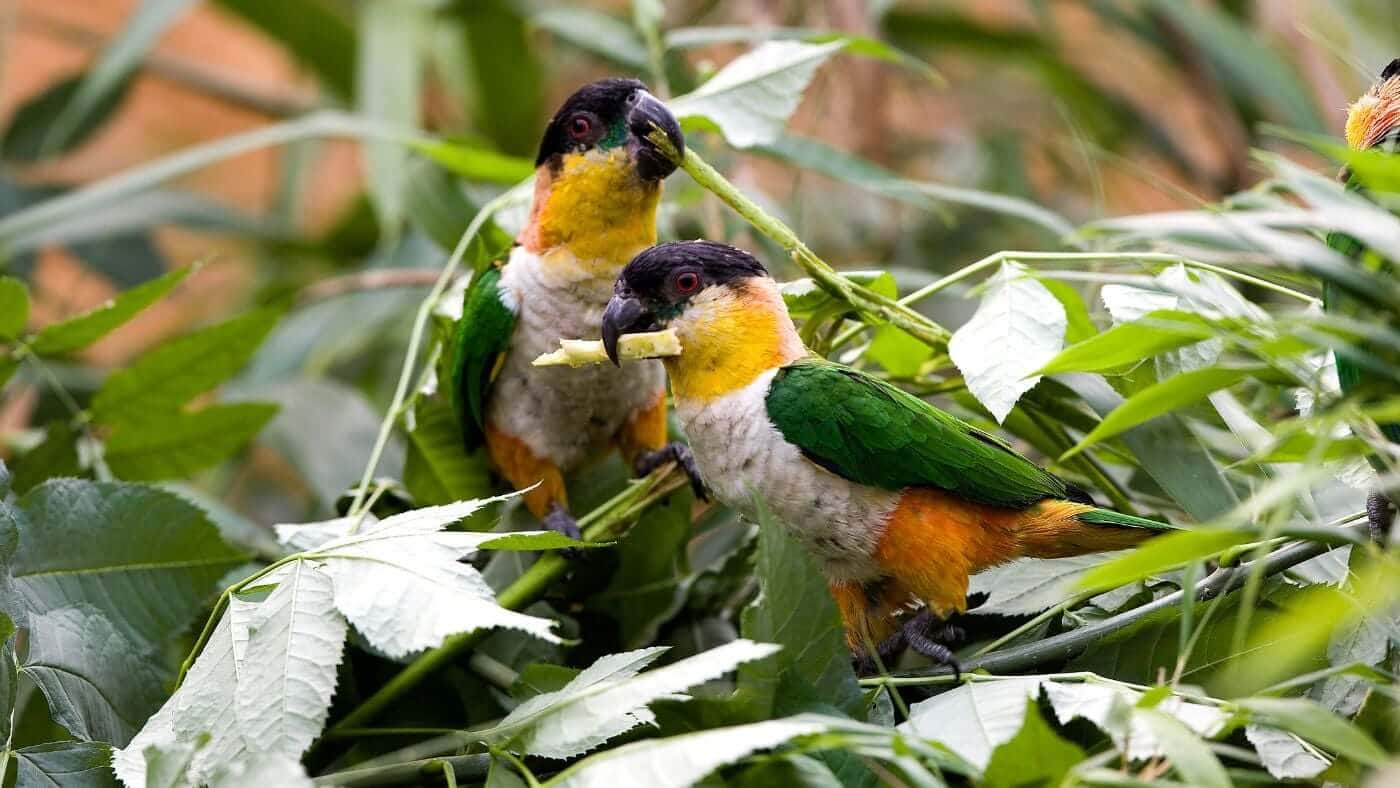
The Black-Headed Caique, also known as the Black-Headed Parrot, is a colourful South American parrot found across parts of the Amazon Basin and surrounding tropical regions. Its natural range includes parts of Brazil, Colombia, Ecuador, French Guiana, Guyana, Peru, Suriname and Venezuela.
In the wild, Black-Headed Caiques are usually found in humid lowland forests, seasonally flooded forests, woodland edges and nearby forested areas. They are active canopy birds that spend much of their day climbing, hopping, flying short distances and exploring in pairs or small groups.
Their wild diet is varied and includes fruits, seeds, flowers, leaves and other plant material. They may also take some insects, although they are mainly plant-feeding parrots. Like many parrots, they usually nest in tree cavities and rely on suitable forest habitats for shelter and breeding.
The Black-Headed Caique is currently listed as a species of Least Concern. However, this does not mean wild parrots face no pressure. Habitat loss, deforestation and trapping for the bird trade can still affect local populations.
INTELLIGENCE & PERSONALITY
Black-Headed Caiques are famous for their bold, playful and clown-like personalities. They are energetic parrots that love to jump, roll, climb, wrestle with toys and investigate anything new in their environment. For many owners, this makes them one of the most entertaining parrots to live with.
They are also very intelligent. Caiques enjoy puzzle toys, foraging activities, training games and interactive play with their owners. Because they are so active, they need plenty of daily stimulation to prevent boredom and frustration.
Although they can be affectionate and very funny, Black-Headed Caiques are not always easy-going. They can be strong-willed, excitable and sometimes nippy, especially if they are over-stimulated or not handled consistently. Early training, clear boundaries and regular socialisation are very important.
These parrots are often described as having big personalities in small bodies. They can be wonderful companions, but they are best suited to owners who can give them time, structure, patience and lots of enrichment.
BLACK-HEADED CAIQUE TALKING ABILITY & NOISE LEVEL
Black-Headed Caiques are not usually considered the best talking parrots. Some individuals may learn a few words, whistles or household sounds, but they are much better known for their playful behaviour than for clear speech.
That said, they are certainly not quiet birds. Caiques can be vocal, especially when excited, seeking attention or calling to their flock. Their calls are not usually as booming as those of some larger parrots, but they can still be sharp, repetitive and difficult to ignore.
Before bringing a Black-Headed Caique home, it is important to consider your living situation. They may not be the best choice for noise-sensitive households, very close neighbours or anyone expecting a quiet pet bird.
FEEDING & SUPPLEMENTS
As with all parrots, a Black-Headed Caique needs a balanced and varied diet. A good daily diet should include a quality pellet food, fresh vegetables, some fruit, and carefully chosen seeds or nuts as treats rather than the main meal.
Caiques are active birds, but this does not mean they should be given unlimited fatty foods. Sunflower seeds, peanuts and high-fat nuts should be offered sparingly, especially if the bird is not getting plenty of exercise outside the cage.
Fresh foods are very important for variety and enrichment. Many Black-Headed Caiques enjoy leafy greens, peppers, carrot, broccoli, apple, berries and other bird-safe fruit and vegetables. Always research new foods before offering them, and avoid unsafe foods such as avocado, chocolate, caffeine, alcohol, onion and highly salty or sugary foods.
Because Caiques are so playful, food can also be used as part of their enrichment. Try hiding small pieces of food in foraging toys, placing vegetables on a bird-safe skewer, or offering different textures to encourage natural exploration.
Fresh, clean water should always be available. Food and water bowls should be washed daily to help prevent bacteria build-up.
HOUSING FOR YOUR BLACK-HEADED CAIQUE
When choosing a cage for a Black-Headed Caique, go for the largest cage you can sensibly fit in your home. These parrots may be smaller than Amazons or African Greys, but they are extremely active and need space to climb, flap, play and move around.
As a general guide, the cage should be spacious enough for your Caique to fully stretch its wings, climb comfortably and have separate areas for feeding, sleeping, playing and perching. As a general guideline, the minimum dimensions for the cage should be around 24" x 24" x 36", with bar spacing of around 5/8" to 3/4". Bigger is always better, especially for a bird with this much energy.
The cage should include a variety of natural wood perches in different widths and textures to support foot health. Avoid using only smooth dowel perches, as these do not give the feet enough variety.
Black-Headed Caiques also need plenty of toys. They usually enjoy chewable toys, shredding toys, foot toys, swings, ropes, bells, climbing toys and puzzle feeders. Because they can be quite destructive, toys should be checked regularly for damage and replaced when needed.
Cage placement is also important. Caiques are social birds and usually enjoy being part of the household, but the cage should not be placed in a stressful or unsafe area. Avoid kitchens, fumes, draughts, direct heat and places where the bird may be disturbed constantly when it needs to rest.
BLACK-HEADED CAIQUE FEATHER PLUCKING
Caiques are not usually known as one of the most feather-plucking-prone parrots, but they can still develop behavioural problems if their needs are not met. Boredom, stress, lack of sleep, poor diet, hormonal frustration, loneliness or health problems can all contribute to feather damage or over-preening.
Because this species is so active and intelligent, daily enrichment is essential. A Caique that has nothing to do may quickly become frustrated. Rotate toys often, offer foraging opportunities, provide supervised out-of-cage time and spend time training or interacting with your bird every day.
Out-of-cage time is especially important. A Caique should ideally have several hours a day outside the cage in a safe, supervised space. This gives the bird a chance to exercise, explore, climb, play and burn off energy.
If your Caique starts plucking, chewing feathers or showing sudden changes in behaviour, it is best to speak to an avian vet. Feather problems can sometimes be linked to medical issues, so it is important not to assume it is only behavioural.
FUN FACTS
- Black-Headed Caiques are often called the clowns of the parrot world because of their playful and silly behaviour.
- They are known for hopping rather than walking when they are excited.
- Caiques often enjoy rolling onto their backs and playing with toys using their feet.
- Their bright plumage includes a black head, orange-yellow cheeks, green wings and a white belly.
- They are small to medium parrots, but they have very big personalities.
- Black-Headed Caiques are highly energetic and need plenty of space, toys and interaction.
- They are not usually the strongest talkers, but some can learn whistles, sounds and a few words.
- They are native to northern South America and are found in forested habitats.
- In the wild, they feed on fruits, seeds, flowers, leaves and other plant material.
- They are cavity nesters, meaning they usually nest in holes in trees.
- Black-Headed Caiques can become nippy if over-excited, so calm handling and training are important.
- They are very social and usually enjoy daily interaction with their owners.
- They need a varied diet and should not be fed an all-seed diet.
- Because they love chewing, safe shredding toys are a must.
- They are best suited to owners who enjoy active, playful and sometimes cheeky parrots.
CONCLUSION
Black-Headed Caiques are colourful, intelligent and full of personality. They can be incredibly fun companions for the right owner, especially if you enjoy a parrot that is playful, active and always looking for something to do.
However, they are not low-maintenance birds. Their energy, noise, need for enrichment and occasional stubbornness mean they require a committed owner who can provide daily time, training and a stimulating environment.
If you are ready for a lively parrot with a huge personality, the Black-Headed Caique can be a rewarding and unforgettable companion. Just make sure you understand the species properly before bringing one home.
To view other Parrot Profiles & Care Guides, visit our alphabetical list of Parrot Fact Sheets by visiting: https://parrotessentials.co.uk/blog/parrot-profiles-care-guides
FAQs
Are Black-Headed Caiques good pets?
Yes, Black-Headed Caiques can make wonderful pets for the right owner. They are playful, intelligent and very entertaining, but they need lots of attention, training, toys and daily interaction.
Are Black-Headed Caiques noisy?
Yes, they can be noisy. They are not usually as loud as some larger parrots, but their calls can be sharp, repetitive and difficult to ignore, especially when they are excited or seeking attention.
Can Black-Headed Caiques talk?
Some Black-Headed Caiques can learn a few words, whistles or sounds, but they are not known as strong talking parrots. They are better known for their playful and clown-like behaviour.
How long do Black-Headed Caiques live?
With good care, Black-Headed Caiques can live around 25 to 40 years, so they are a long-term commitment.
Are Black-Headed Caiques good for beginners?
They are not usually the easiest choice for complete beginners. Their high energy, strong personality and occasional nippiness mean they are better suited to owners who are prepared for daily handling and training.