Conure Species Guide: 15+ Types Compared
Table of Contents
- Understanding Conure Species
- Conure Size Categories
- Common Conure Characteristics
- Small Conure Species (Under 10 Inches)
- Medium Conure Species (10 to 13 Inches)
- Large Conure Species (Over 13 Inches)
- Conure Species Comparison Chart
- Choosing Your Conure Species
- Conclusion: Are Conure Species Worth It?
- FAQs
If you have ever met a conure, you will understand the hype instantly. Bright eyes, busy beaks, endless curiosity, and the kind of confidence that makes a small parrot feel like the main character of your home. But here is the catch: not all conure species are the same. Some are quieter and cuddlier, others are bold and loud, and a few need a level of space and routine that surprises first-time owners.
In this guide, you will learn what conures are, how they are grouped by size, and how 15+ popular types compare so you can choose a bird that genuinely fits your lifestyle. And yes, if you are wondering "are conure species a good match for beginners?", we will answer that clearly as we go.
Understanding Conure Species
Conures are a group of small-to-medium parrots found mainly in Central and South America, plus parts of Mexico and the Caribbean. The term "conure" is a common-name umbrella rather than one single scientific group, which is why you will see a wide range of sizes, temperaments, and noise levels across different types.
What makes conures such popular pet birds is the combination of intelligence, social bonding, and play-driven learning. Many want to be involved in everything you do, and training can be genuinely enjoyable when you keep it positive and consistent.
- Big personality in a manageable size: Many conures feel like "large-parrot energy" without the same space needs as macaws.
- High social intelligence: They often bond strongly and enjoy being part of your daily routine.
- Play-driven learning: They can thrive with trick training, foraging games, and simple routines you can repeat daily.
Still, when people ask "are conure species all noisy?", the honest answer is that the range is huge. A Green Cheek and a Sun Conure are not in the same league for volume, and your home set-up can also influence how loud a bird becomes over time.
Conure Size Categories
A simple way to narrow your options is by size. Size often predicts cage needs, bite pressure, and how intense their energy feels day-to-day.
Small Conures (Under 10 Inches)
Often Pyrrhura types. These are generally more apartment-friendly, with softer voices and a slightly more relaxed daily feel, although individual personality still matters.
Medium Conures (10 to 13 Inches)
This group includes several well-known conures. Many are athletic, high-energy, and more vocal, so they suit owners who enjoy an active home and do not mind more noise.
Large Conures (Over 13 Inches)
Bigger bodies and bigger beaks usually come with bigger needs. Large conures often require more space, more enrichment, and more experienced handling to keep behaviour balanced.
Common Conure Characteristics
Across the board, conures share a few traits that explain why they are so rewarding, and why they can be challenging if your routine does not match their needs.
- Smart and fast learners: With short, positive sessions, they can pick up step-up, recall basics, and trick behaviours.
- Strong bonding needs: They often struggle if left alone for long hours without interaction.
- Enrichment is essential: Foraging, shredding, climbing, chewing, and training are not extras. They help your bird stay emotionally settled.
- Beak exploration is common: Many test the world with the beak, so gentle beak training early makes a big difference.
If you are still deciding, a helpful question is: are conure species best suited to busy households or quiet homes? The answer depends on which conure you choose and how much you enjoy an active, chatty companion.
Small Conure Species (Under 10 Inches)
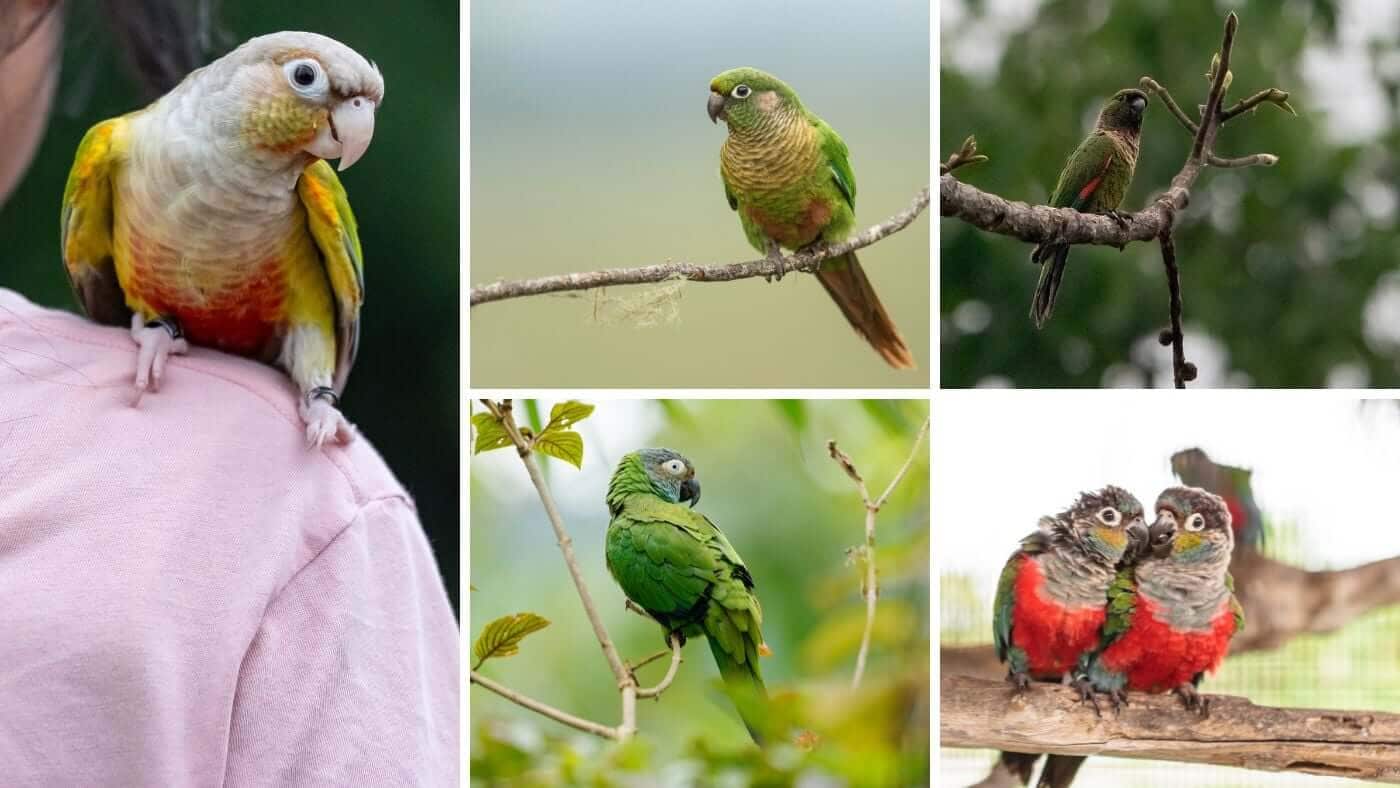
Small conures are often a great fit if you want a playful bird without the volume level of the loudest conure types. They still need a good cage, daily out-of-cage time, and plenty of safe chewing and foraging options, but many owners find them easier to live with in flats or shared homes.
- Best for: Many first-time owners, smaller spaces, and people who want an active bird without maximum volume.
- Typical noise: Low to moderate, with occasional loud bursts.
- Care focus: Enrichment, gentle handling, and consistent routines.
Green Cheek Conures
Green Cheek Conures are often recommended because they usually offer a sweet spot of personality, trainability, and manageable noise. Many are affectionate, curious, and playful, and they often enjoy learning routines and practising step-up daily.
If you are wondering "are conure species too intense for a first parrot?", a well-socialised Green Cheek is often one of the safer starting points, as long as you commit to daily interaction and enrichment.
Maroon-Bellied Conures
Maroon-Bellied Conures are sometimes described as gentle and slightly more laid-back than Green Cheeks, although individual birds vary. Their care basics are similar: a spacious cage, climbing and chewing outlets, and daily social time.
Black-Capped Conures
Black-Capped Conures can be bold, confident, and strongly bonded. Many are playful and curious, but they can become a "one-person bird" if they are not socialised early. Regular gentle handling by more than one person can help.
Dusky Conures
Dusky Conures are often described as sweet-natured and steady. They can be a good choice if you want a small conure with a calmer vibe, but they still need stimulation every day to prevent boredom habits.
Crimson-Bellied Conures
Crimson-Bellied Conures are known for their striking red belly patch. Many are affectionate and social, with moderate noise for a conure. Like other Pyrrhura types, they benefit from routine, training, and foraging to keep their energy focused.
Painted Conures
Painted Conures are less commonly kept, and availability can vary depending on where you live. With less common species, it is worth taking extra care to find reputable guidance and support. The foundations stay the same: quality diet, safe chewing options, and consistent social interaction.
Medium Conure Species (10 to 13 Inches)
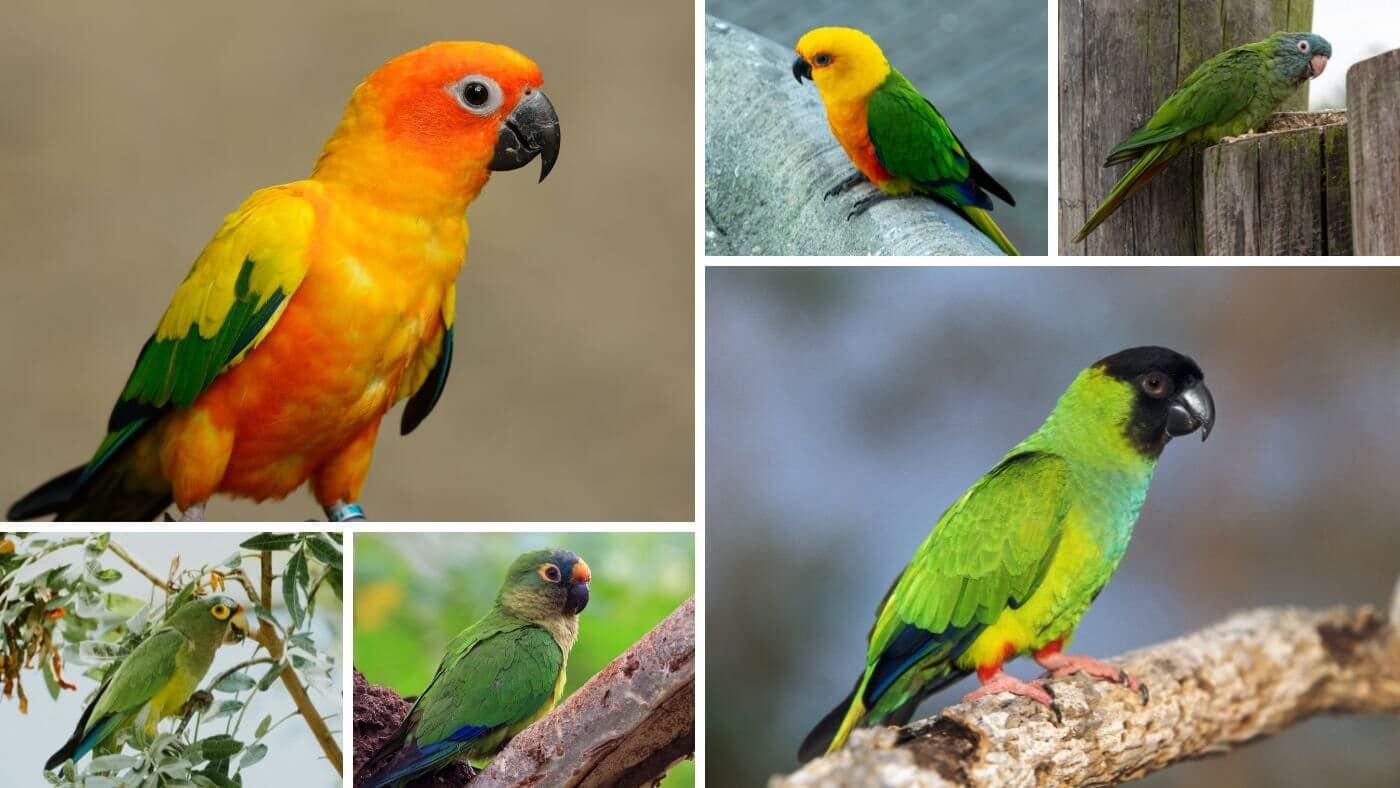
Medium conures often bring more volume and intensity. They can be wonderful companions if you love energy and you can provide consistent training and enrichment, but they are not always the best match for noise-sensitive homes.
- Best for: Active households and owners who enjoy training, games, and a lively home.
- Typical noise: Moderate to very high, depending on species.
- Care focus: Noise management, structured routines, and plenty of foraging and exercise.
Sun Conures
Sun Conures are stunning, with bright yellow and orange colouring and green wing accents. They are often affectionate and very people-focused, but noise is a big warning.
If you have close neighbours, be honest with yourself before choosing a Sun. This is one of the main reasons people ask whether conure species are suitable for apartments. Some are, but Suns usually are not.
Jenday Conures
Jendays are similar to Suns in personality and noise levels. They are energetic, affectionate, and vocal. If you are choosing between Sun and Jenday, focus less on colour and more on whether your lifestyle fits a louder, more demanding bird.
Blue-Crowned Conures
Blue-Crowned Conures are often described as having a calmer feel than Suns and Jendays. Many also have good potential for clear mimicry, although every bird is different. They can still be loud, but many homes find them a more balanced option overall.
Nanday Conures
Nanday Conures are bold and engaging, and they are well-known for volume. They can thrive with training and structure, but they are not the right match if you need a quieter household.
Peach-Fronted Conures
Peach-Fronted Conures are often underrated. Many owners find them playful and social, sometimes a touch more independent than Suns. Noise can still be significant, but some people find them easier to live with than the loudest conure types.
Half-Moon Conures
Half-Moon Conures are loved for their markings and lively nature. They are active and can be vocal, so they suit owners who can provide plenty of enrichment and structured interaction.
Large Conure Species (Over 13 Inches)
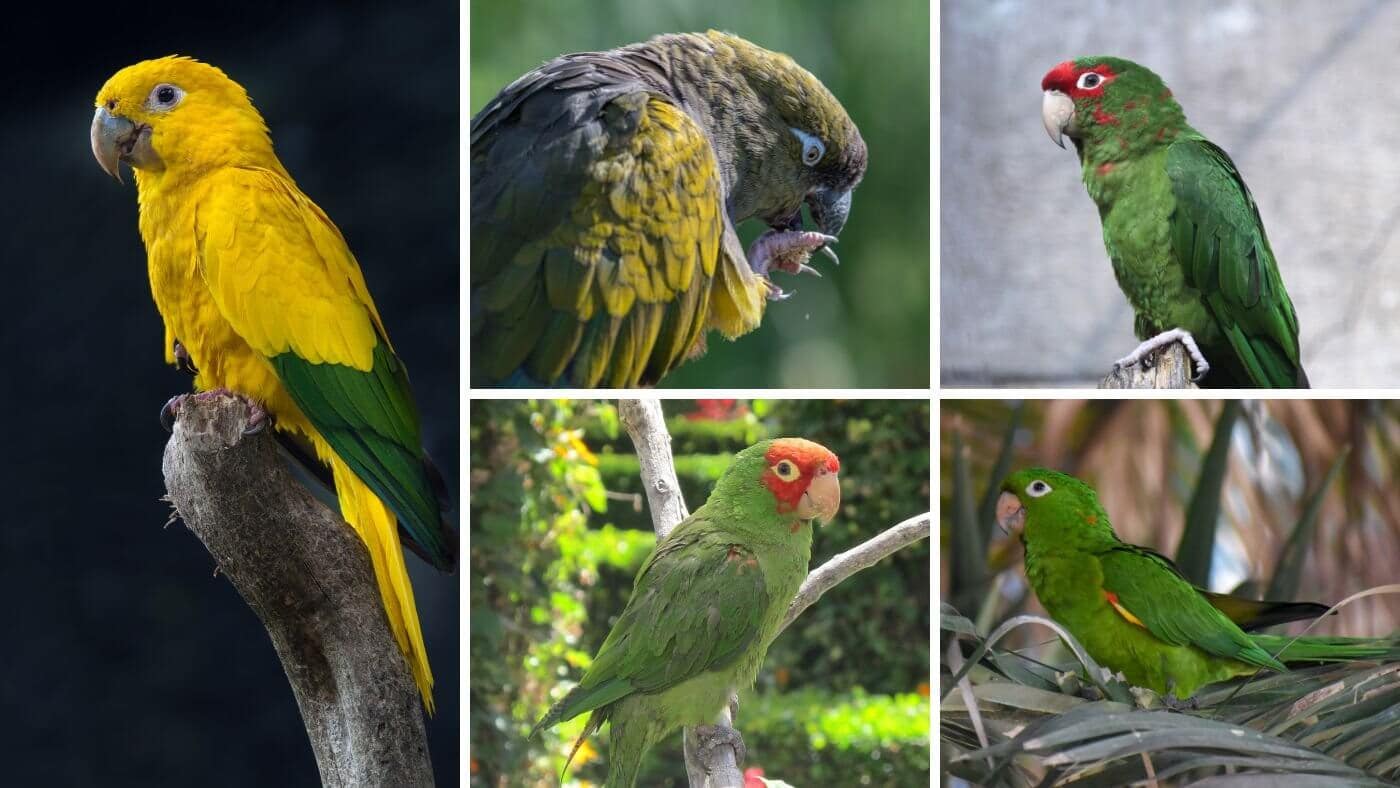
Large conures are impressive birds with big personalities. They often need a larger cage, more out-of-cage time, and confident handling. If you enjoy training and routine, they can be deeply rewarding companions.
- Best for: Experienced owners, larger homes, and people who enjoy structured training.
- Typical noise: High, with calls that can carry.
- Care focus: Space, strong enrichment, predictable routines, and confident handling.
Patagonian Conures
Patagonian Conures are among the largest conures. Many have a gentle reputation, but they still need space, serious chewing outlets, and plenty of exercise. Their calls carry, and their daily activity level can be substantial.
Golden Conures
Golden Conures are famous for their stunning colour and presence. They are not a casual commitment. Depending on where you live, availability and legal considerations can apply, and their care needs suit experienced owners who have done thorough research.
Mitred Conures
Mitred Conures are often boisterous and loud, with a bold temperament. They can be affectionate and entertaining, but they do best with consistent boundaries, training, and experienced handling.
Red-Masked (Cherry-Headed) Conures
Red-Masked Conures are highly intelligent and often strongly bonded. They can also develop loud calling habits and strong opinions if their routine is inconsistent. They thrive with training, structure, and appropriate outlets for chewing and movement.
White-Eyed Conures
White-Eyed Conures are social and energetic. Many are confident and not shy about using their voice. They typically suit active homes where they get regular interaction and varied enrichment.
Conure Species Comparison Chart
Use this quick comparison to shortlist the best matches. Remember that individual birds vary, and early socialisation plus routine can make a huge difference.
| Conure type | Size | Typical noise level | Temperament snapshot | Difficulty |
| Green Cheek | Small | Low to moderate | Affectionate, playful, trainable | Beginner to intermediate |
| Maroon-Bellied | Small | Low to moderate | Gentle, social, steady | Beginner to intermediate |
| Black-Capped | Small | Moderate | Bold, bonded, cheeky | Intermediate |
| Dusky | Small | Low to moderate | Sweet, steady, often calmer | Beginner to intermediate |
| Crimson-Bellied | Small | Moderate | Social, active, affectionate | Intermediate |
| Painted | Small | Moderate | Less common, active, needs research | Intermediate |
| Sun | Medium | Very high | Affectionate, intense, high energy | Intermediate |
| Jenday | Medium | Very high | Similar to Sun, lively and social | Intermediate |
| Blue-Crowned | Medium | Moderate to high | Often calmer feel, good mimic potential | Intermediate |
| Nanday | Medium | High | Bold, engaging, can be demanding | Intermediate |
| Peach-Fronted | Medium | Moderate to high | Playful, sometimes more independent | Intermediate |
| Half-Moon | Medium | Moderate to high | Lively, athletic, needs enrichment | Intermediate |
| Patagonian | Large | High | Large, often gentle, needs space | Advanced |
| Golden | Large | Moderate to high | Specialised care, high commitment | Advanced |
| Mitred | Large | High | Boisterous, confident, needs structure | Advanced |
| Red-Masked (Cherry-Headed) | Large | High | Intelligent, bonded, vocal | Advanced |
| White-Eyed | Large | High | Social, energetic, often loud | Advanced |
Choosing Your Conure Species
To make a smart choice, match the bird to your reality, not your fantasy. Consider your space, your daily schedule, your noise tolerance, and how much enrichment you can provide consistently.
Noise Tolerance Considerations
If noise is your biggest concern, start by thinking in tiers rather than chasing a single "quiet conure" idea.
- Often more apartment-friendly: Green Cheek, Maroon-Bellied, Dusky (not silent, but often more manageable).
- Middle ground: Blue-Crowned, Peach-Fronted, Black-Capped, Crimson-Bellied.
- Commonly the loudest choices: Sun, Jenday, Nanday, Mitred, Red-Masked, White-Eyed.
A helpful mindset shift is to ask not only "are conure species loud?" but also whether you can happily live with daily peaks of noise, not just the average.
Experience Level Matching
Many beginners do best with smaller Pyrrhura types, especially if you commit to training and routine from day one.
- Good starting points for many beginners: Green Cheek, Maroon-Bellied, Dusky.
- Better for confident, hands-on owners: Black-Capped, Crimson-Bellied, Blue-Crowned, Peach-Fronted.
- Best for experienced owners with space and time: Patagonian, Mitred, Red-Masked, White-Eyed, Golden.
Space and Daily Routine Checklist
- Can you fit a cage that allows full wing stretching and plenty of movement?
- Can you offer daily out-of-cage time and safe climbing space?
- Can you provide foraging and chew outlets every day?
- Are you consistent with training and handling, even on busy days?
- Can you handle noise without reacting or getting frustrated?
Conclusion: Are Conure Species Worth It?
So, are conure species a brilliant choice? For the right person, absolutely. They are smart, affectionate companions, but they are not "easy parrots". When you choose a conure that suits your space, your noise tolerance, and your daily routine, you set yourself and your bird up for a relationship that feels joyful rather than stressful.
If you take only one thing from this guide, let it be this: are conure species compatible with your lifestyle as it is today? Choose honestly, commit fully, and you will have a companion who brings colour, connection, and chaos in the very best way.
FAQs
Are conure species good for beginners?
Some are. Smaller conures like Green Cheeks, Maroon-Bellieds, and Duskies are often a smoother start because their size and noise can be more manageable. You will still need daily handling, training, and enrichment to prevent nipping and attention-seeking behaviour.
Are conure species loud?
Many can be, but it depends heavily on the type and the individual bird. Sun and Jenday Conures are famously loud, while many small Pyrrhura conures tend to be quieter overall, with occasional loud bursts.
Which conure species are best for flats or close neighbours?
Generally, smaller Pyrrhura types are more apartment-friendly, especially Green Cheeks and Maroon-Bellieds. If noise is a big concern, avoid the louder medium and large conures, particularly Suns and Jendays.
Do conures talk?
Some do, but most conures are better at whistles, contact calls, and sound effects than long phrases. Blue-Crowned Conures are often noted for clearer mimicry, but every bird is different.
Are conure species cuddly?
Many can be very affectionate, but it depends on socialisation and personality. Build trust slowly, respect body language, and do not force contact, as that can increase biting.