Orange-Winged Amazon Profile & Care Guide
Table of Contents
| Common name: | Orange-Winged Amazon, orange-winged parrot, loro guaro |
| Scientific name: | Amazona amazonica |
| Length: | 31 cm/12" |
| Weight: | 298 - 470 grams |
| Lifespan: | 30+ years, potentially 50 years or more with excellent care |
| Range: | Northern and central South America, including Venezuela, Colombia, the Guianas, Brazil, eastern Ecuador, eastern Peru, north-eastern Bolivia, and Trinidad and Tobago |
| Noise level: | High - Loud! |
ORANGE-WINGED AMAZON NATURAL HABITAT
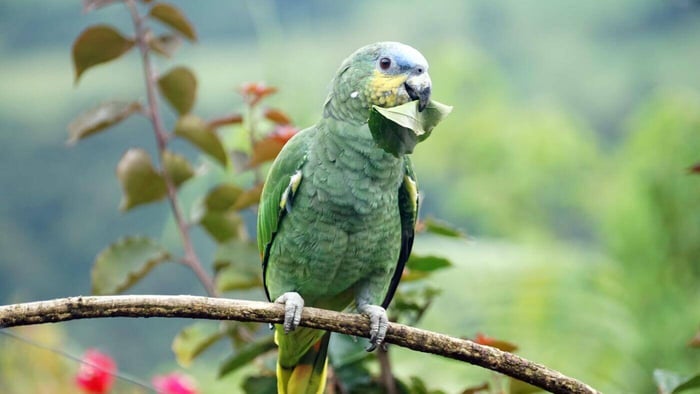
Orange-Winged Amazon - Amazona amazonica is naturally found across a wide part of South America. Its range includes areas such as Venezuela, Colombia, the Guianas, Brazil, eastern Ecuador, eastern Peru, north-eastern Bolivia, and Trinidad and Tobago. This broad distribution means the species can be seen in a variety of natural environments, from tropical forests to more open wooded areas.
In the wild, orange-winged Amazons are adaptable birds. They use lowland forests, savannah woodland, mangroves, palm swamps, gallery forests, cultivated areas with trees, and areas close to rivers and waterways. They are especially associated with forested landscapes and often gather in noisy flocks when feeding, travelling, or roosting.
Their wild diet is varied and includes fruits, berries, seeds, flowers, nectar, palm fruits, and other seasonal plant foods. Like many Amazon parrots, they may also visit cultivated areas when natural food is available nearby or when crops provide an easy food source.
The IUCN Red List currently lists the orange-winged Amazon as a Least Concern species, but this does not mean there are no conservation concerns. Wild populations are believed to be decreasing, with pressures including trapping for the bird trade, hunting in some areas, and habitat loss.
INTELLIGENCE & PERSONALITY
Orange-winged Amazon parrots are intelligent, social, curious, and often very engaging birds. They usually enjoy being involved in household life and can form strong bonds with their owners when handled kindly and consistently. A well-socialised orange-winged Amazon can be playful, affectionate, confident, and full of character.
Like other Amazon parrots, they are not a low-maintenance choice. They need daily interaction, mental stimulation, training, and clear boundaries. Without proper attention, they may become noisy, frustrated, territorial, or difficult to handle. This is especially true during hormonal periods, when Amazons can become more excitable or defensive.
Orange-winged Amazons are best suited to experienced parrot owners, or to committed owners who are prepared to learn about Amazon body language, positive reinforcement training, enrichment, diet, and long-term care. These birds are emotionally complex, and their needs should be taken seriously before bringing one into your home.
TALKING ABILITY & NOISE LEVEL
Orange-winged Amazons can be good talkers, although individual ability varies from bird to bird. Some learn words, phrases, household sounds, whistles, and tunes, while others prefer to communicate through natural calls and body language. As always, it is important not to choose a parrot only because you want it to talk.
When it comes to noise, orange-winged Amazons are loud. Their natural calls include screeches, squawks, whistles, trills, and other strong vocalisations. Even a happy and healthy Amazon will call loudly at certain times of the day, especially in the morning and evening.
This makes them unsuitable for many flats, shared walls, or noise-sensitive households. If you are considering this species, you must be comfortable with the fact that loud calling is normal parrot behaviour and not something that can be completely trained away.
FEEDING & SUPPLEMENTS
As with all parrots, an orange-winged Amazon's diet needs to be balanced and varied to support good health. A quality pellet or complete parrot food can form the base of the diet, supported by fresh vegetables, leafy greens, a smaller amount of fruit, and carefully chosen treats.
Amazon parrots can be prone to weight gain, so it is important not to rely too heavily on fatty seed mixes, sunflower seeds, or nuts. These can still be useful as training rewards, but they should not become the main part of the daily diet.
Fresh foods can include vegetables such as carrots, peppers, broccoli, green beans, peas, squash, and leafy greens. Fruit can be offered in moderation, including apples, pears, berries, pomegranates, and oranges. Always remove uneaten fresh food before it spoils.
To keep feeding interesting, try presenting food in different ways. You can use foraging toys, skewers, puzzle feeders, treat holders, and food-safe branches to encourage natural searching and problem-solving behaviour.
Fresh, clean water should always be available. Food and water dishes should be washed daily to reduce bacteria and keep your bird's feeding area hygienic.
HOUSING FOR YOUR ORANGE-WINGED AMAZON
When choosing a cage for your orange-winged Amazon, go for the largest safe cage you can realistically fit in your home. A good minimum guideline for an Amazon-sized parrot is around 48" x 30" x 30", but bigger is always better.
This minimum only applies if your bird has several hours of supervised out-of-cage time every day. If the bird is expected to stay inside its enclosure for most of the day, a much larger aviary-style setup is more appropriate.
Cage placement matters too. Orange-winged Amazons are social birds, so their cage should be in an area where they can feel included in daily life. Many owners choose a living room or another active but safe part of the home. Avoid kitchens, draughty hallways, direct fumes, strong sprays, smoke, and sudden temperature changes.
The cage should include sturdy natural wood perches of different widths and textures to support foot health. Your bird will also need a strong selection of Orange-Winged Amazon toys, including chew toys, shredding toys, foraging toys, swings, ladders, and puzzle toys.
A separate parrot stand or play gym is also useful for supervised time outside the cage. This gives your Amazon a safe place to climb, chew, play, and interact with you away from its main enclosure.
ORANGE-WINGED AMAZON FEATHER PLUCKING
Orange-winged Amazons are active, intelligent birds, and they need plenty of stimulation to stay mentally healthy. A lack of enrichment, poor diet, boredom, stress, inconsistent handling, or not enough out-of-cage time can all contribute to behavioural problems.
Feather plucking is not something to ignore or treat as a habit only. If an orange-winged Amazon starts damaging its feathers, the first step should always be to speak to an avian vet. Medical issues, pain, skin irritation, parasites, nutritional problems, and hormonal factors should be ruled out before assuming the cause is behavioural.
Once medical causes have been checked, the daily routine becomes very important. Most Amazon parrots benefit from at least 3 to 4 hours of supervised out-of-cage time each day, along with regular bathing opportunities, training sessions, safe chewing materials, and fresh enrichment.
Simple changes can make a big difference. Rotate toys weekly, hide food inside foraging toys, offer safe branches and shreddable materials, and give your bird predictable one-to-one interaction. A confident routine helps reduce stress and gives your Amazon something positive to focus on.
FUN FACTS
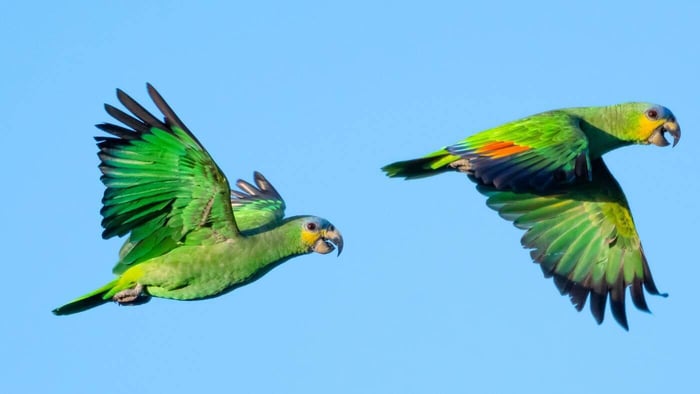
- Orange-winged Amazons are named after the orange markings found in the wings, which are usually most visible when the bird is flying or stretching.
- Their overall colour is mainly green, with yellow on the head and blue or violet-blue tones around the forehead and face.
- There are two recognised subspecies: Amazona amazonica amazonica and Amazona amazonica tobagensis.
- The Tobago subspecies has more extensive orange colouring in the wings.
- Juvenile orange-winged Amazons often have darker eyes than adults, with the eye colour becoming more orange as they mature.
- They are highly vocal birds and can produce harsh calls, whistles, squawks, trills, and other expressive sounds.
- Orange-winged Amazons are often seen in pairs or flocks in the wild.
- They use a wide range of habitats, including tropical forest, wooded savannah, mangroves, palm swamps, and cultivated areas with trees.
- They are strong chewers, so safe wood and shredding toys are essential for enrichment.
- They can live for several decades, so owning one is a serious long-term commitment.
- It is not possible to reliably tell males and females apart by appearance alone. DNA testing is the most accurate option.
- Like many Amazon parrots, they can become more intense during hormonal periods, so calm handling and consistent routines are important.
- Providing a variety of perches of different sizes and textures helps support healthy feet.
CONCLUSION
To sum up, orange-winged Amazons are intelligent, vocal, social, and highly rewarding parrots for the right owner. They can be affectionate and entertaining companions, but they also need structure, patience, enrichment, and a serious long-term commitment.
Before bringing an orange-winged Amazon into your home, it is important to understand their noise level, space requirements, diet, need for social interaction, and potential hormonal behaviour. These are not background pets. They are active, emotional, clever birds that need daily care and involvement.
With the right setup, a balanced diet, plenty of enrichment, and respectful training, an orange-winged Amazon can become a wonderful companion and a much-loved member of the family.
To view other Parrot Profiles & Care Guides, visit our Alphabetical list of Parrot Fact Sheets by visiting: https://parrotessentials.co.uk/blog/parrot-profiles-care-guides
FAQs
Is an Orange-Winged Amazon a good pet?
An Orange-Winged Amazon can be a wonderful pet for the right owner, but it is not usually recommended for complete beginners. These parrots are intelligent, social, loud, and emotionally complex. They need daily interaction, training, enrichment, and a consistent routine.
Can Orange-Winged Amazons talk?
Yes, many Orange-Winged Amazons can learn to talk, whistle, and mimic household sounds. However, talking ability varies between individual birds, so they should never be chosen only because you want a talking parrot.
How loud is an Orange-Winged Amazon?
Orange-Winged Amazons are loud parrots. They can produce strong calls, screeches, squawks, whistles, and trills, especially in the morning and evening. They are not ideal for flats, shared walls, or noise-sensitive homes.
What should an Orange-Winged Amazon eat?
An Orange-Winged Amazon should have a balanced diet based around quality pellets or complete parrot food, fresh vegetables, leafy greens, some fruit, and occasional healthy treats. Fatty seeds, sunflower seeds, and nuts should be limited and used mainly as rewards.
Are Orange-Winged Amazons good for beginners?
They are usually better suited to experienced parrot owners. Their loud voice, strong personality, long lifespan, and need for consistent training can be challenging for someone new to parrots.