Pellets vs Seeds for Parrots: What Should Your Bird Eat?
Pellets vs seeds for parrots generally comes down to balance: nutritionally complete pellets should form the foundation of most companion parrots' diets, while seeds are better offered in controlled amounts alongside vegetables and other suitable foods.
The debate around pellets vs seeds for parrots can make feeding your bird seem more complicated than it needs to be. Seeds look natural, parrots usually love them, and many birds have eaten seed-based diets for years. Pellets, meanwhile, are designed to provide a more consistent balance of nutrients in every bite.
The problem is not necessarily seeds themselves. It is what happens when a parrot is allowed to eat mostly seeds, particularly when they selectively pick out their favourites.
Understanding what each type of food provides can help you build a more balanced diet without taking all the enjoyment and variety out of mealtimes.
What Is The Nutritional Difference Between Pellets And Seeds?
The biggest difference is consistency.
Complete parrot pellets are formulated so that your bird receives a controlled combination of nutrients rather than choosing individual ingredients. Depending on the formula, they can provide protein, fats, carbohydrates, vitamins and minerals in carefully calculated proportions.
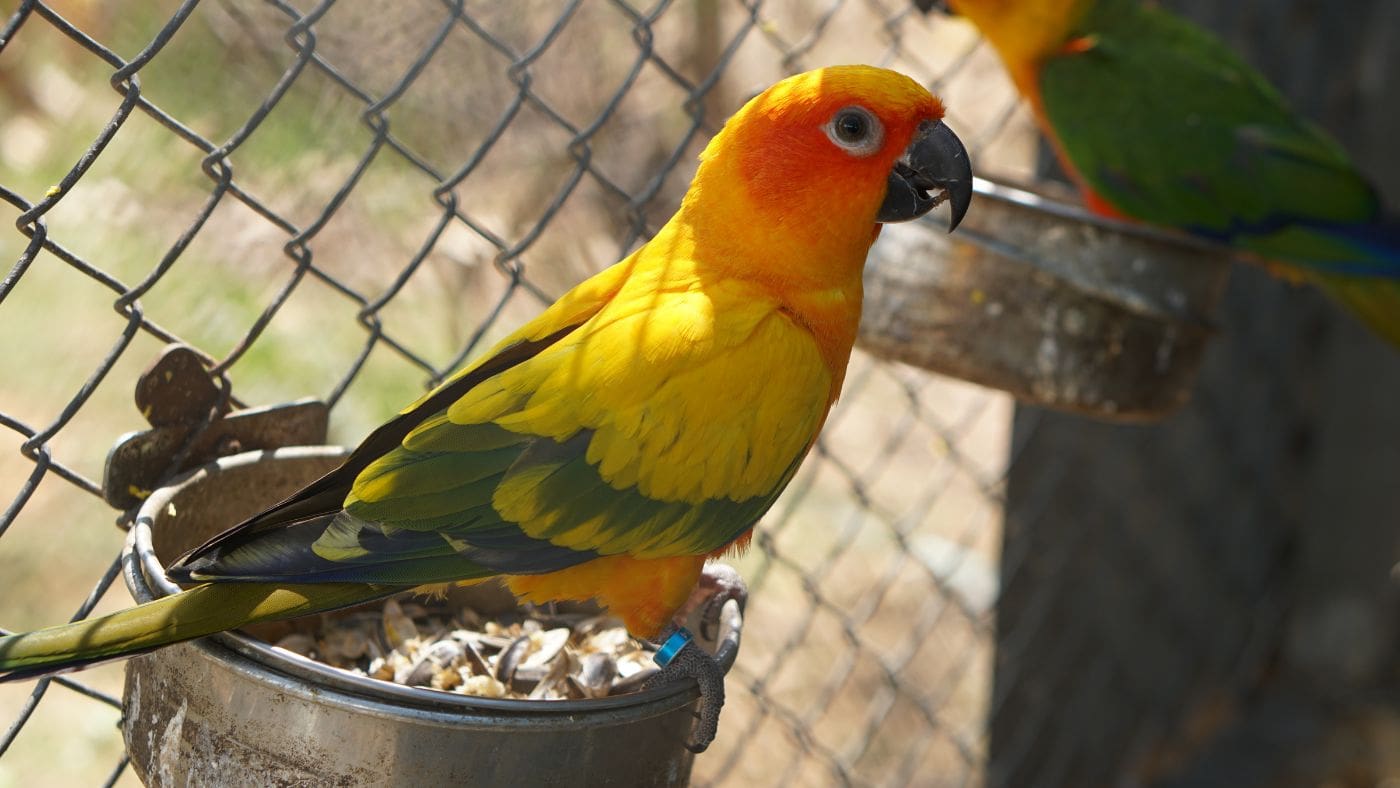
A traditional parrot seed mix is different. It contains individual seeds and sometimes grains, nuts, dried fruit or other ingredients. That creates more variation in taste and texture, but it also allows your parrot to choose what to eat.
And parrots can be very good at choosing their favourites.
A bowl may contain ten different ingredients, but that does not mean your bird has eaten all ten. If your parrot consistently picks out sunflower seeds or other preferred ingredients and leaves the rest, the nutritional balance of the bowl becomes very different from the nutritional balance of the mix itself.
Seed-heavy diets can also be high in fat and may be deficient in important nutrients such as calcium and vitamin A when relied upon as the main source of nutrition.
Pellets vs Seeds for Parrots: The Pros And Limitations
Neither food should be judged simply as "good" or "bad". It is more useful to understand what each contributes to your bird's diet.
The Benefits Of Pellets
A good-quality complete pellet makes balanced feeding easier because your parrot cannot simply pick out one ingredient and leave everything else behind.
Pellets can:
- Provide more consistent daily nutrition.
- Reduce selective feeding.
- Make portion control easier.
- Provide essential vitamins and minerals within the food.
- Offer different formulas and sizes for different parrots and life stages.
This consistency is one reason formulated diets are widely recommended as a major part of the diet for many companion parrots.
Pellets do have limitations. Not every pellet is identical, and a food still needs to be appropriate for your bird. Pellet size, formulation, ingredients, life stage and your parrot's individual health requirements all matter.
Some parrots also refuse pellets initially, especially if they have spent years eating seed.
The Benefits Of Seeds
Seeds offer something pellets cannot completely reproduce: variety.
Different shapes, shells, textures and flavours encourage your parrot to manipulate food with the beak and tongue. Seeds can therefore be particularly useful as part of foraging activities, training rewards or controlled meal variety.
They are also highly palatable, which can help encourage eating or introduce other foods.
The downside is exactly the same thing that makes seeds appealing: your parrot can choose.
Given unlimited access, some birds will repeatedly select the richest or most familiar ingredients. Over time, a diet dominated by a narrow selection of seeds can become nutritionally unbalanced.
The goal, therefore, does not have to be removing every seed from your parrot's life. It is making sure seeds are not crowding out the foods your bird needs for balanced nutrition.
Should Parrots Eat Both Pellets And Seeds?
For many companion parrots, yes.
A varied feeding plan can use pellets as the nutritional foundation while incorporating controlled amounts of seeds alongside suitable vegetables and other species-appropriate foods.
How you offer them matters.
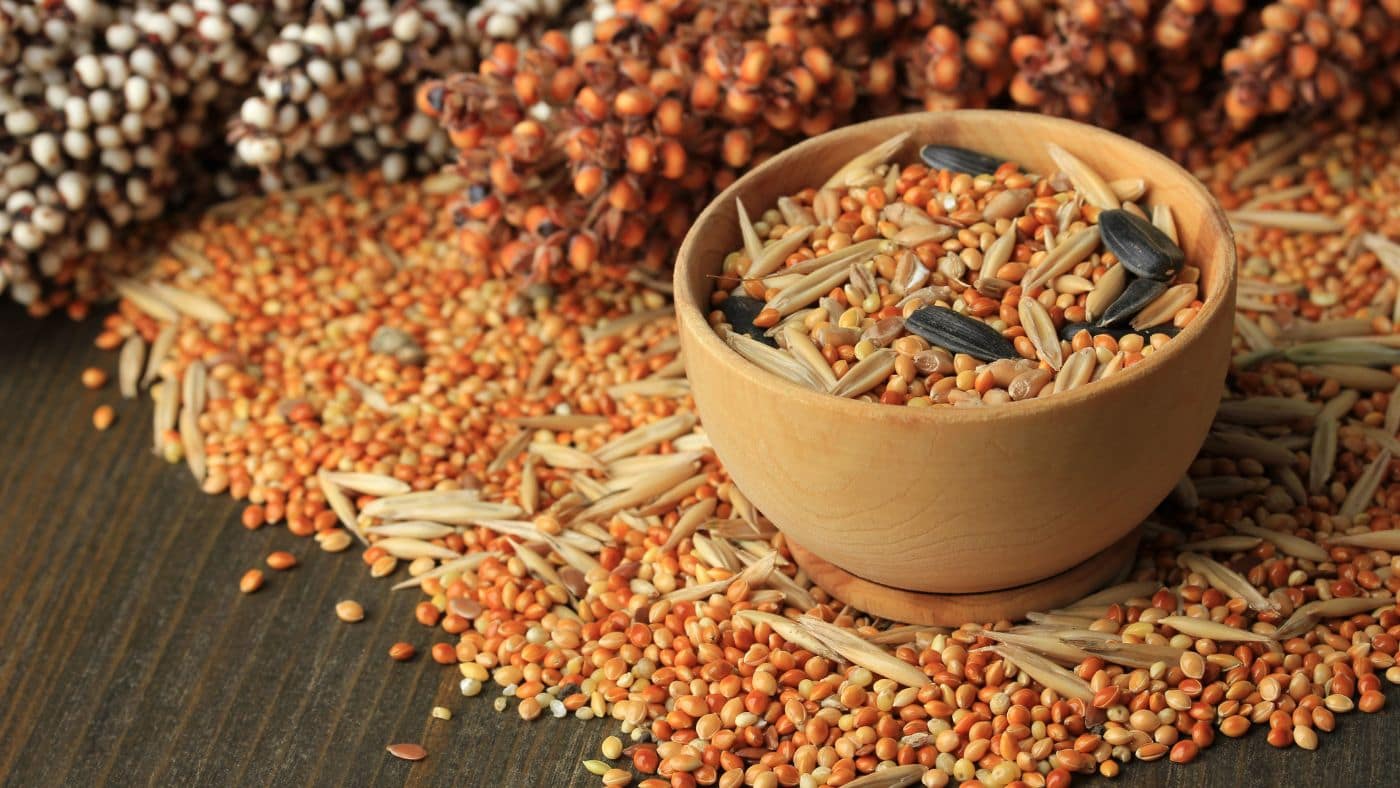
If your parrot receives an overflowing bowl containing pellets and favourite seeds together, there is a good chance the pellets will be left behind. Offering foods at different times or using measured portions can make it easier to see what your bird is actually consuming.
Seeds can also become much more useful when you make your parrot work for them. Hide small quantities in foraging toys, use individual seeds during training or scatter them through appropriate foraging material.
That turns a favourite food into both nutrition and enrichment.
Does The Right Diet Depend On Your Parrot's Species?
Absolutely.
There is no single feeding plan that should automatically be copied from one parrot to another.
Budgies and cockatiels, for example, are naturally adapted to eating significant amounts of grasses and seeds, although that does not mean a captive bird should live on an unrestricted bowl of commercial seed.
African Greys require particular attention to nutritional balance and are recognised as being vulnerable to problems involving calcium and vitamin A. Amazons can also be prone to obesity, making excessive intake of fatty foods particularly undesirable.
Lories and lorikeets are an even clearer example of why species matters. Their specialised feeding habits mean they require appropriately formulated foods rather than simply being placed on the same pellet-and-seed routine as other parrots.
Age, activity, breeding status and existing health conditions can change nutritional requirements too.
This is why "What percentage of seeds should every parrot eat?" does not have one responsible answer.
Start with the nutritional requirements of the species, then consider the individual bird in front of you. If your parrot has a medical condition, is laying eggs, is significantly overweight or underweight, or has previously experienced nutritional deficiencies, an avian vet should help you decide on the most appropriate diet.
How To Transition A Parrot From Seeds To Pellets
If your bird currently eats mostly seeds, do not suddenly remove them and replace the bowl with pellets.
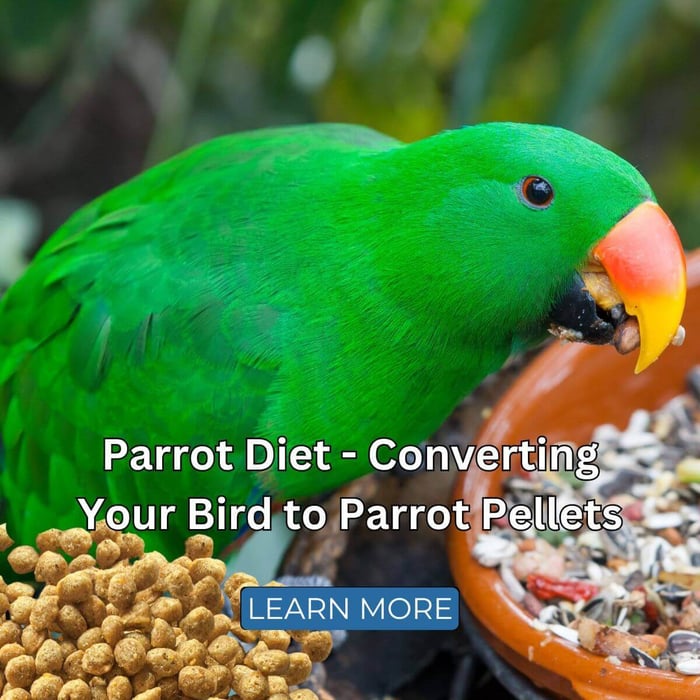
Your parrot may not recognise pellets as food right away. Check out our Conversion Guide to get an idea of how to gradually switch their diet.
Make diet changes gradually, and monitor your bird's actual food intake carefully throughout the process.
Start by introducing a suitable pellet while your bird's familiar diet is still available. You can offer pellets when your parrot is normally interested in eating and experiment with different pellet sizes, shapes and textures.
Some parrots investigate a new food immediately. Others need repeated exposure before they even taste it.
You can also try:
- Offering pellets in a separate clean bowl.
- Crushing a small amount over a familiar moist food.
- Offering pellets during normal social feeding times.
- Trying another suitable pellet size or texture.
- Gradually reducing the amount of seed once you know pellets are being eaten.
- Weighing your parrot regularly during the transition.
Do not judge success by an empty-looking pellet bowl. Parrots can crumble, throw and play with food without swallowing much of it.
Watch your bird, check what is actually disappearing and monitor body weight. A gram scale can be extremely useful during a dietary change.
Most importantly, do not try to "wait out" a stubborn bird by removing familiar food until hunger forces it to eat pellets. Transitioning can take weeks or even months, particularly with an older bird that has eaten seed for most of its life.
How To Choose The Right Parrot Pellets
Look through the pellet options available and you will quickly discover that there is no single bag labelled simply "parrot food".
That is a good thing.
Different parrots need different pellet sizes and may benefit from different formulations. When choosing a pellet, consider:
Species: Look for a formula suitable for your type of parrot.
Pellet size: Your bird needs to be able to comfortably pick up and eat the food. A macaw and a budgie clearly require very different sizes.
Life stage: Maintenance, growth and breeding formulas may have different nutritional profiles.
Complete vs complementary food: Check whether the product is intended to provide complete nutrition or is designed to form only part of the diet.
Acceptance: The theoretically perfect pellet is not particularly useful if your parrot refuses to eat it. You may need to experiment with suitable options.
Existing diet: Consider what your bird is already eating and how realistically you can transition from it.
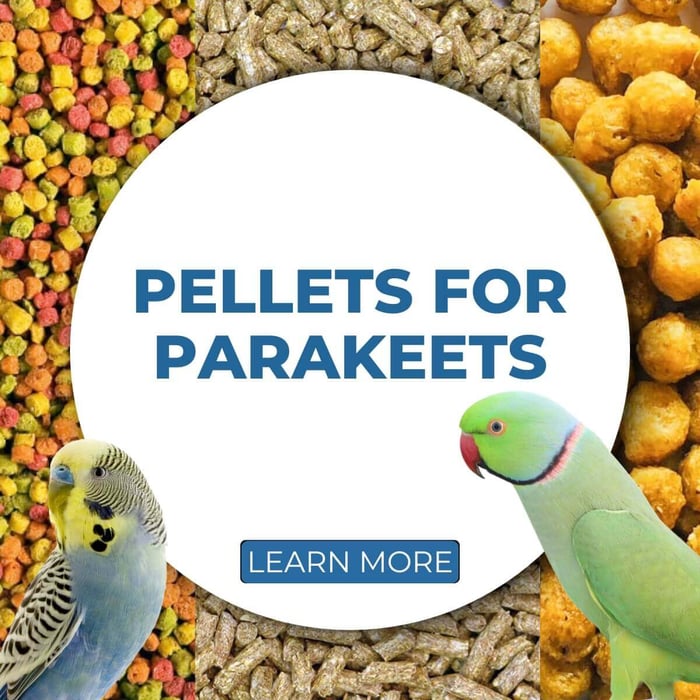
Our parrot pellets range includes different sizes and formulations, making it easier to compare options for small, medium and large parrots.
How To Choose A Seed Mix
The same level of thought should go into choosing seed.
Do not judge a mix simply by how colourful or varied it looks in the bag.
Look at the ingredient list and consider the species it has been designed for. A mix intended for a budgie should look very different from one formulated for an African Grey or macaw.
Also think about how you intend to use it.
If seed is going to form a controlled part of a varied feeding plan, a good-quality species-appropriate blend can provide variety and encourage natural food-handling behaviours.
If you mainly want seed for training or foraging, you may need far less than you would when feeding it as part of a meal.
You can explore our parrot seed mixes by species and type rather than choosing one general mixture for every bird.
Do Parrots Need Supplements With Pellets?
More is not always better when it comes to vitamins and minerals.
A nutritionally complete pellet has already been formulated to provide specific nutrients in controlled amounts. Adding vitamin and mineral supplements without a clear reason can upset that balance rather than improve it.
Birds eating an incomplete or predominantly seed-based diet may have different requirements, particularly while their diet is being improved, but supplementation should be considered in the context of the whole diet.
Certain birds may also have additional requirements because of their health, life stage or reproductive status.
If you are considering parrot supplements, check what your bird is already receiving through pellets and other foods first. For a diagnosed deficiency or specific health concern, follow the advice of an avian vet rather than adding several supplements "just in case".
A Simple Framework For Building A Better Parrot Diet
Instead of asking whether you should choose pellets or seeds, look at the whole feeding routine.
Start with five questions:
- What does my parrot's species naturally require?
Species should guide your starting point. - Is the main food nutritionally complete?
Check the manufacturer's feeding guidance rather than assuming every packaged parrot food provides the same nutritional balance. - Is my bird actually eating the balanced part of the diet?
What you put into the bowl and what your parrot consumes can be two very different things. - Where do seeds fit?
Consider using them deliberately for variety, foraging, training or as a measured part of the diet rather than providing unlimited access. - Does my bird have individual requirements?
Age, body condition, activity, breeding and health can all affect the answer.
That framework is much more useful than copying another owner's feeding percentages without knowing whether their bird has the same nutritional needs as yours.
Finding The Right Balance Between Pellets And Seeds
The question of pellets vs seeds for parrots is not really about choosing a winner. It is about understanding the nutritional role each food plays.
For many companion parrots, a suitable complete pellet provides a reliable nutritional foundation, while carefully selected seeds can add variety, enjoyment and opportunities for natural feeding behaviour. Fresh foods and species-specific requirements also need to be considered as part of the wider diet.
If your parrot currently lives mainly on seed, you do not need to transform the food bowl overnight. Start gradually, monitor what your bird actually eats and make changes at a pace that keeps nutrition and food intake safe.
Once you stop thinking of pellets vs seeds for parrots as an either-or decision, building a balanced feeding routine becomes much easier.
FAQs
Are pellets better than seeds for parrots?
For many companion parrots, nutritionally complete pellets are a better foundation for the diet because they provide a more consistent balance of nutrients. Seeds can still be included in controlled amounts for variety, training and foraging.
Can parrots eat seeds every day?
Yes, many parrots can eat seeds as part of a balanced diet. The amount depends on the species and individual bird. Problems can arise when seeds dominate the diet and a parrot selectively eats only its favourite varieties.
Can parrots live on pellets alone?
Complete pellets are formulated to provide balanced nutrition, but feeding can also include suitable fresh foods and other species-appropriate foods for variety and enrichment. Always check the feeding guidance for the particular pellet you choose.
How do I get my parrot to eat pellets instead of seeds?
Introduce pellets gradually while continuing to provide familiar food. Try different pellet sizes and textures, offer them separately or alongside familiar foods, and monitor your parrot's weight and actual food intake during the transition.
Should I mix pellets and seeds together?
You can, but some parrots simply pick out their favourite seeds and leave the pellets. Offering measured portions or providing pellets and seeds at different times can make it easier to monitor what your bird is actually eating.