A 7-Day Routine for Calming a Stressed Parrot
Calming a stressed parrot starts with a predictable routine, a peaceful environment, adequate sleep and gentle interaction. This seven-day plan helps you identify stress triggers, make manageable changes and monitor your bird's progress without expecting overnight results.
Has your parrot suddenly become more vocal, nervous around familiar people or reluctant to interact? Perhaps they are pacing, hiding or reacting strongly to everyday noises. These changes can be worrying, especially when you cannot immediately identify the cause.
The good news is that small, consistent adjustments can help your parrot feel more secure. Rather than attempting to change everything at once, this practical seven-day routine focuses on one manageable priority each day.
Remember, seven days is a starting point, not a deadline. Some parrots settle relatively quickly after a temporary disturbance, while others need much longer to regain confidence.
Before You Start: Understand Your Parrot's Stress
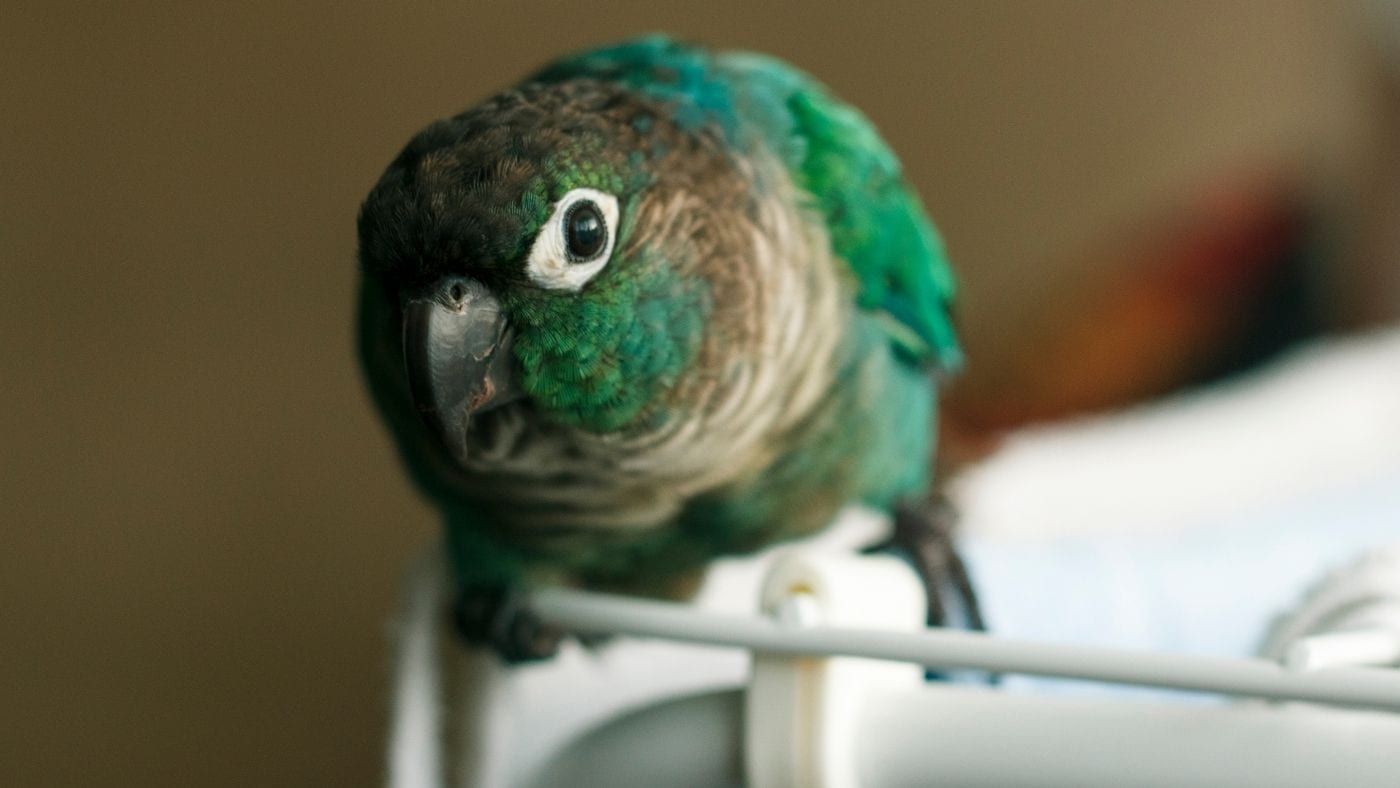
Parrots can become unsettled by changes that seem insignificant to us. Moving their cage, introducing a new pet, welcoming visitors or changing your working hours can affect their sense of security.
Common signs of possible stress include:
- Increased screaming or unusual vocalisations.
- Pacing, restlessness or repeated movements.
- Reluctance to interact or increased defensiveness.
- Changes in posture, feather position or alertness.
- Excessive preening or feather-damaging behaviour.
- Becoming unusually withdrawn or easily startled.
These behaviours do not automatically mean your parrot is anxious. Pain and illness can cause similar changes. If symptoms appear suddenly, particularly alongside changes in appetite, droppings or activity, contact an avian vet rather than assuming stress is responsible.
Understanding your bird's normal behaviour makes changes easier to recognise. Our guide to parrot body language explains how to interpret different signals in context.
Your 7-Day Plan for Calming a Stressed Parrot
Each day builds on the previous one. Continue the helpful changes throughout the week rather than replacing yesterday's routine with something entirely new.
Day 1: Create a Calmer Environment
Begin by looking at your parrot's surroundings. Is their cage beside a noisy television, close to a busy doorway or somewhere people constantly walk past?
Reduce avoidable disturbances while keeping your bird in a familiar, secure environment.
- Lower unnecessary background noise.
- Avoid sudden movements around the cage.
- Provide an area where your parrot can retreat from activity.
- Keep familiar perches, feeding stations and favourite toys in place.
- Avoid unnecessary cage rearrangements.
If the current cage position is genuinely unsuitable, make a considered adjustment rather than repeatedly moving it around the house.
Today's observation: Note which household activities cause your parrot to become more alert, vocal or restless.
Day 2: Establish Predictable Daily Times
A consistent schedule helps your parrot anticipate what happens next.
Try to maintain regular times for waking, meals, interaction, exercise and bedtime. Many parrots benefit from approximately 10 to 12 hours of quiet, uninterrupted nighttime rest, although individual sleep requirements vary.
Keep the sleeping area comfortable, appropriately dark and free from unnecessary disturbances. If your bird experiences night frights, review the sleeping arrangement rather than assuming complete darkness is always best.
Avoid suddenly changing bedtime or waking your bird repeatedly after they have settled.
Today's observation: Record sleep and waking times, along with any nighttime disturbances or unusual morning behaviour.
Day 3: Reduce Overstimulation Without Removing Enrichment
When a parrot appears anxious, it can be tempting to offer constant attention or introduce several new toys. Unfortunately, too much activity can overwhelm an already nervous bird.
Instead, maintain familiar enrichment while reducing unnecessary excitement.
- Offer quiet periods between interactions.
- Keep handling sessions short and voluntary.
- Avoid introducing several unfamiliar objects simultaneously.
- Maintain access to suitable toys and normal exercise opportunities.
- Watch for signs that your bird wants space.
The aim is not to create an empty, unstimulating environment. Parrots still need opportunities to explore, chew, forage and interact.
Today's observation: Notice whether your parrot settles more easily when household activity is reduced.
Day 4: Build Trust Through Gentle Interaction
Today, concentrate on making interactions predictable and positive.
Sit near your parrot without demanding attention. Speak in a familiar, relaxed voice and allow them to approach at their own pace.
If your bird enjoys training, practise a simple, familiar behaviour using positive reinforcement. Reward voluntary participation and stop before your parrot becomes uncomfortable.
Never force step-up training, chase your bird around the cage or punish screaming and defensive behaviour. These responses can increase fear and damage trust.
If your parrot prefers observing you from a distance, that is perfectly acceptable. Calm companionship can be valuable without physical contact.
Today's observation: Record whether your bird approaches voluntarily, accepts familiar rewards or appears more comfortable with your presence.
Day 5: Introduce Gentle Foraging Activities
Once your parrot has had several days of predictable care, consider a small enrichment activity suited to their confidence level.
Foraging encourages natural exploration and provides an opportunity to engage in something rewarding.
You could:
- Place a familiar treat inside an easy-to-open paper parcel made from bird-safe materials.
- Offer a favourite shredding toy in an accessible position.
- Hide a small portion of their usual food in a familiar foraging toy.
- Encourage gentle exploration without pressuring your bird to participate.
For a particularly nervous parrot, start with an activity they already understand. Supervise unfamiliar enrichment and avoid materials that could cause entanglement or be swallowed.
Today's observation: Note whether your parrot investigates, plays or chooses to ignore the activity. All three responses provide useful information.
Day 6: Identify Patterns and Adjust Your Approach
By now, you should have several days of observations. Look for patterns rather than expecting dramatic behavioural changes.
Does your parrot become unsettled when visitors arrive? Are mornings easier than evenings? Does background noise affect their willingness to interact?
Choose one manageable adjustment based on what you have observed.
For example, if your bird becomes nervous during busy family meals, provide a quieter period beforehand. If unfamiliar objects trigger defensive behaviour, introduce future changes more gradually.
Avoid making multiple major adjustments simultaneously, as this makes it difficult to understand what helps.
Today's observation: Identify the most consistent stress trigger and one practical change you can maintain.
Day 7: Review Progress and Plan Ahead
Today is about evaluating your parrot's comfort, not testing whether they have been completely 'fixed'.
Compare their behaviour with your notes from the beginning of the week.
Possible encouraging signs include:
- More frequent relaxed postures.
- Greater willingness to approach familiar people.
- Less pacing during previously stressful situations.
- More interest in familiar toys or foraging.
- Shorter or less intense reactions to specific triggers.
- More predictable rest and activity patterns.
Some parrots may show little visible improvement during the first week. That does not necessarily mean your efforts have failed. It may indicate that the underlying trigger remains, your bird needs more time or professional guidance is required.
Today's observation: Compare the week as a whole and decide which changes should become part of your regular care routine.
Keep a Simple Parrot Stress Observation Diary
One of the most useful tools for calming a stressed parrot is a daily observation diary. It helps you recognise subtle progress and identify patterns that might otherwise go unnoticed.
Record the following information each day:
- Date and time: When did you notice the behaviour?
- Possible trigger: Was there noise, a visitor or another change?
- Behaviour: What did your parrot actually do?
- Duration: Approximately how long did the episode last?
- Response: What did you change, and how did your bird react?
- Daily wellbeing: Note sleep, appetite, droppings, activity and voluntary interaction.
For example, you might record: 'Tuesday, 5 pm. Vacuum cleaner started in the hallway. Parrot called repeatedly and moved away from the front of the cage. Settled after the noise stopped.'
Keep descriptions factual rather than labelling every behaviour as anxiety. A diary can also provide valuable information for an avian vet or qualified parrot behaviour professional.
How Long Does It Take to Calm a Stressed Parrot?
There is no reliable universal timeline for calming a stressed parrot. The response depends on the cause, duration and severity of the problem, as well as your bird's temperament, health and previous experiences.
A parrot frightened by a temporary disturbance may return to familiar behaviour once the situation has passed. A recently rehomed bird may need considerably longer to become comfortable with new surroundings and people.
Long-standing fear, repeated stress triggers and established feather-damaging behaviours can require ongoing management and professional support.
Importantly, progress is not always linear. Your parrot might appear relaxed one day and more cautious the next. Assess overall patterns rather than individual setbacks.
Do not assume that a lack of improvement after seven days is normal if your bird remains highly distressed. Seek professional advice when the cause is unclear, distress is persistent or behaviour is worsening.
Can Natural Calming Products Help?
Environmental improvements, predictable routines and appropriate behavioural support should remain the foundation of your approach. Some owners also consider calming products as additional support during stressful periods.
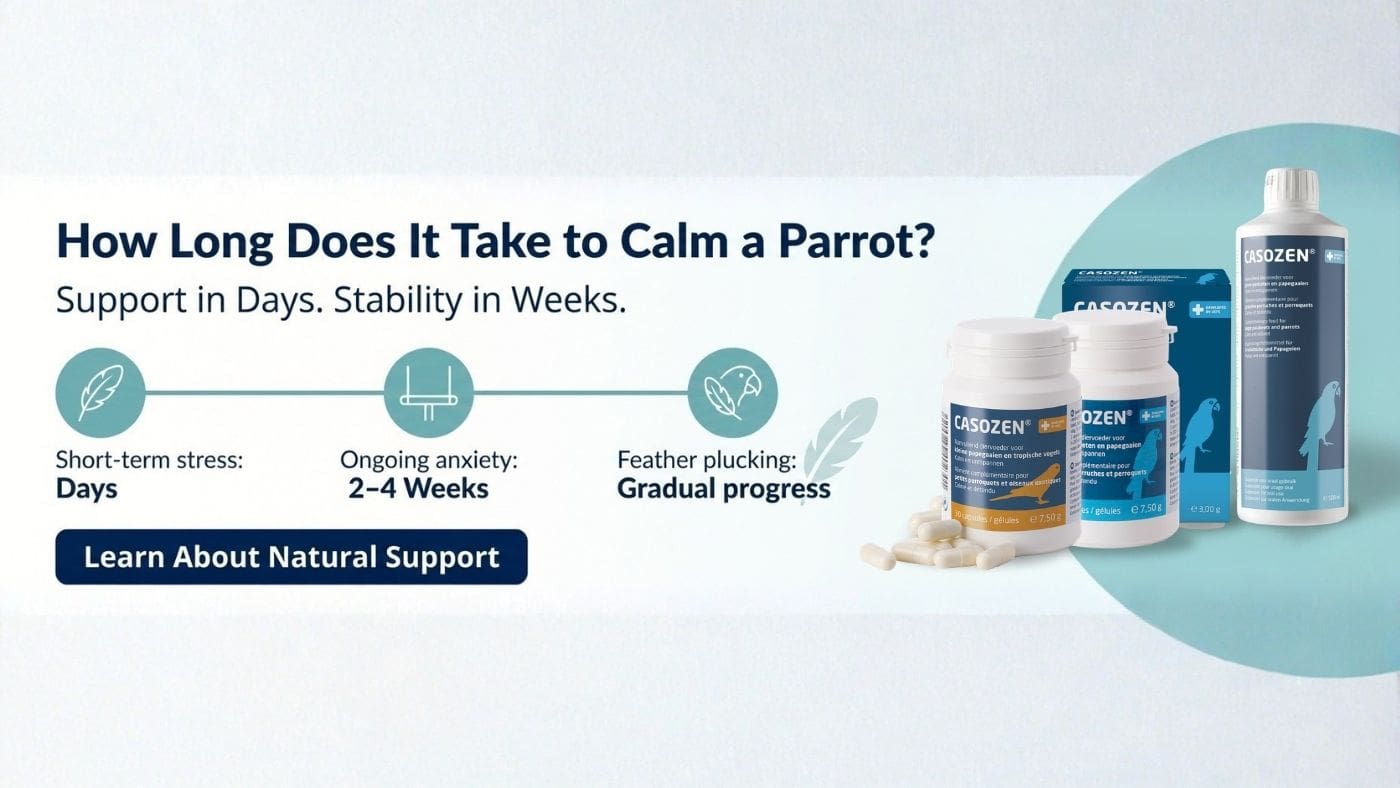
Casozen is a parrot-focused calming supplement range available in capsule and liquid formats. It is useful for supporting birds during stressful situations, but individual responses vary.
Pet Remedy offers environmental calming products, including sprays and wipes. Unlike an orally administered supplement, these products are intended for use in the bird's surroundings according to the specific product instructions.
When Should You Contact an Avian Vet?
Not every behavioural change is caused by stress. Parrots can conceal signs of illness, making it important to recognise changes early.
Contact an avian vet promptly if your bird develops:
- Reduced appetite, weight loss or unusual droppings.
- Persistent lethargy, weakness or unusually fluffed feathers.
- Sudden, unexplained behavioural changes.
- New feather plucking, feather damage or skin irritation.
- Persistent distress that does not improve when obvious triggers are addressed.
Breathing difficulties, collapse, significant bleeding or severe weakness require urgent veterinary attention.
If your parrot is damaging their feathers, our guide to feather plucking in parrots explores possible medical and environmental causes in greater detail.
Beyond Day Seven: Make Calm Part of Everyday Life
The most valuable outcome of this seven-day routine is a better understanding of your individual parrot.
Continue providing predictable sleep and feeding times, suitable enrichment, voluntary interaction and opportunities for quiet rest. Review your observation diary regularly and introduce future changes gradually.
Remember that calm behaviour does not mean complete silence or inactivity. Healthy parrots naturally vocalise, explore, play and express preferences. The goal is to help your bird feel secure enough to behave naturally.
Above all, calming a stressed parrot requires patience, observation and consistency. Seven days can help you establish a supportive routine, but lasting confidence develops at your bird's own pace. Celebrate small improvements, remain responsive to their needs and seek professional guidance whenever something does not seem right.
FAQs
How long does it take to calm a stressed parrot?
It depends on the cause and duration of the stress. Some parrots settle after a temporary disturbance, while others need weeks or longer to become more confident. There is no guaranteed seven-day recovery period.
What is the best daily routine for an anxious parrot?
Maintain consistent waking, feeding, exercise and bedtime schedules. Include familiar enrichment, voluntary interaction and quiet periods. Adjust the routine according to your parrot's individual needs.
Should I leave my stressed parrot alone?
Give your parrot space when they appear uncomfortable, but do not withdraw all social interaction. Quiet companionship, familiar activities and allowing your bird to choose when to interact can help maintain trust.
Can calming supplements help a stressed parrot?
Some products are marketed for supporting parrots during stressful situations, but responses vary and evidence for particular benefits may be limited. They should complement appropriate care rather than replace environmental improvements or veterinary advice.
What if my parrot is still stressed after seven days?
Review your observations and check whether stress triggers remain. If your parrot is persistently distressed, deteriorating or displaying unexplained behavioural changes, consult an avian vet. A qualified parrot behaviour professional may also help once medical concerns have been addressed.