Can Parrots Eat Peppers?
If you are looking for colourful new foods to add to your bird's fresh diet, you may be wondering: can parrots eat peppers? With everything from mild bell peppers to hot chillies available in the supermarket, it is understandable to question which types are suitable for your parrot.
The good news is yes, parrots can eat peppers. Bell peppers and chilli peppers can both be included as part of a varied, balanced diet. They provide useful nutrients while also offering different colours, flavours and textures for your bird to investigate.
There are still a few things worth knowing before you start chopping. In this guide, we will look at which peppers you can offer, why parrots can eat chillies without reacting to them in quite the same way we do, how to prepare peppers and how to introduce them to a bird that is cautious about unfamiliar foods.
Can Parrots Eat Peppers Safely?
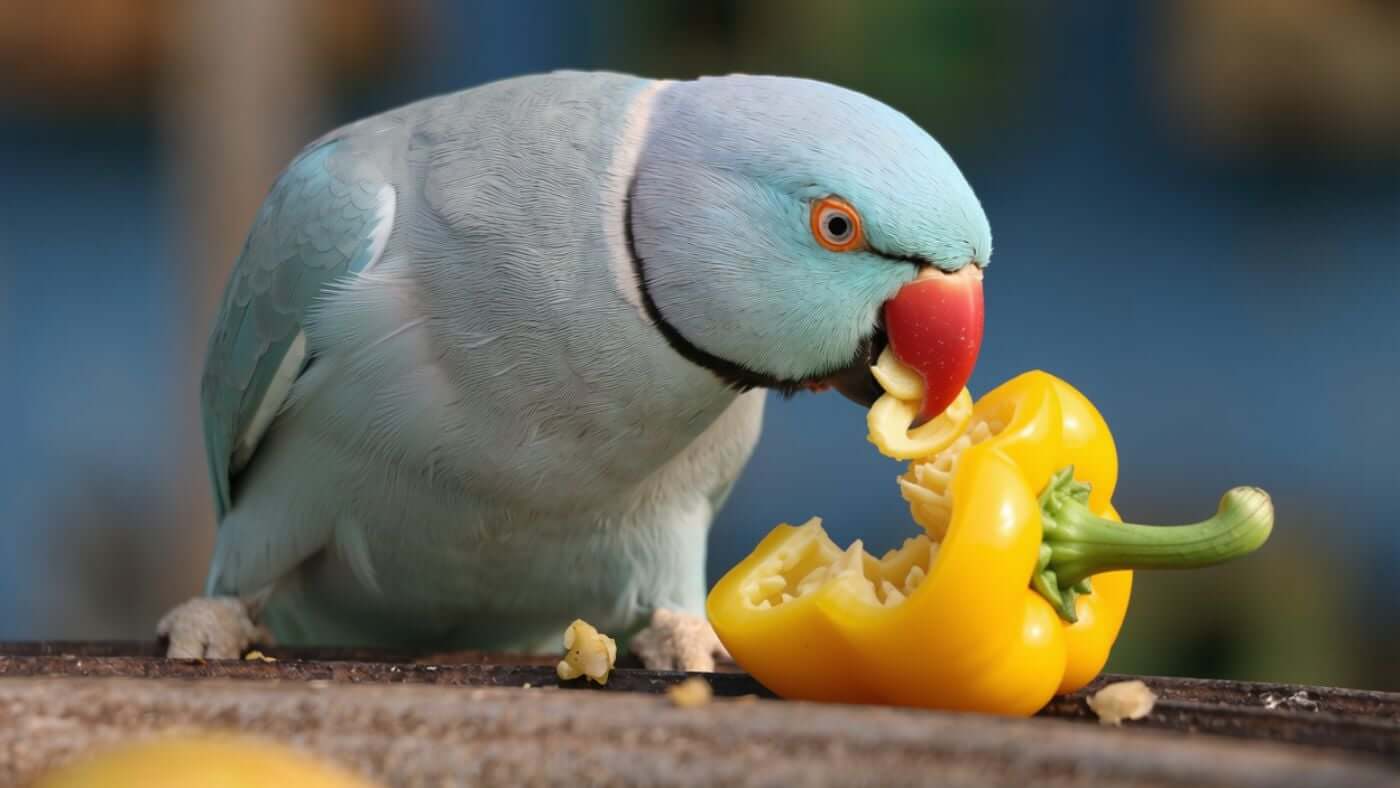
Yes, parrots can eat peppers. Fresh bell peppers are a suitable vegetable for pet birds, and chilli peppers can also be offered.
Bell peppers come in green, yellow, orange and red varieties. Although their flavour and nutritional composition vary slightly as they ripen, you do not need to limit your bird to one particular colour.
Peppers are best treated as one part of a varied fresh food selection rather than as the main part of your parrot's diet.
The nutritional requirements of parrots vary between species, and our understanding of the exact requirements of many species is still developing. For most companion parrots, a nutritionally balanced formulated food is commonly recommended as the foundation of the diet, accompanied by appropriate fresh vegetables and smaller quantities of other foods.
Are Peppers Good for Parrots?
Peppers can make a useful addition to your bird's fresh food bowl.
Brightly coloured peppers contain carotenoids, including compounds that can act as precursors to vitamin A. Vitamin A is an important nutrient in avian nutrition, particularly for maintaining healthy epithelial tissues and supporting normal immune function.
This is especially relevant because poorly balanced, predominantly seed-based diets are frequently deficient in vitamin A. Veterinary nutrition guidance therefore recommends offering suitable vegetables alongside a properly balanced diet.
Bell peppers also provide vitamin C and a range of naturally occurring plant compounds. However, it is important not to think of an individual vegetable as a supplement or treatment.
A piece of red pepper will not correct an unbalanced diet by itself. Its value comes from being part of a wider variety of appropriate foods.
Which Peppers Can Parrots Eat?
Several commonly available peppers can be included in a parrot's diet.
These include:
- Red, yellow, orange and green bell peppers.
- Sweet peppers.
- Mini sweet peppers.
- Fresh chilli peppers.
You do not need to search for an unusually hot chilli to give your bird any additional benefit. A normal bell pepper or commonly available chilli is perfectly adequate.
Bell peppers are often the easiest place to start because they are readily available, easy to prepare and have a crisp texture that many parrots enjoy shredding.
Can Parrots Eat Bell Peppers?
Yes. Bell peppers are suitable for parrots and are specifically included among vegetables recommended for pet birds by avian veterinary sources.
You can offer red, orange, yellow or green varieties.
Your bird may have its own preference. Red peppers are generally sweeter than green ones, so a parrot that refuses one colour may still happily investigate another.
This is worth remembering if you have a bird that is reluctant to try fresh vegetables. A rejected food does not always mean that the bird dislikes every version of it.
Try changing the colour, size or presentation before giving up.
Can Parrots Eat Chilli Peppers?
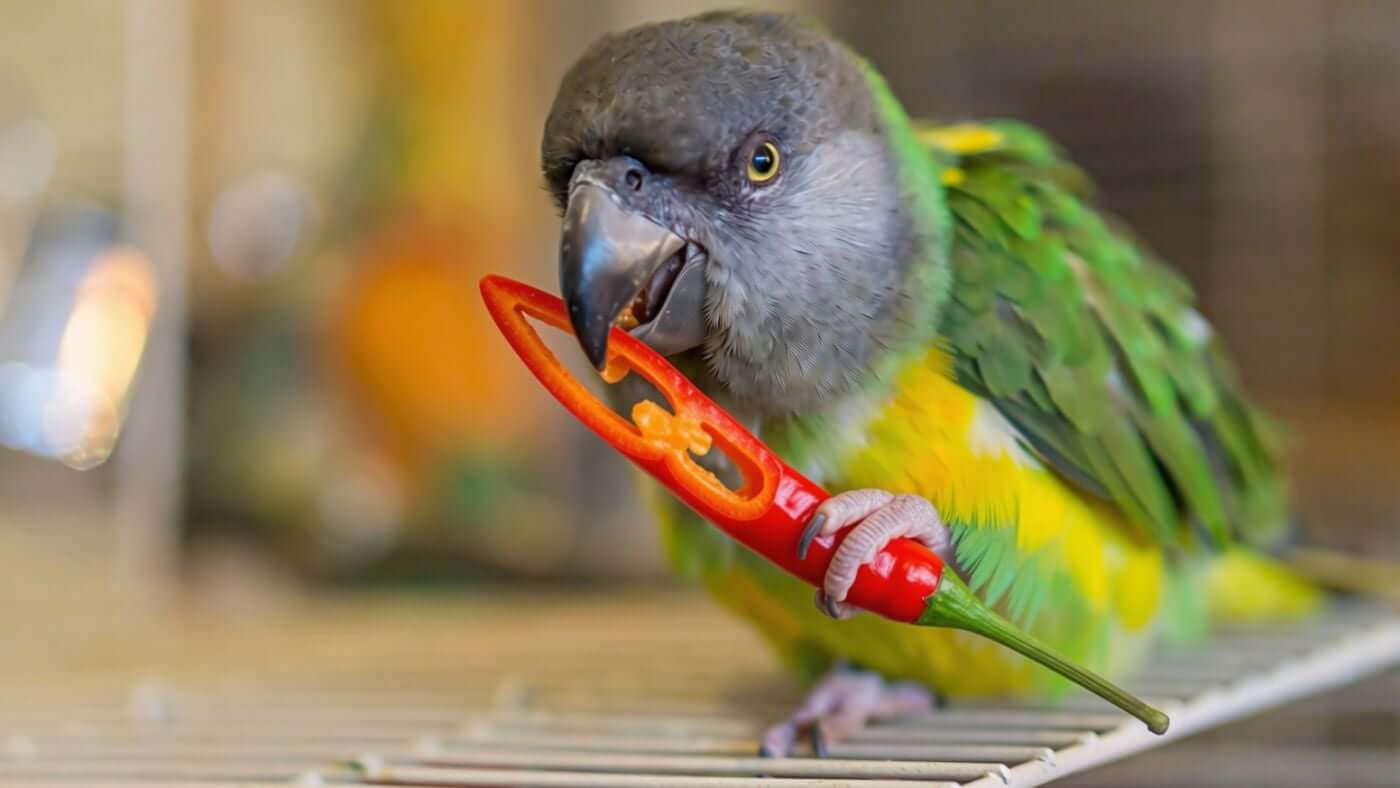
This is the part that often surprises parrot owners.
Yes, parrots can eat chilli peppers.
Chillies contain capsaicin, the compound responsible for the hot sensation humans experience when eating them. Birds are considerably less sensitive to the effects of capsaicin than mammals.
This difference has an interesting role in nature. Wild chilli plants benefit when birds eat their fruit and disperse the seeds. Mammals are much more likely to find capsaicin unpleasant, whereas birds can consume chilli fruits without experiencing the same intense burning sensation.
Research into avian capsaicin sensitivity has shown that birds respond very differently from mammals to this compound.
That is why you may see a parrot happily eating a chilli that would have you reaching for a glass of milk.
There is no nutritional reason to seek out extremely hot varieties, however. If your bird enjoys a normal fresh chilli, it can simply form part of the variety you offer.
Remember that your hands are not as tolerant as your parrot's beak. Wash them carefully after preparing hot chillies, particularly before touching your eyes or face.
Can Parrots Eat Pepper Seeds?
The small seeds found naturally inside fresh Capsicum peppers do not need to be treated in the same way as potentially hazardous fruit stones, such as those from stone fruits.
Birds naturally play an important role in dispersing Capsicum seeds, and wild birds can consume chilli fruits and pass the seeds on.
If you offer a fresh pepper, your parrot may therefore spend more time investigating the seeds and inner portion than eating the flesh itself.
However, this does not mean that seeds from all fruits and vegetables are automatically safe. Different plants contain very different compounds, so always check an unfamiliar food individually before offering it to your bird.
Raw or Cooked Peppers for Parrots?
Fresh raw pepper is one of the simplest ways to offer it.
Wash the pepper thoroughly and offer it chopped, sliced or in a larger manageable piece depending on the size of your bird.
Raw peppers also provide an interesting crunchy texture. Parrots do not simply consume food for calories. They use their beaks and feet to investigate, tear and manipulate it, so the way you present fresh food can contribute to enrichment.
Plain cooked pepper can also be offered, but avoid adding ingredients intended for human meals.
Jarred or prepared roasted peppers are also less suitable than plain fresh peppers because some contain considerable amounts of salt, oil, vinegar or other added ingredients.
When in doubt, fresh and plain is the simplest choice.
How to Prepare Peppers for Your Parrot
Start by washing the pepper thoroughly under clean running water.
Remove any spoiled, damaged or mouldy areas. You can then cut the pepper according to the size and preferences of your bird.
A small parrot might prefer finely chopped pieces, while an African Grey, Amazon, Cockatoo or Macaw may enjoy holding a larger strip in one foot and tearing pieces from it.
You can also chop pepper into a mixed vegetable bowl alongside other suitable fresh foods.
Always pay attention to hygiene when offering fresh produce. Fresh foods can spoil, particularly in a warm room, so do not leave uneaten vegetables sitting in the cage indefinitely.
Clean food bowls regularly and replace fresh food before it deteriorates.
How Much Pepper Can a Parrot Eat?
There is no universal number of grams of pepper that every parrot should eat.
A Budgie, Conure and Macaw have very different energy requirements, and even two parrots of the same species may have different nutritional needs.
Instead of concentrating on a precise pepper portion, concentrate on overall dietary balance and variety.
Peppers should be one of several suitable vegetables offered rather than filling your bird's bowl with the same ingredient every day.
Veterinary guidance on companion bird diets generally places nutritionally complete formulated food at the centre of the diet, with fresh vegetables and other appropriate foods making up a smaller proportion.
If your parrot has a medical condition, is overweight, is breeding or has been prescribed a particular diet, follow the recommendations of your avian vet rather than making major dietary changes based on general feeding advice.
How to Introduce Peppers to a Fussy Parrot
You prepare a beautiful bowl of fresh vegetables, put it into the cage and watch your parrot carefully pick out the one familiar food before throwing everything else onto the floor.
Sound familiar?
Many parrots are cautious about unfamiliar foods. A parrot refusing pepper once does not necessarily mean it dislikes peppers.
Try changing the way you serve it.
You might finely chop a little red pepper and mix it with vegetables your bird already recognises. Alternatively, offer a larger strip that your parrot can hold and investigate.
Different colours are also worth trying. A bird that ignores green pepper might be much more interested in a sweeter red or orange one.
Do not force your parrot to eat a new food and do not remove its established balanced diet in an attempt to make it hungry enough to try something unfamiliar.
Repeated, relaxed exposure is usually a much better approach.
Turn Pepper Into Enrichment
One advantage of fresh vegetables is that they can provide more than nutrition.
Instead of cutting every pepper into tiny pieces, occasionally allow your bird to do some of the work.
A larger piece of bell pepper gives your parrot an opportunity to hold, bite, tear and investigate its food. You can also combine different coloured vegetables in a fresh food bowl or use appropriate bird-safe feeding and foraging accessories.
Some parrots will carefully eat every piece.
Others will take one bite and enthusiastically throw the rest across the room.
That does not necessarily mean the experience was pointless. Manipulating, shredding and investigating appropriate foods can form part of a bird's normal exploratory behaviour.
Can Parrots Eat Peppers Every Day?
Peppers can be offered regularly, but variety remains important.
There is little reason to give your parrot a large serving of the same vegetable every day when so many suitable fresh foods are available.
Rotate peppers with other appropriate vegetables such as leafy greens, carrots, broccoli, squash and other bird-safe produce.
Different foods provide different combinations of nutrients as well as different shapes, smells, tastes and textures.
For your parrot, a varied fresh food bowl can therefore be both nutritionally useful and much more interesting.
Conclusion: Can Parrots Eat Peppers?
So, can parrots eat peppers? Yes. Fresh bell peppers and chilli peppers can both form part of a varied and appropriately balanced parrot diet.
Bell peppers are an easy vegetable to introduce, while chilli peppers are also suitable because birds are far less sensitive to capsaicin than mammals. Fresh peppers can be served raw and plain, and their colours, textures and inner seeds can give your parrot plenty to investigate.
Just remember that no single vegetable makes a complete diet. Peppers are most valuable when they are offered alongside a nutritionally appropriate main food and a varied selection of other suitable fresh produce.
If you originally asked can parrots eat peppers because you are trying to add more variety to your bird's meals, they are certainly worth trying. Your parrot may love them immediately, or you may need to offer them several times and in different ways before curiosity wins.
Either way, keep introducing safe variety and give your parrot the opportunity to decide what it enjoys.
Want to know more about feeding your parrot? Explore the Parrot Essentials Blog for practical guidance on nutrition, enrichment and everyday parrot care.
FAQs
Can parrots eat peppers?
Yes, parrots can eat peppers. Fresh bell peppers, sweet peppers and chilli peppers can be offered as part of a varied, balanced diet.
Can parrots eat bell peppers?
Yes. Parrots can eat red, yellow, orange and green bell peppers. Different colours have slightly different flavours, so it is worth offering a variety to see which your bird prefers.
Can parrots eat chilli peppers?
Yes. Birds are considerably less sensitive to capsaicin, the compound responsible for the heat in chillies, than mammals. Many parrots will happily eat fresh chilli peppers.
Can parrots eat pepper seeds?
Yes. The small seeds naturally found inside fresh bell and chilli peppers can be eaten by parrots. Some birds particularly enjoy picking the seeds from inside the pepper.
Do I need to remove pepper seeds before feeding my parrot?
No. You do not normally need to remove the small seeds from fresh bell or chilli peppers. Leaving the seeds and inner section intact can also give your parrot something interesting to investigate while eating.