Must-Have Parrot Accessories: Parrot Perches & Stands
Table of Contents
- The Link Between Parrot Accessories and Bird Wellbeing
- How to Shop Accessories by Parrot Species
- Must-Have Parrot Perches: The Foundation of a Healthy Cage Setup
- Types of Parrot Perches and Their Benefits
- Perch Sizing Guide by Species: Budgies, Cockatiels, Macaws, and More
- Parrot Stands and Play Gyms: Enrichment Beyond the Cage
- Parrot Harnesses: Safe Outdoor Adventures for Your Bird
- Accessory Checklist for Small Parrots: Budgies, Parrotlets, and Lovebirds
- Accessory Checklist for Medium Parrots: Cockatiels, Conures, and Caiques
- Accessory Checklist for Large Parrots: African Greys, Amazons, Macaws, and Cockatoos
- Where to Buy the Best Parrot Accessories and Avian Supplies in the UK
- FAQs
If you want your parrot to truly thrive, not just get by, the right parrot accessories matter more than many owners realise. They are not just extra items to fill a cage. They shape your bird's day, affecting how it rests, climbs, plays, explores, and feels in its environment.
In the wild, parrots spend their time flying, balancing on uneven branches, chewing bark, foraging, and staying mentally engaged. In our homes, they rely on us to recreate some of that variety in a safe and practical way. That is why choosing the right parrot accessories is not simply about appearance. It is about supporting your bird's physical health, mental stimulation, and emotional well-being every single day.
Among the most important items you can provide are perches and stands. These core accessories influence comfort, posture, movement, foot health, confidence, and enrichment. Get them right, and you build a stronger foundation for a happier, healthier parrot.
The Link Between Parrot Accessories and Bird Wellbeing
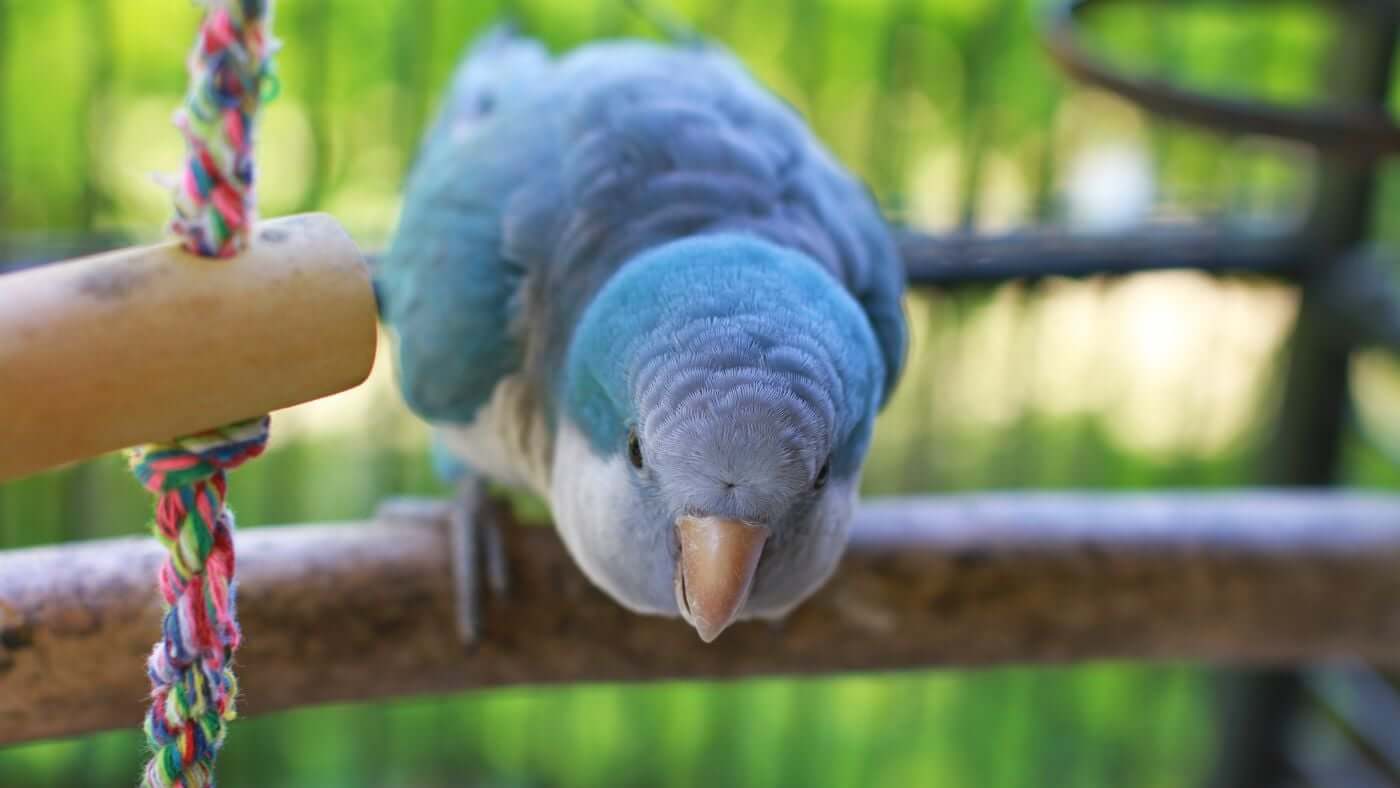
A parrot's environment has a direct effect on its quality of life. Good accessories encourage natural behaviour, while poor choices can contribute to discomfort, boredom, and frustration. A cage setup that lacks variety may leave a bird standing in the same place for long periods, using the same grip all day, with little reason to move or engage.
Well-chosen parrot accessories help support healthier feet, better balance, improved confidence, and more regular activity. They also make it easier for your bird to express normal behaviours such as climbing, chewing, resting, and exploring. This matters because parrots are highly intelligent and active animals. When their environment is too limited, behavioural problems can develop more easily.
That is why accessories should never be treated as an afterthought. They are part of the daily care your parrot depends on.
How to Shop Accessories by Parrot Species
One of the most helpful ways to shop is by thinking about your parrot's species, size, and behaviour. A budgie does not need the same setup as a cockatoo, and a Senegal's preferences may differ from those of a conure. The best accessory choices are the ones that suit your individual bird rather than following a one-size-fits-all approach.
Small parrots usually need lighter, narrower, and more compact items that they can grip and use comfortably. Medium parrots often benefit from a wider mix of textures and slightly sturdier designs. Large parrots need durable accessories that can handle stronger beaks, heavier bodies, and more powerful chewing habits.
If you are shopping by species, Parrot Essentials' Shop by Parrot Section can help you narrow down suitable options more easily.
Must-Have Parrot Perches: The Foundation of a Healthy Cage Setup
Perches are one of the most important parrot accessories you will ever buy. Your bird may spend a large part of the day standing, climbing from perch to perch, resting, eating, and sleeping. That means perch choice has a major impact on comfort and long-term health.
A cage with just one smooth dowel perch is rarely enough. It limits grip variation and does very little to mimic the surfaces a parrot would naturally use. Over time, that can place repeated pressure on the same areas of the foot.
A better setup includes multiple perches in different materials, textures, and diameters. This encourages movement, helps work the feet more naturally, and gives your bird choice throughout the day.
Types of Parrot Perches and Their Benefits
A varied perch setup is usually the most effective approach. Different perch types offer different advantages, and using a combination tends to create a more balanced environment.
Natural Wood Perches: Mimicking the Wild Environment
Natural wood perches are often one of the best additions to a parrot's cage. Their uneven surfaces more closely reflect the branches parrots would encounter in nature. That natural variation helps exercise the feet, reduce constant pressure on one area, and promote a more secure grip.
Many parrots also enjoy chewing and stripping bark, which adds another layer of enrichment. This makes natural wood perches useful not only for comfort but also for mental engagement. For many owners, they are the first perch type to prioritise when upgrading a cage setup.
If your current cage still relies heavily on smooth dowels, switching some of those out for natural options can make a noticeable difference.
Rope and Cotton Perches for Comfort and Grip Variety
Rope and cotton perches can be a very useful part of a balanced setup. They offer a softer texture underfoot and can often be bent into different shapes, which helps create more interesting movement routes around the cage or play area.
These perches are especially useful for adding comfort and grip variety. Some parrots enjoy them as resting spots, while others like using them as bridges or pathways. Older birds or birds that prefer a slightly softer surface may also benefit from having one available.
As with all soft materials, regular checks are important. If a rope perch becomes frayed or damaged, it should be replaced promptly.
Calcium and Sanded Perches for Nail and Beak Maintenance
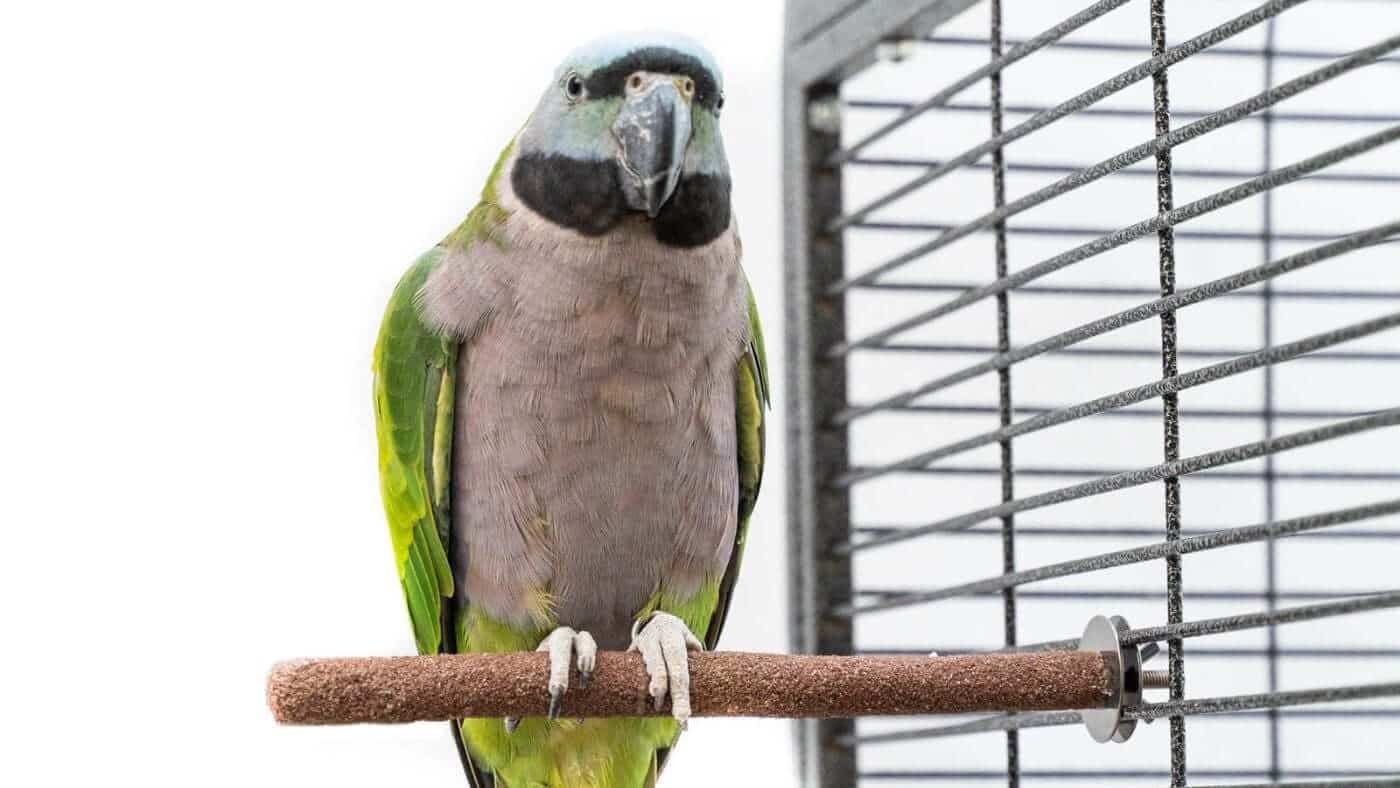
Calcium and sanded perches are often chosen to help with everyday grooming. They can assist with natural wear on nails and, in some cases, support beak maintenance too. This can be helpful when used as part of a varied environment.
That said, these should not be the only perches in the cage, nor should they be the main place your bird stands all day. Overuse can be too harsh for some parrots. The best approach is to treat them as one element within a broader mix of perch types.
Used sensibly, they can be a practical addition to your collection of parrot accessories without replacing the need for natural wood and other more comfortable surfaces.
How Many Perches Does Your Parrot Need and Where to Place Them?
There is no single number that suits every bird, because cage size and parrot size both matter. In general, most parrots benefit from at least three to five well-placed perches. The aim is to give your bird options without overcrowding the cage.
It helps to place one perch higher up as a sleeping spot, one close to food and water, and others in ways that encourage movement between areas. Try to avoid positioning perches directly above bowls where droppings can fall into food or water. It is also worth leaving enough open space for climbing and wing stretching.
Good placement can make even a modest cage layout feel more functional and more natural for your bird.
Perch Sizing Guide by Species: Budgies, Cockatiels, Macaws, and More
Perch diameter matters because your parrot needs to grip securely without its feet being overextended or forced into the same position all day. A perch that is too thin or too thick can be uncomfortable and less supportive over time.
- Budgies, parrotlets, and lovebirds: around 1 to 1.5 cm
- Cockatiels, small conures, and similar-sized parrots: around 1.5 to 2.5 cm
- African Greys, Amazons, and larger parrots: around 2.5 to 4 cm
- Macaws and cockatoos: 4 cm and above, depending on the bird
Rather than relying on one diameter, it is usually better to offer a mix. Variety supports better foot use and a more natural daily routine.
Parrot Stands and Play Gyms: Enrichment Beyond the Cage
Cage accessories are important, but out-of-cage enrichment matters too. Stands and play gyms give your bird a safe place to perch, climb, and interact with the family while outside the cage. They are especially helpful for parrots that spend regular time with their owners in living spaces rather than staying enclosed all day.
A good stand can encourage movement, reduce boredom, and create a more structured routine for out-of-cage time. It also gives your parrot a place that feels like its own, which can help reduce the temptation to explore unsafe furniture or household surfaces.
For many owners, stands quickly become some of the most useful parrot accessories in the home.
Tabletop Parrot Stands: Compact Solutions for Smaller Birds
Tabletop stands are especially useful for smaller species such as budgies, cockatiels, parrotlets, and lovebirds. They do not take up as much room as large floor stands, which makes them practical for homes where space is limited.
These stands can be moved around the house, set on a stable surface, and used for supervised play, training, or social time. A good tabletop stand offers your bird a clear place to perch and engage with its surroundings without needing a large dedicated area.
For many owners of smaller parrots, this is a simple but effective way to increase daily enrichment.
Parrot Harnesses: Safe Outdoor Adventures for Your Bird
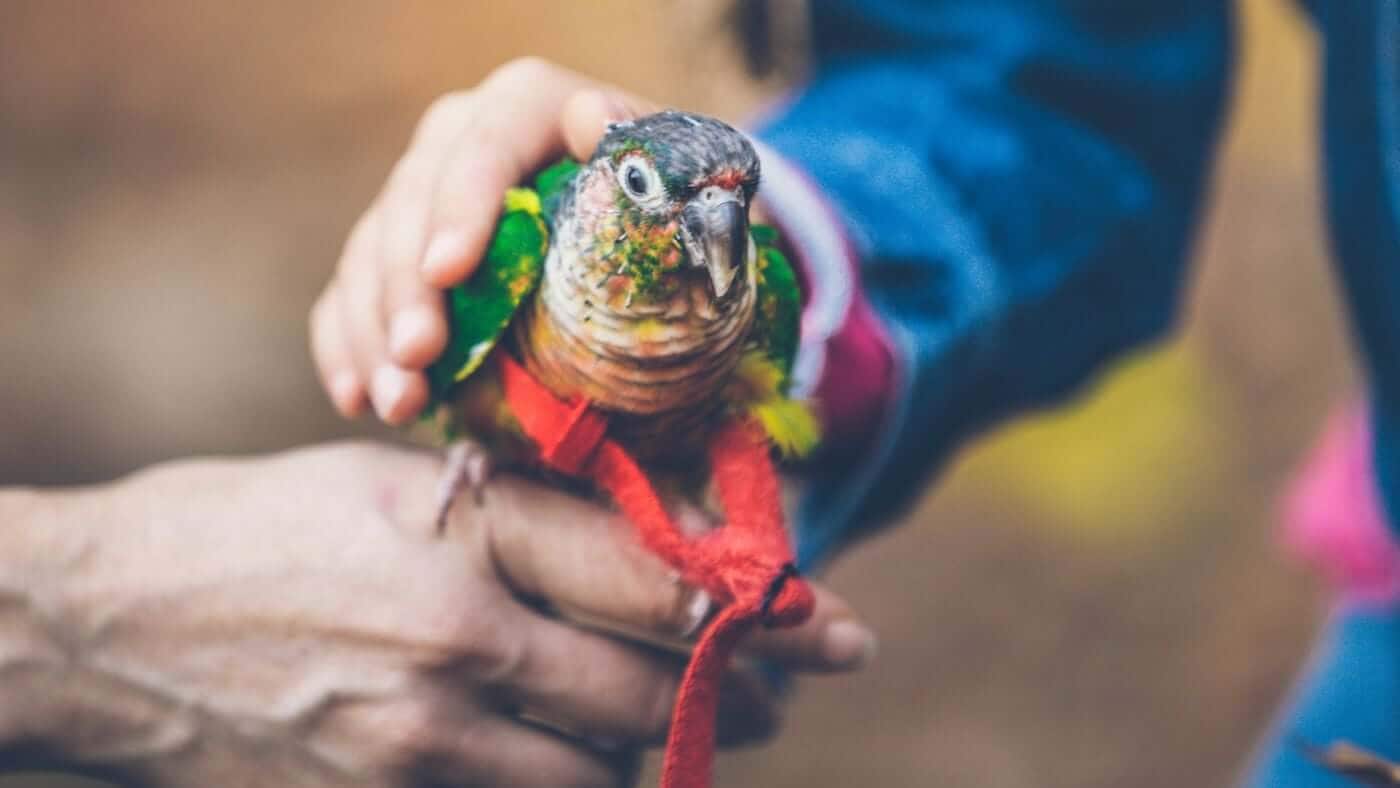
While perches and stands are the main focus of many setups, harnesses can also be a valuable accessory for some birds. Outdoor time can offer fresh air, new sights, and extra stimulation, but it also comes with obvious risks if a parrot is unsecured.
A properly fitted harness can help make outdoor experiences safer and more manageable. It allows your bird to enjoy supervised time outside while reducing the risk of flying off if startled.
Not every parrot owner will choose to use a harness, but it is certainly worth considering if you want to introduce safe outdoor experiences gradually.
Why Every Parrot Owner Should Consider a Harness
Fresh air and natural daylight can be enriching, and some parrots genuinely enjoy being outdoors once they are comfortable. The problem is that even a well-bonded bird can panic in an unfamiliar situation. A sudden sound, movement, or gust of wind can cause an instant flight response.
A harness offers a safer way to explore the outdoors together. It can also support bonding by giving you more opportunities to share calm, supervised experiences beyond the home.
As with all accessories, the key is to choose carefully and introduce it at your bird's pace.
Choosing the Right Harness: Size, Material, and Fit Guide
When selecting a harness, size is one of the first things to check. A harness should fit securely without rubbing, pinching, or restricting normal movement. Materials should be durable, bird-safe, and comfortable enough for short sessions while your parrot gets used to wearing it.
Here is the size guide for Parrot Essentials' Comfort-Fit Bird & Parrot Harness with Leash
- X-Small: For birds from 75-110 grams – Cockatiels, Small Conures (e.g. Green Cheeked). Rope length 120cm.
- Small: For birds from 110-190 grams – Senegals, Quakers, Caiques, Ringnecks, Rosellas, Medium Conures (Sun Jenday, Nanday, Blue-Crowned etc), Hahns Macaw. Rope length 120cm.
- Medium: For Birds from 190–450 grams – Small Cockatoos (Goffins, Galah, Lesser Sulphur etc), Most Amazons (Blue-Front, Lilac-Crowned, Orange-Winged etc), Timnehs, Jardines, Poinus. Rope length 130cm
- Large: For birds from 450–600 grams – African Greys, Eclectus, Larger Amazons (Mealy, Double Yellow Headed etc), Umbrella Cockatoos, Medium Macaws (Severe, Red Fronted etc). Rope length 130cm
- X-Large: For birds 600-1000 grams – Large Macaws (Blue & Gold, Military etc), Triton, Most Moluccans.Rope length 130cm
Step-by-Step: How to Introduce a Harness to Your Parrot
Harness training should be gradual and positive. Start by letting your parrot see the harness from a comfortable distance. Reward calm behaviour with praise or treats. Once your bird seems relaxed, allow it to investigate the harness more closely.
From there, take small steps. You might reward your bird for touching the harness, then for allowing brief contact, and later for tolerating parts of the fitting process. Keep sessions short, calm, and pressure-free. If your bird becomes stressed, slow down and return to an easier step.
Patience matters here. A rushed approach can create resistance, while a steady one can build confidence.
Accessory Checklist for Small Parrots: Budgies, Parrotlets, and Lovebirds
Small parrots usually benefit from:
- Thin natural wood perches
- At least one soft rope perch
- A compact tabletop stand for supervised out-of-cage time
- Lightweight accessories that are easy to grip and use comfortably
These birds may be small, but they still need variety, stimulation, and a setup that encourages movement and curiosity.
Accessory Checklist for Medium Parrots: Cockatiels, Conures, and Caiques
Medium parrots often benefit from:
- Natural wood perches in mixed diameters
- Durable rope perches for added comfort and interest
- Interactive play stands
- A balanced mix of accessories that support climbing and enrichment
These birds are often lively and playful, so their accessories should support regular activity and engagement.
Accessory Checklist for Large Parrots: African Greys, Amazons, Macaws, and Cockatoos
Large parrots usually need:
- Thick, heavy-duty natural wood perches
- Strong reinforced stands
- Highly durable materials that can handle strong beaks
- A more robust setup built for daily wear and regular use
Because these birds are powerful and intelligent, quality matters even more. Well-made accessories are worth the investment.
Where to Buy the Best Parrot Accessories and Avian Supplies in the UK
If you are looking for quality parrot accessories in the UK, it helps to shop somewhere that understands species differences and real-world parrot care. At Parrot Essentials, you can browse a wide range of perches, stands, and related items chosen to suit different birds and setups.
Whether you are upgrading your cage interior, adding a play stand, or building a more complete setup for a new bird, shopping by category can help you make better choices. You can explore the full collection here.
Choosing the right retailer makes it easier to find products that are practical, species-appropriate, and designed with bird welfare in mind.
FAQs
What are the most important parrot accessories to start with?
The essentials are a variety of perches and a suitable stand or play area. These form the foundation of your bird's daily comfort, movement, and enrichment.
How many perches should I have in my parrot's cage?
Most parrots benefit from at least three to five perches, depending on cage size. The key is variety in size, texture, and placement rather than just quantity.
Are natural wood perches better than dowel perches?
Yes, natural wood perches are generally better because they offer uneven surfaces that support foot health and encourage natural gripping behaviour.
Can sanded perches replace nail trimming?
Sanded perches can help maintain nails, but they should not replace regular checks. They work best as part of a mixed perch setup, not as the main perch.
Are rope perches safe for parrots?
Rope perches are safe when in good condition. They should be checked regularly for fraying or loose fibres and replaced if damaged.
Is a harness necessary for parrots?
A harness is not essential for every owner, but it can be useful if you want to safely introduce your parrot to outdoor environments.
Where can I buy quality parrot accessories in the UK?
You can find a wide range of species-appropriate parrot accessories, including perches and stands, at Parrot Essentials, designed with bird welfare in mind.