Parrot Body Language: What Eyes, Feathers, Posture and Beak Signals Can Mean
Parrot body language uses changes in the eyes, feathers, posture, beak, wings and tail to communicate excitement, relaxation, fear, discomfort or a desire for space, but individual signals should always be interpreted together and in context.
Living with a parrot means learning a language that has very little to do with words. Your bird may talk, whistle or call to you, but some of their most important messages are communicated silently.
A quick change in pupil size, feathers pulled tightly against the body or a slight shift in posture can tell you that your parrot's emotional state is changing. Learning to notice these signals can help you decide when to approach, when to continue an interaction and when your bird would prefer some space.
Understanding parrot body language can also make training easier and help prevent avoidable bites. Parrots often give increasingly obvious signals before resorting to biting, so recognising the earlier signs gives you an opportunity to respond before your bird feels the need to escalate.
The important thing is not to treat any single movement as having one fixed meaning. The same behaviour can mean different things depending on what happened immediately beforehand, your parrot's species and personality, and what the rest of their body is doing.
What Your Parrot's Eyes Can Tell You
One of the most noticeable eye behaviours in parrots is eye pinning, sometimes called eye flashing or pinpointing. The pupil rapidly expands and contracts, and the effect can be particularly easy to see in species with lighter irises.
Eye pinning generally indicates a heightened state of arousal or excitement. That excitement might be positive, such as enthusiasm about a favourite treat, person or activity. It can also occur when a bird is becoming territorial, overstimulated or ready to defend itself.
This is why 'pinning eyes = angry parrot' is too simplistic.
Look at everything else your bird is doing. A parrot pinning their eyes while eagerly approaching a familiar training treat presents a very different picture from one pinning their eyes while fanning the tail, stiffening the body and holding the beak ready to lunge.
You may also notice your bird staring intently at something or rapidly looking around the room. Wide eyes accompanied by a tense body and attempts to move away can indicate that your parrot is frightened or looking for an escape route.
If your bird suddenly becomes very focused on you, pause for a moment and look at the rest of their body before reaching towards them.
Reading Feather Position
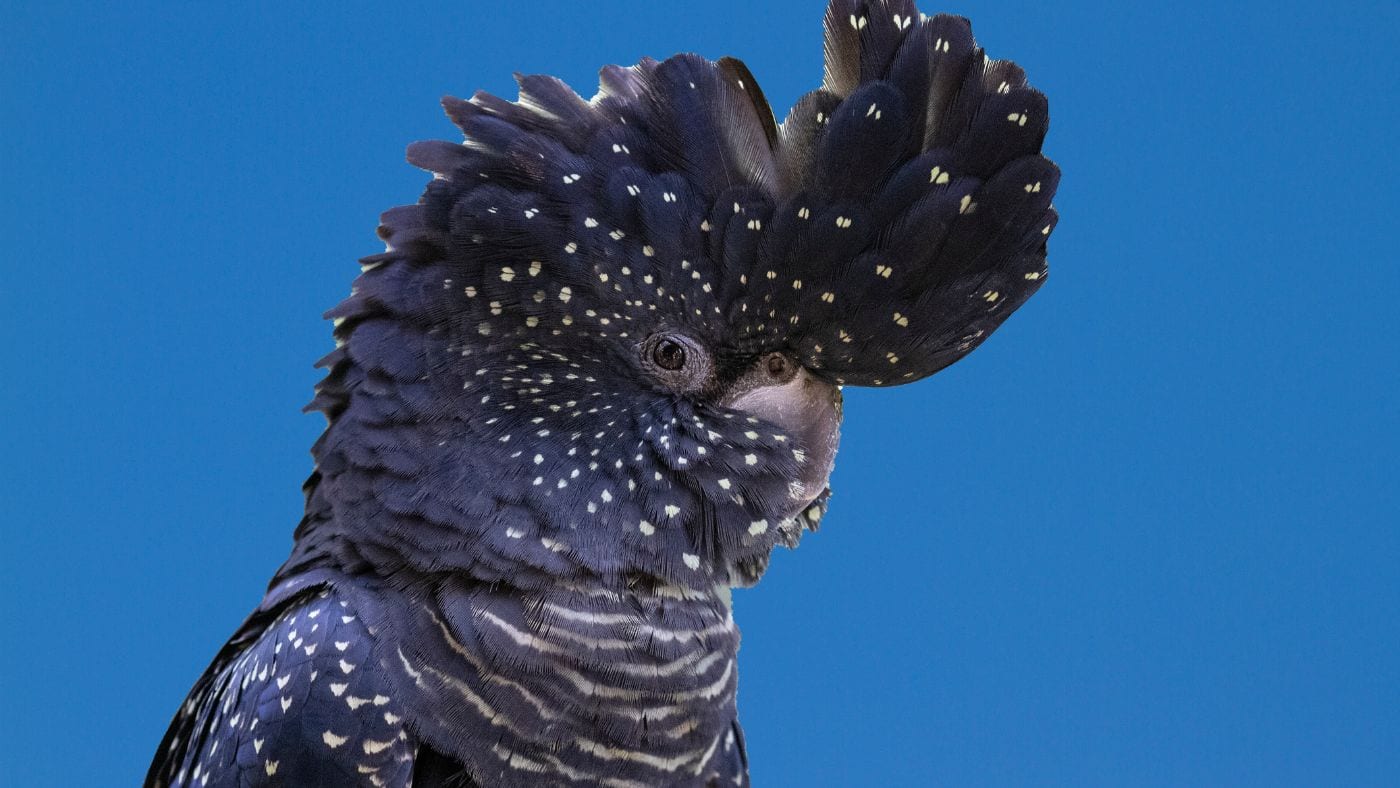
Feathers can dramatically change a parrot's appearance, but their position can also provide useful clues about how your bird is feeling.
A comfortable parrot may allow their feathers to sit relatively loosely against the body. You might see gentle fluffing while your bird is resting, preening or settling down.
Fluffed feathers do not automatically mean 'happy', however.
A bird may fluff certain feathers during excitement, displays or interactions with another bird or person. Some parrots deliberately make themselves appear larger when highly aroused. Cockatiels and cockatoos can also use their crests as particularly visible signals, raising them in response to both positive and negative excitement.
Feathers held very tightly against the body can be important too. A frightened parrot may become tall and narrow, with the feathers slicked tightly against the body while looking for a way to retreat.
This is another reason to read combinations rather than individual signs.
For example:
- Soft feathers, relaxed posture and quiet beak grinding can accompany relaxation.
- Tight feathers, a stretched body and repeated attempts to move away may suggest discomfort or fear.
- Raised head or neck feathers combined with eye pinning, a broad stance and a fanned tail can indicate intense excitement and may be a warning that you should give your bird more space.
Persistent changes in feather condition or unusual feather loss should not simply be interpreted as body language. Feather problems can have behavioural or medical causes and warrant advice from an avian vet.
Understanding Parrot Body Language Through Posture
Posture is one of the best signals to watch because it shows you what your bird is preparing to do.
A relaxed bird may perch comfortably with their body appearing balanced and loose. As their emotional state changes, you may notice the body becoming taller, flatter, lower or much more rigid.
A parrot leaning towards you may be interested in what you are doing or may want to approach. Some parrots crouch and position themselves towards a familiar person when seeking interaction.
Leaning away sends a very different message.
If your bird repeatedly shifts backwards as your hand approaches, respect that movement. Continuing towards them removes their opportunity to communicate politely and may eventually result in a stronger response.
Watch the feet as well. A parrot deliberately moving away, repositioning on the perch or lifting a foot defensively may be telling you that they are not comfortable with what is happening.
Body position can become particularly obvious during territorial or hormonal displays. Some parrots strut, lower their bodies, fan their tails or hold their wings differently when displaying. Sexual behaviour can also include strutting and fanning of the wings or tail, so context remains essential.
Learning your bird's normal posture gives you a useful baseline. Small deviations become much easier to recognise when you know what your individual parrot looks like when relaxed.
What Beak Signals Can Mean
A parrot's beak is not simply a feeding tool. It is used for climbing, exploring, playing, preening, manipulating objects, interacting with other birds and communicating with you.
That means contact with the beak should not automatically be interpreted as an attempt to bite.
Your parrot may gently use their beak to investigate your hand or steady themselves while stepping onto you. Some parrots also use their beak almost like an additional hand when climbing.
Beak grinding is commonly observed when parrots are comfortable and settling down. You may hear a gentle grinding sound while your bird is relaxed or becoming sleepy.
Beak clicking can have a different meaning. Depending on the bird and circumstances, clicking may occur during excitement or act as a warning to stay away.
An open beak deserves particular attention when combined with other warning signals. An open beak, forward lunge, tense posture and intense focus towards your hand are clear reasons not to continue approaching.
Parrots may also direct their beaks towards objects as part of courtship, territorial or display behaviour. For example, some birds bang or tap their beaks against surfaces.
Once again, ask what happened before the behaviour and what the rest of the body is telling you.
Wings And Tail Signals
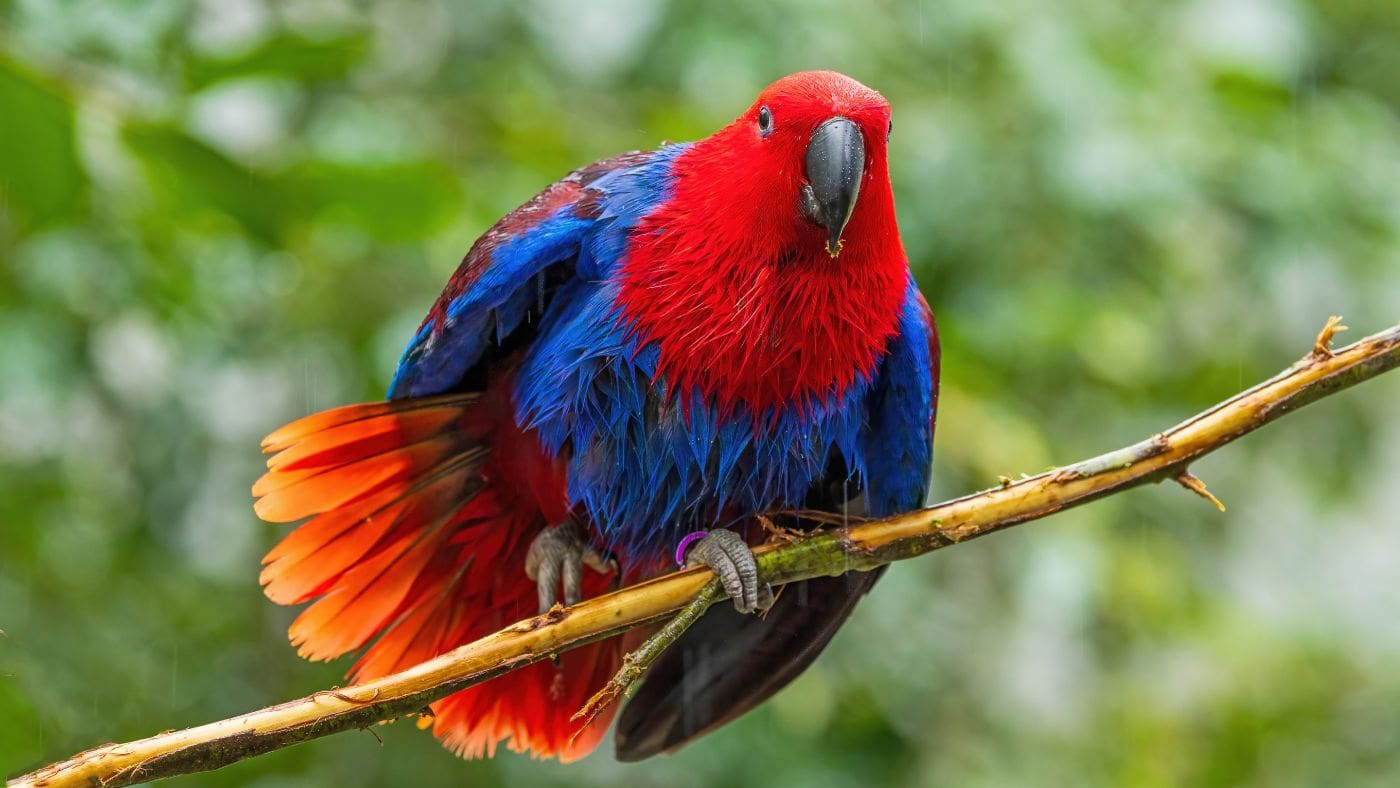
Wings and tails can make subtle emotions suddenly very visible.
One of the easiest signals to recognise is tail fanning, when the tail spreads noticeably rather than remaining in its usual position. Tail fanning often accompanies a heightened state of excitement and may occur alongside eye pinning.
If you see a fanned tail together with a rigid body, raised feathers, eye pinning or defensive movements, give your parrot some room rather than testing whether they will tolerate your hand.
Wing movements are more complicated.
A parrot may stretch one wing, briefly lift the wings, quiver them, hold them away from the body or use exaggerated movements during displays. Young birds can also use wing movements when begging.
Some wing and tail displays may be related to courtship or reproductive behaviour rather than aggression. Courtship displays can include eye pinning, tail fanning and wings held stiffly from the shoulders.
The movement itself is therefore only part of the message.
Context Changes Everything
Perhaps the most important lesson in reading parrot body language is that there is no universal dictionary where one movement always translates into one emotion.
Imagine your parrot pins their eyes.
What happened immediately beforehand?
Did you show them their favourite treat?
Did a stranger enter the room?
Did another bird approach their cage?
Did you reach towards a toy they were guarding?
Are they displaying to another parrot?
The physical signal may be similar while the motivation behind it is completely different.
Species differences matter too. Amazons, for example, can produce particularly obvious combinations of eye pinning, raised head and neck feathers, tail fanning and a broad stance when highly excited. Cockatoos and cockatiels have highly expressive crests that provide an additional visual signal.
Our species guides can help you learn more about the typical characteristics and behaviour of different parrots, but individual personality still matters.
Your bird's history also influences their responses. A hand-reared young parrot, a newly rehomed adult and a rescue bird that has previously learned to fear hands may react very differently to exactly the same situation.
Instead of trying to memorise isolated signals, become familiar with your parrot's baseline.
Ask yourself:
- What does my bird look like when completely relaxed?
- What changes when they become excited?
- What are their earliest signs of discomfort?
- What happens immediately before they move away or attempt to bite?
Those observations will teach you far more than trying to assign a rigid meaning to every feather movement.
How Reading Body Language Can Help Prevent Bites
A bite can feel sudden to you without necessarily being sudden from your parrot's perspective.
Before biting, parrots may communicate through increasingly obvious changes in their eyes, feathers, posture, movements and vocalisations. When those signals repeatedly fail to make an unwanted interaction stop, a bird may discover that biting works.
Imagine that you reach towards your parrot.
Your bird leans away.
You continue.
Their feathers tighten and their body becomes tense.
You continue.
They open their beak.
You continue.
They lunge.
From your perspective, your parrot 'suddenly bit'. From their perspective, several attempts at communication may have been ignored.
When you notice your bird becoming uncomfortable, stop the interaction or increase the distance. Continuing to push your bird when they are displaying signs of fear, anxiety or aggression can make the situation worse and may teach them that subtler signals are ineffective.
This does not mean you have to avoid everything your bird dislikes forever. Instead, you can gradually teach comfortable behaviours through positive reinforcement.
For example, if your parrot is nervous about stepping onto your hand, structured training can help you build the behaviour gradually rather than repeatedly forcing the interaction.
Providing suitable parrot toys can also give your bird appropriate opportunities to chew, forage, investigate and direct their energy towards enriching activities.
When Body Language Could Be A Health Warning
Behavioural changes should not always be assumed to be emotional.
Birds can conceal signs of illness, so an unusual posture or a major change from your parrot's normal behaviour deserves attention.
If your normally active bird suddenly becomes persistently fluffed, unusually quiet, weak, reluctant to move or consistently sits differently from normal, contact an avian vet rather than assuming your bird is simply tired or unhappy.
Veterinary examinations consider posture, feathering, behaviour and general attitude alongside physical examination because changes in these areas can provide useful information about a bird's health.
Knowing your bird's everyday behaviour therefore has another benefit: you are more likely to notice when something genuinely changes.
Learn To Listen To What Your Parrot Is Showing You
Understanding parrot body language is less about memorising a list of signals and more about becoming a careful observer.
Watch the eyes, feathers, posture, beak, wings and tail together. Consider what happened immediately before the behaviour and learn the patterns that are normal for your individual bird.
Most importantly, respect the quieter signals.
You do not need to wait for a lunge or bite to recognise that your parrot wants more space. Responding when your bird first leans away, stiffens or shows discomfort teaches them that subtle communication works.
As you become better at reading parrot body language, everyday interactions can become calmer and more predictable. You will know when your bird is interested, when excitement is building, when training is going well and when it is better to give them a little space.
That understanding is one of the foundations of a trusting relationship: not simply teaching your parrot to understand what you want, but learning to understand what your parrot is telling you too.
FAQs
What is parrot body language?
Parrot body language is the way parrots communicate through their eyes, feathers, posture, beak, wings, tail and movements. These signals can indicate relaxation, excitement, fear, discomfort or a desire for space.
What does eye pinning mean in parrots?
Eye pinning usually shows heightened excitement or arousal. It can happen when a parrot is interested in a treat, person or activity, but it may also appear during territorial or defensive behaviour, so always check the rest of the body language too.
Why does my parrot fluff up its feathers?
Parrots may fluff their feathers when they are relaxed, resting, preening or settling down. Fluffing can also occur during excitement or displays, so it is important to consider posture, eye movements and the situation.
How can I tell if my parrot is uncomfortable?
Signs of discomfort can include leaning away, tightening the feathers against the body, moving away from you, freezing, opening the beak, becoming rigid or trying to escape. Respecting these early signals can help prevent bites.
What does it mean when a parrot fans its tail?
Tail fanning often indicates increased excitement or arousal. If it appears alongside eye pinning, raised feathers or a tense posture, your parrot may be overstimulated and may need more space.