Parrot Mental Stimulation Ideas That Work
Looking for practical parrot mental stimulation ideas that actually make a difference? If your bird seems bored, restless, noisy, destructive or simply too clever for its own good, adding more mental enrichment to the day can help more than many owners realise.
Parrots are not designed to sit in one place with food handed to them in a bowl. In the wild, they spend much of their time searching, chewing, climbing, investigating, communicating and solving little problems throughout the day. In our homes, life is much safer, but it can also become too predictable. That is where good enrichment comes in.
Below, we will look at simple, realistic parrot mental stimulation ideas you can use at home, whether you have a budgie, cockatiel, conure, African Grey, Amazon, cockatoo or macaw.
Why Mental Stimulation Matters for Parrots
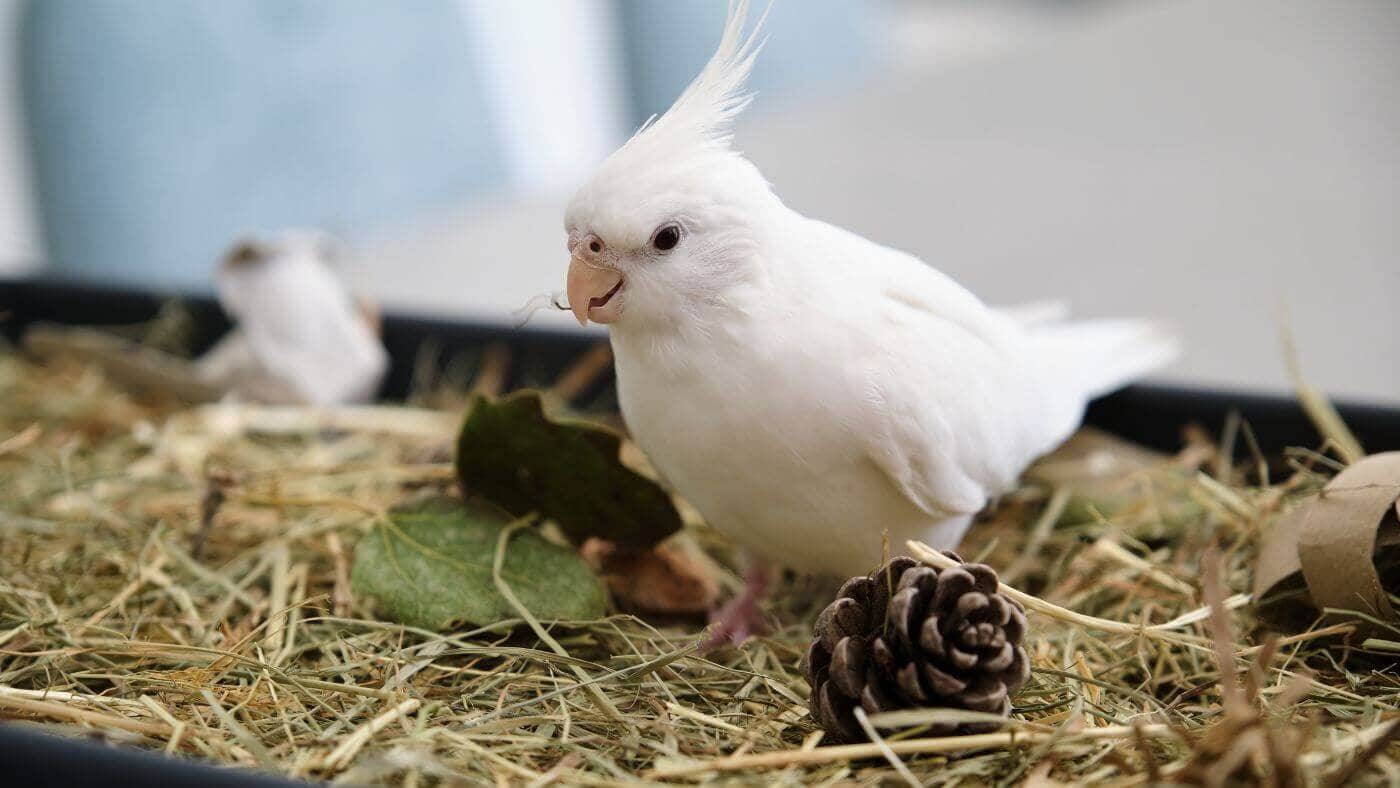
Mental stimulation is not just about keeping your parrot entertained. It supports their confidence, emotional well-being, and natural behaviour. A bird with nothing to do may start creating their own entertainment, and that can sometimes mean chewing furniture, screaming for attention, over-preening or becoming frustrated.
Good enrichment gives your parrot a healthy outlet for their energy and intelligence. It encourages them to use their beak, feet, body and brain in ways that feel natural.
| Without Enough Stimulation | With Better Daily Enrichment |
| More boredom and frustration | More curiosity and confidence |
| Destructive chewing | Safe chewing outlets |
| Food eaten too quickly | Natural foraging behaviour |
| Repetitive behaviour | More variety and problem-solving |
| Attention-seeking noise | Healthier engagement |
Turn Food Into a Small Challenge
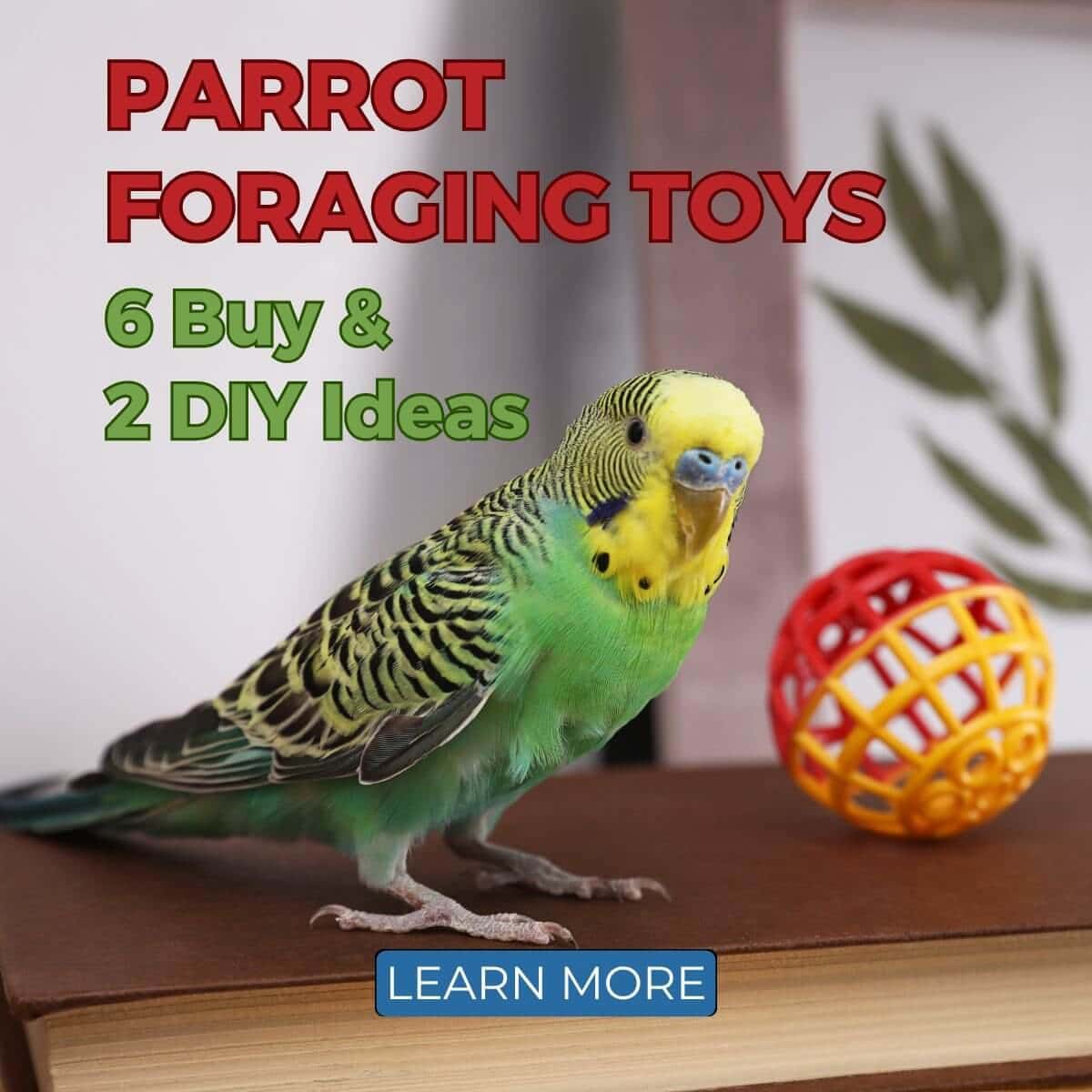
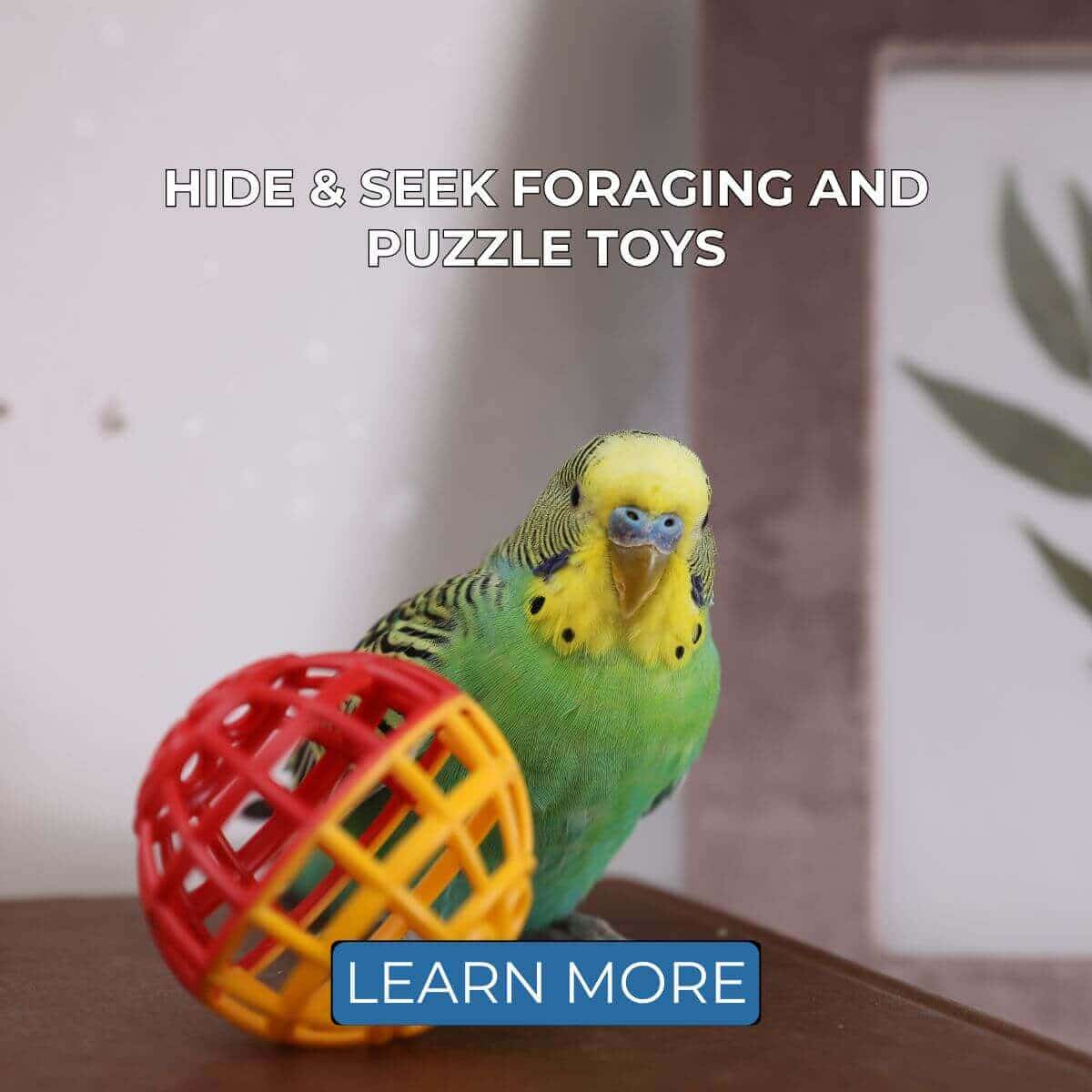
One of the easiest ways to keep your parrot busy is to stop serving every meal in the same open bowl. You do not need to hide all of their food straight away, especially if your bird is new to foraging, but you can start by making a small part of the meal more interesting.
Try placing a few pellets, seeds or small treats inside:
- A folded piece of paper.
- A cardboard cup.
- A vine ball.
- A simple foraging toy.
- A paper parcel.
- A small cardboard tube.
At first, leave the food partly visible so your bird understands the idea. Once they work it out, you can make it slightly more challenging by folding the paper tighter or hiding the treat deeper inside.
This works well because it encourages natural searching behaviour. Instead of eating in seconds and then looking for something else to do, your parrot has to think, investigate and work for the reward.
Use a Foraging Box
A foraging box is one of the most useful enrichment ideas because it suits so many different birds. You can use a shallow cardboard box or tray and fill it with safe materials such as shredded paper, paper straws, cardboard pieces, vine balls, foot toys and small natural chew items.
Then hide a few favourite treats inside and let your bird explore. Some parrots will dive in immediately, while others may need time to build confidence. If your bird is nervous, start with the box outside the cage or place a few treats clearly on top so it does not feel too strange.
Good foraging box fillers include:
| Filler Idea | Why It Works |
| Shredded paper | Encourages digging and tearing |
| Cardboard pieces | Safe chewing outlet |
| Vine balls | Easy to hide treats inside |
| Foot toys | Encourages holding and exploring |
| Palm leaf pieces | Great for shredding |
| Paper straws | Lightweight and easy to move |
This is especially helpful for parrots that enjoy digging, throwing things, chewing or making a mess. Rather than trying to stop those behaviours completely, you are giving your bird an appropriate place to do them.
Rotate Toys Instead of Overfilling the Cage
Many owners add more and more toys when their parrot seems bored, but too many toys in the cage can become overwhelming or simply ignored. A better approach is to rotate toys regularly.
Keep a few toys in the cage and store the rest away. Every week or two, change one or two items. A toy your bird ignored last month may suddenly become interesting again when it returns after a break.
A balanced toy rotation can include:
- Shredding toys.
- Wooden chew toys.
- Foraging toys.
- Foot toys.
- Climbing toys.
- Preening toys.
- Noise-making toys.
This gives your parrot different ways to use their beak, feet and brain throughout the week without making the cage feel crowded.
Make Vegetables More Interesting
Fresh vegetables are much more exciting when they are offered in a way that encourages your parrot to work with them. Instead of chopping everything into tiny pieces and placing it in a bowl, try offering larger chunks on a bird-safe skewer, clipping leafy greens to the cage bars or weaving thin slices through a toy.
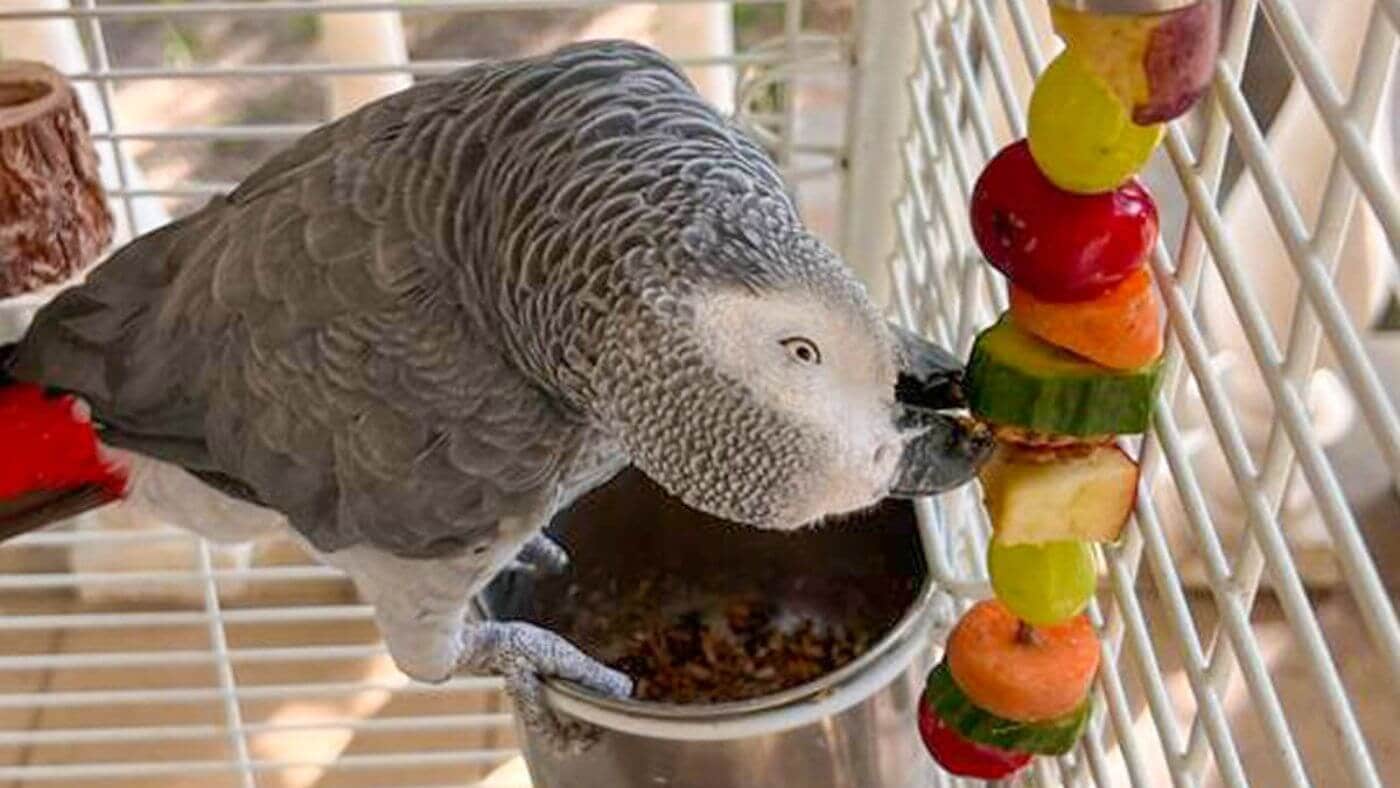
Vegetables that often work well for enrichment include:
- Carrot sticks.
- Broccoli florets.
- Pepper slices.
- Cucumber pieces.
- Romaine lettuce.
- Sugar snap peas.
- Kale or other leafy greens.
Many parrots enjoy tearing, holding and exploring food, even if they do not eat every piece straight away. This is one of those parrot mental stimulation ideas that also supports healthier feeding habits, especially for birds that are picky with vegetables.
Teach Simple Tricks
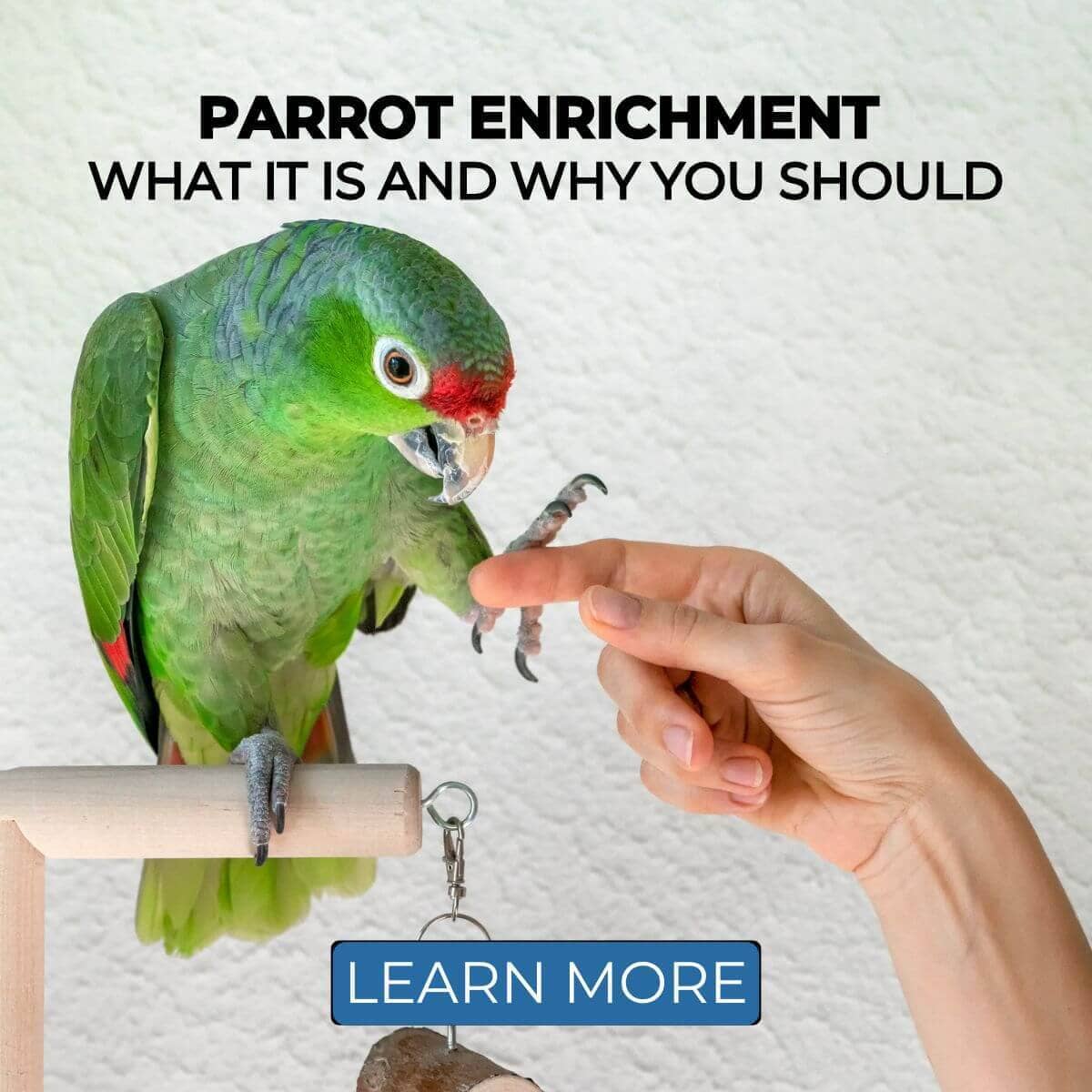
Training is not just about control. It is one of the best ways to exercise your parrot's mind while building trust between you.
Start with simple behaviours such as:
- Stepping up.
- Touching a target stick.
- Turning around.
- Waving.
- Placing an object into a cup.
- Stepping onto scales.
Keep sessions short and positive. Five minutes is often enough, especially for small birds or parrots that are easily distracted.
The aim is not to force your bird to perform. The real value is in the learning process. Your parrot has to listen, focus, make choices and understand what earns the reward. That kind of thinking can be surprisingly tiring in a healthy way.
Give Your Parrot Safe Things to Destroy
If you live with parrots, you know they love to chew, shred and dismantle things. This is not bad behaviour. It is normal parrot behaviour that needs a safe outlet.
Good materials include:
| Material | Best For |
| Palm leaf | Shredding and tearing |
| Balsa wood | Gentle chewing |
| Cardboard | Destruction and foraging |
| Paper sticks | Small bird enrichment |
| Vine balls | Treat hiding and chewing |
| Cork | Chewing and texture |
| Loofah | Shredding and picking |
Larger parrots may need tougher materials, while smaller birds often prefer lightweight items they can grip and pull apart easily.
The important thing is to give your bird something they are allowed to destroy. A parrot with no safe chewing outlet may turn to furniture, wallpaper, cage bars or anything else within reach.
Move Perches and Play Areas Around
You do not need to completely rearrange your parrot's cage every few days, but small changes can make their environment more interesting. Moving a perch slightly, adding a new natural branch or changing where a toy hangs can encourage your bird to explore.
Outside the cage, a play stand or safe climbing area can also make a big difference. Add a few foot toys, a small foraging activity or a chewable item and your parrot has somewhere to stay busy while still being part of the household.
For cautious birds, make changes slowly. Some parrots love novelty, while others need time to accept anything new.
Play Simple Thinking Games
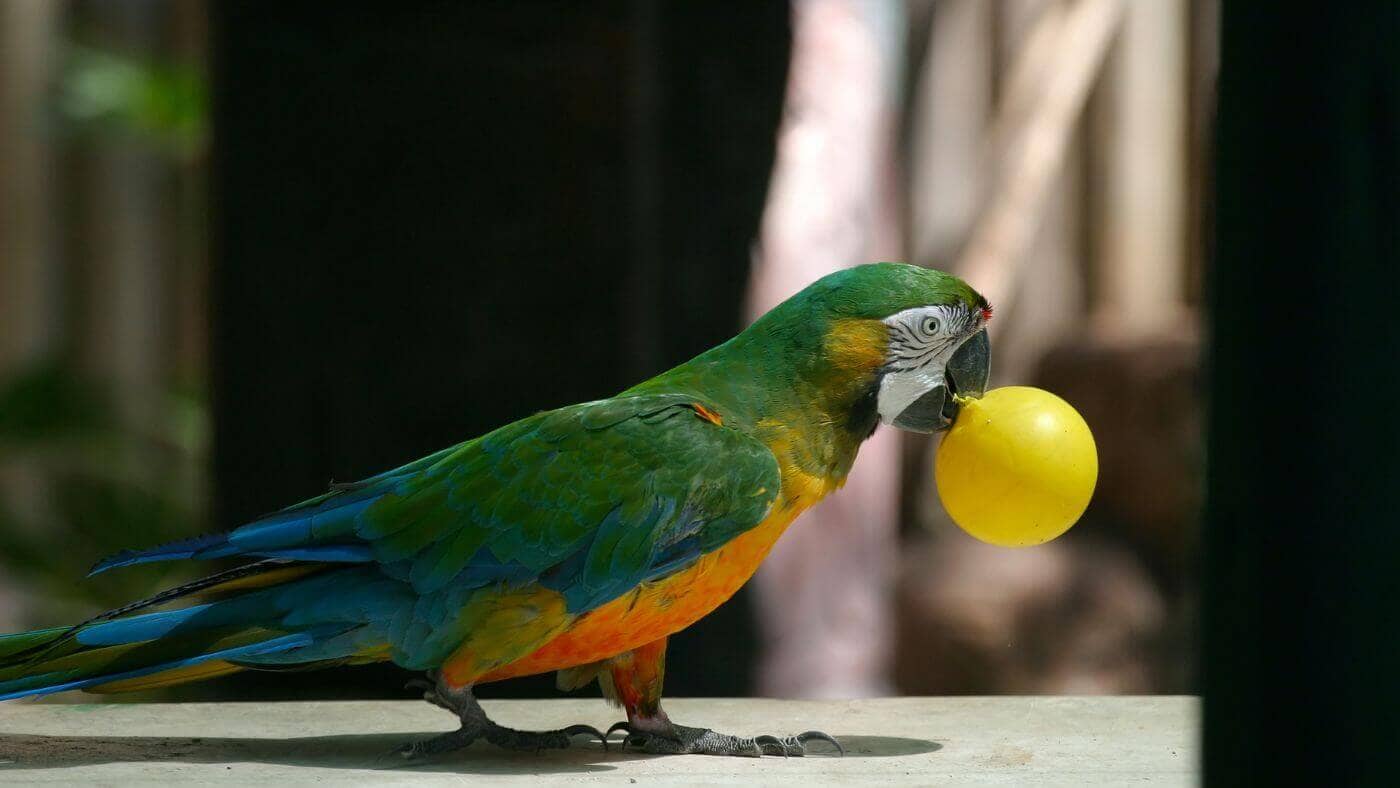
Not every enrichment activity needs to involve a toy. Some of the best parrot mental stimulation ideas are quick games you can play during the day.
Simple games include:
| Game | How to Play |
| Which hand? | Hide a treat in one hand and let your bird choose |
| Colour touch | Ask your bird to touch a chosen colour |
| Drop it in | Teach your bird to place an item into a cup |
| Find the treat | Hide a treat under paper or inside a small toy |
| Bring it back | Reward your bird for retrieving a small object |
These games are simple, but they give your parrot a reason to focus on you and solve a small problem. Over time, they can also help improve confidence and communication.
Let Them Be Part of Your Routine
Parrots are social birds, and many enjoy feeling involved in everyday life. This does not mean your bird needs constant attention, but it does mean that quiet shared moments can be enriching too.
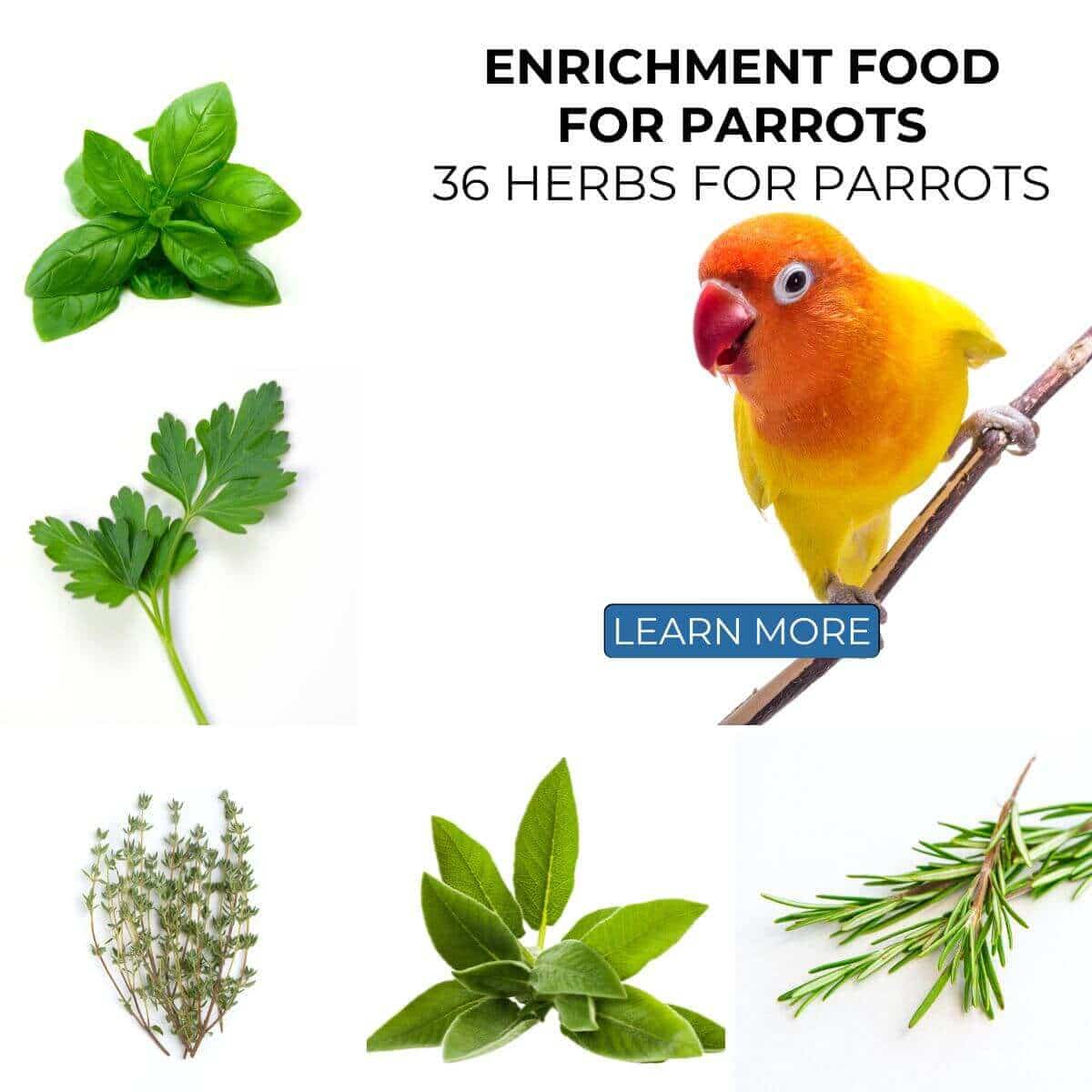
You might offer vegetables while you prepare your own food, talk to your bird while tidying, play music, read aloud or let them sit safely nearby while you work. For many parrots, being included in the rhythm of the home is mentally stimulating because there is movement, sound and interaction.
Of course, this should always be supervised, especially around kitchens, open windows, other pets and anything unsafe.
Match the Activity to Your Bird's Personality
The best enrichment plan is not the one with the most toys. It is the one that suits your bird.
| Bird Personality | Enrichment Ideas That May Work Well |
| Shredder | Paper, palm leaf, cardboard, soft wood |
| Problem-solver | Puzzle toys, target training, colour games |
| Chewer | Wood, cork, natural branches, chew toys |
| Climber | Ladders, ropes, play stands, varied perches |
| Food-motivated | Foraging toys, treat parcels, hidden snacks |
| Nervous or cautious | Easy foraging, familiar toys, slow changes |
Watch what your parrot naturally chooses to do. Do they chew, climb, throw things, dig, pull knots apart or search for food? Their behaviour will tell you which enrichment ideas are most likely to work.
Final Thoughts on Parrot Mental Stimulation Ideas
The most effective parrot mental stimulation ideas are not always complicated. Often, the best results come from small daily changes: hiding a treat in paper, offering vegetables differently, rotating toys, teaching a simple trick or giving your bird something safe to destroy.
What matters most is that your parrot has regular opportunities to think, explore and use natural behaviours. A mentally stimulated bird is more likely to be confident, engaged and settled in their environment.
Start with one or two ideas and build from there. Once you see what your bird enjoys, it becomes much easier to create a routine that keeps them busy in a healthy, positive way.
FAQs
How can I mentally stimulate my parrot every day?
The easiest way is to combine several activities throughout the day. Hide treats in paper, use foraging toys, rotate toys regularly, offer fresh branches, teach simple tricks and allow supervised exploration outside the cage. Small daily activities are often more effective than occasional large changes.
What are the best parrot mental stimulation ideas for beginners?
Simple foraging activities are usually the best place to start. Try hiding treats inside folded paper, cardboard tubes or vine balls. These activities encourage natural problem-solving without overwhelming your bird.
How often should I rotate my parrot's toys?
Most parrots benefit from toy rotation every one to two weeks. Rather than filling the cage with lots of toys at once, keep some in storage and swap them regularly to maintain interest.
Can mental stimulation help reduce screaming?
In some cases, yes. Boredom can contribute to excessive vocalisation. Providing more opportunities for foraging, training and enrichment may help reduce attention-seeking behaviours. However, screaming can also have medical, environmental or social causes.
Can training be considered mental stimulation?
Absolutely. Training encourages your parrot to focus, learn and solve problems. Even simple behaviours such as stepping up, touching a target stick or turning around provide valuable mental enrichment.