Hawaiian Endangered Birds: The Fight To Stop More Extinctions
Hawaiian endangered birds are facing an escalating threat from avian malaria spread by invasive mosquitoes, with conservation teams now using mosquito control, captive breeding and habitat protection to prevent further extinctions.
Hawai'i is home to remarkable birds found nowhere else in the world. Unfortunately, several of its remaining native forest species are now declining at an alarming rate.
The situation has become particularly urgent on Kaua'i. In 2026, conservationists marked one year since the last known wild 'Akikiki was seen, while efforts to protect other threatened birds from mosquito-borne disease continue across the islands.
Why Hawaiian Endangered Birds Are Disappearing
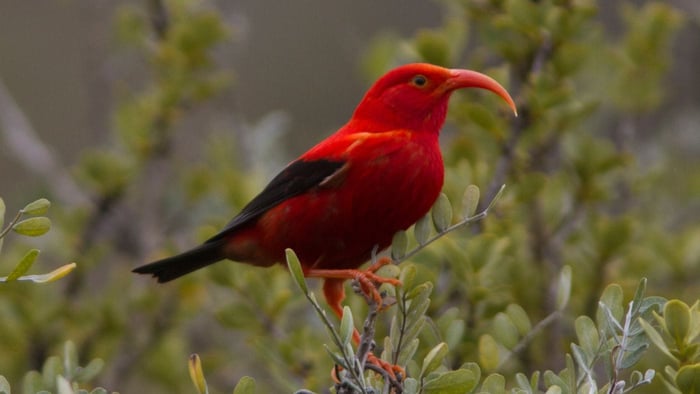
Avian malaria is one of the biggest threats facing Hawaii's native forest birds.
Native Hawaiian birds evolved without mosquitoes and have little natural resistance to the diseases they carry. According to the Hawai'i Department of Land and Natural Resources, many surviving forest birds are now concentrated in cooler, high-elevation habitats where mosquito numbers have historically been lower.
As temperatures change, mosquitoes are able to survive at higher elevations, reducing the amount of safe habitat available to vulnerable species.
Other pressures include habitat loss, invasive predators and changes to native forests, but mosquito-borne disease has become one of the most urgent conservation challenges.
What Happened To The 'Akikiki?
The decline of the 'Akikiki shows just how serious the situation has become.
On 29 August 2025, field biologists saw a female 'Akikiki named Pakele in the forests of Kaua'i. She has not been seen since and is considered the last known wild member of her species.
In August 2026, the Kaua'i Forest Bird Recovery Project honoured Pakele one year after that final sighting.
There is still hope for the species. Four of Pakele's offspring survive within the conservation breeding population, alongside other 'Akikiki being cared for in protected facilities.
The long-term goal is that captive-bred birds could eventually return to Kaua'i if their forest habitat can once again be made safe enough for them.
How Conservationists Are Fighting Avian Malaria
One of the most ambitious current conservation projects focuses directly on the mosquitoes spreading avian malaria.
The Birds, Not Mosquitoes partnership is working to reduce invasive southern house mosquito populations in important Hawaiian forest bird habitats.
One method uses the Incompatible Insect Technique, or IIT. Male mosquitoes carrying a different strain of the naturally occurring bacterium Wolbachia are released into the environment. When these males mate with wild females, their eggs do not hatch.
Because male mosquitoes do not bite, the aim is to gradually reduce mosquito numbers without introducing mosquitoes that can spread disease.
In February 2025, conservation teams carried out the first release of incompatible male mosquitoes on Kaua'i's Alaka'i Plateau following years of research, planning and regulatory review.
Which Hawaiian Birds Are At Risk?
The 'Akikiki is not the only species in trouble.
The Hawai'i Department of Land and Natural Resources currently identifies several native forest birds as being at risk, including the 'Akeke'e, 'I'iwi, Kiwikiu, 'Akohekohe, Palila and O'ahu 'Elepaio.
You can see the current list of threatened and endangered Hawaiian species through the state's Division of Forestry and Wildlife.
The 'I'iwi is particularly vulnerable to avian malaria. State wildlife information reports that nine out of ten experimentally infected 'I'iwi died after receiving just one bite from a malaria-infected mosquito.
Conservation Goes Beyond Mosquito Control
Reducing mosquitoes is only one part of the response.
Conservation teams are also monitoring surviving wild populations, protecting native forest habitat, managing invasive predators and maintaining conservation breeding programmes.
Recent declines on Kaua'i have become so serious that conservation teams are also collecting eggs and, in some cases, adult birds to preserve genetic diversity and investigate future moves to safer habitat.
The Kaua'i Forest Bird Recovery Project continues to publish updates on this rapidly changing conservation work.
Can Hawaii's Endangered Birds Still Be Saved?
The disappearance of the last known wild 'Akikiki is a sobering reminder of how quickly a species can reach the edge of extinction.
However, conservationists now have tools that offer other Hawaiian endangered birds a better chance. Mosquito suppression, conservation breeding, habitat management and intensive monitoring are all being used together rather than relying on a single solution.
The survival of Pakele's offspring also shows why acting before every wild bird disappears matters. Conservation breeding cannot replace a healthy wild population, but it can preserve a species while work continues to make its natural habitat safer.
Protecting Hawaiian endangered birds now means moving quickly enough to prevent the next species from following the same path. The work taking place across Kaua'i and Maui could determine whether some of Hawaii's rarest birds remain part of the islands' forests for generations to come.
FAQs
Why are Hawaiian endangered birds disappearing?
Many Hawaiian endangered birds are threatened by avian malaria, invasive mosquitoes, habitat loss and introduced predators. Some species are now restricted to small areas of suitable forest.
What is avian malaria?
Avian malaria is a disease caused by parasites transmitted by mosquitoes. Native Hawaiian birds evolved without this disease, so some species have very little natural resistance to infection.
Why are mosquitoes such a problem in Hawaii?
Mosquitoes are not native to Hawaii. As warmer conditions allow them to survive at higher elevations, they can reach forest habitats that once provided safer refuges for native birds.
What happened to the 'Akikiki?
The last known wild 'Akikiki, a female named Pakele, was last seen in August 2025. The species now survives through birds held in conservation breeding programmes.
Which Hawaiian birds are most at risk?
Threatened species include the 'Akikiki, 'Akeke'e, 'I'iwi, Kiwikiu, 'Akohekohe, Palila and O'ahu 'Elepaio, although their conservation status and threats vary.