New To Parrot Essentials: Palmexol For Senior And Sensitive Parrots
As parrots get older, their needs can change in subtle ways. A bird that once climbed everywhere, explored every corner and moved confidently from perch to perch may begin to slow down a little. You may notice more resting, more careful movement, or a preference for easier-to-reach perches. That is why we are pleased to introduce Palmexol to Parrot Essentials.
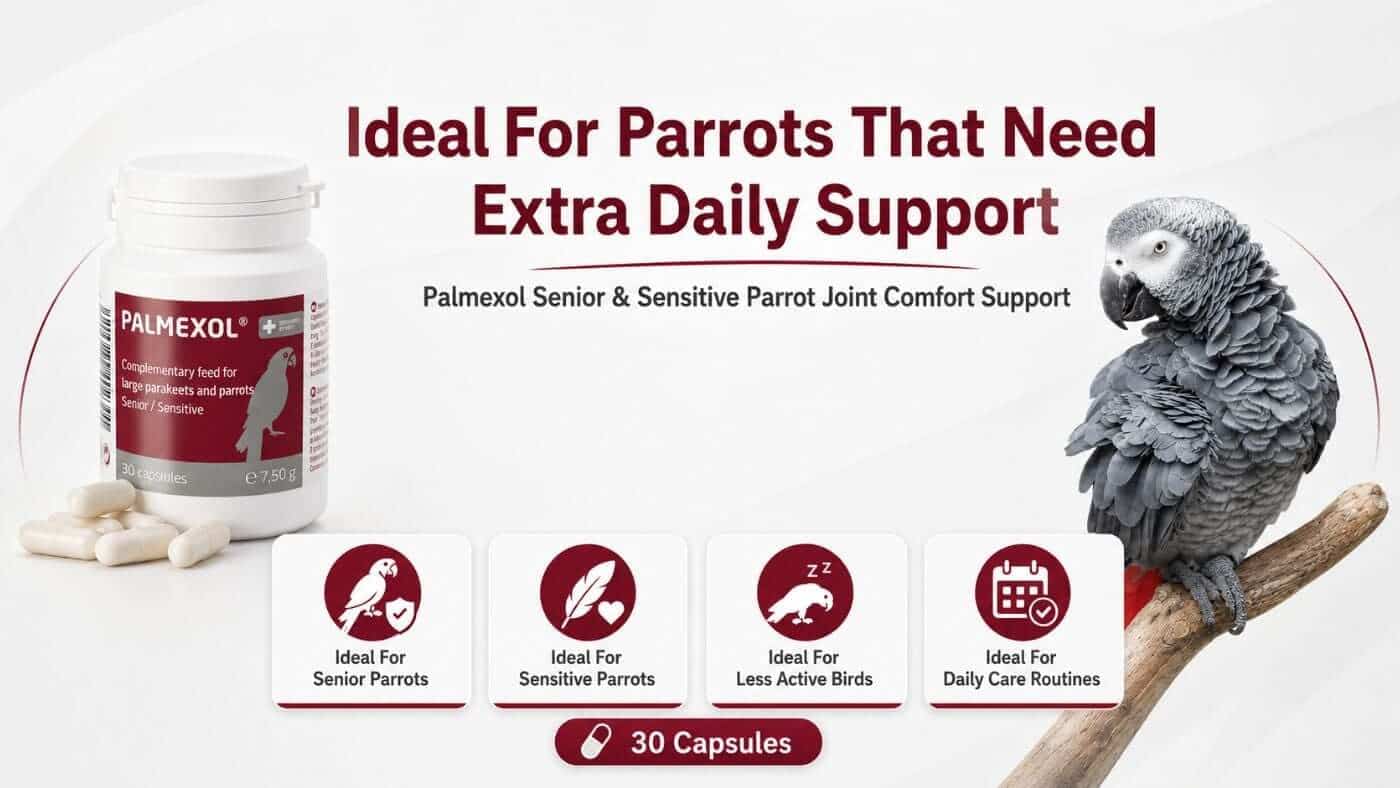
Palmexol is a parrot supplement developed to support comfort, mobility, physiological balance and normal daily activity in senior and sensitive parrots. It is a complementary feed, not a medication, and it is designed to fit naturally into a responsible daily care routine.
Why Senior Parrots May Need Extra Daily Support
Parrots can live for many years, and senior bird care is about noticing the smaller details. Your parrot may still be bright, vocal, affectionate and full of personality, but their body may need more support than it once did.
Older parrots may become less confident with climbing, more selective about where they perch, or slower when moving around the cage. Some birds may also be dealing with age-related joint stiffness, old injuries, arthritis, gout, reduced mobility, or other conditions that affect how comfortably they move around. Sensitive parrots may also need a steadier routine, especially if they are easily unsettled by changes in their environment.
This is where a thoughtful care plan matters. Good senior parrot care is not just about adding one product. It is about looking at the full routine: perches, diet, hydration, enrichment, movement, observation and veterinary advice when needed. Palmexol can be a helpful parrot supplement for parrots that need extra support for comfort, mobility, normal activity and everyday wellbeing. It is especially suited to birds where movement, perching or activity levels have become part of their daily care focus.
Signs Your Parrot May Benefit From Extra Support
Every bird is different, so the most important thing is knowing what is normal for your parrot. Small changes can sometimes be easy to miss, especially in birds that naturally hide weakness or discomfort.
Your parrot may benefit from extra daily support if you notice:
- Resting more than usual.
- Moving more carefully around the cage.
- Avoiding higher or awkward perches.
- Taking longer to climb or step up.
- Becoming less active than before.
- Needing a gentler, more predictable routine.
These signs do not always mean something serious is wrong, but they are worth paying attention to. If the change is sudden, severe, or unusual for your bird, an avian vet should always be your first point of contact.
What Is Palmexol?
Palmexol is a complementary feed for parrots and large parakeets, created for birds that may need extra support for comfort, mobility and normal activity. It is especially suitable for senior and sensitive parrots, including birds that have joint pain, stiffness, reduced mobility, arthritis, gout, old injuries or any diagnosed condition.
As a parrot supplement, it is easy to use because the capsule contents are mixed with drinking water. This makes it practical for owners who want a simple daily support option without complicated dosing.
Palmexol should not be viewed as a treatment or a replacement for veterinary care. Instead, it should be seen as part of a broader wellbeing routine for parrots that need support with everyday comfort and movement.
How Palmexol Works
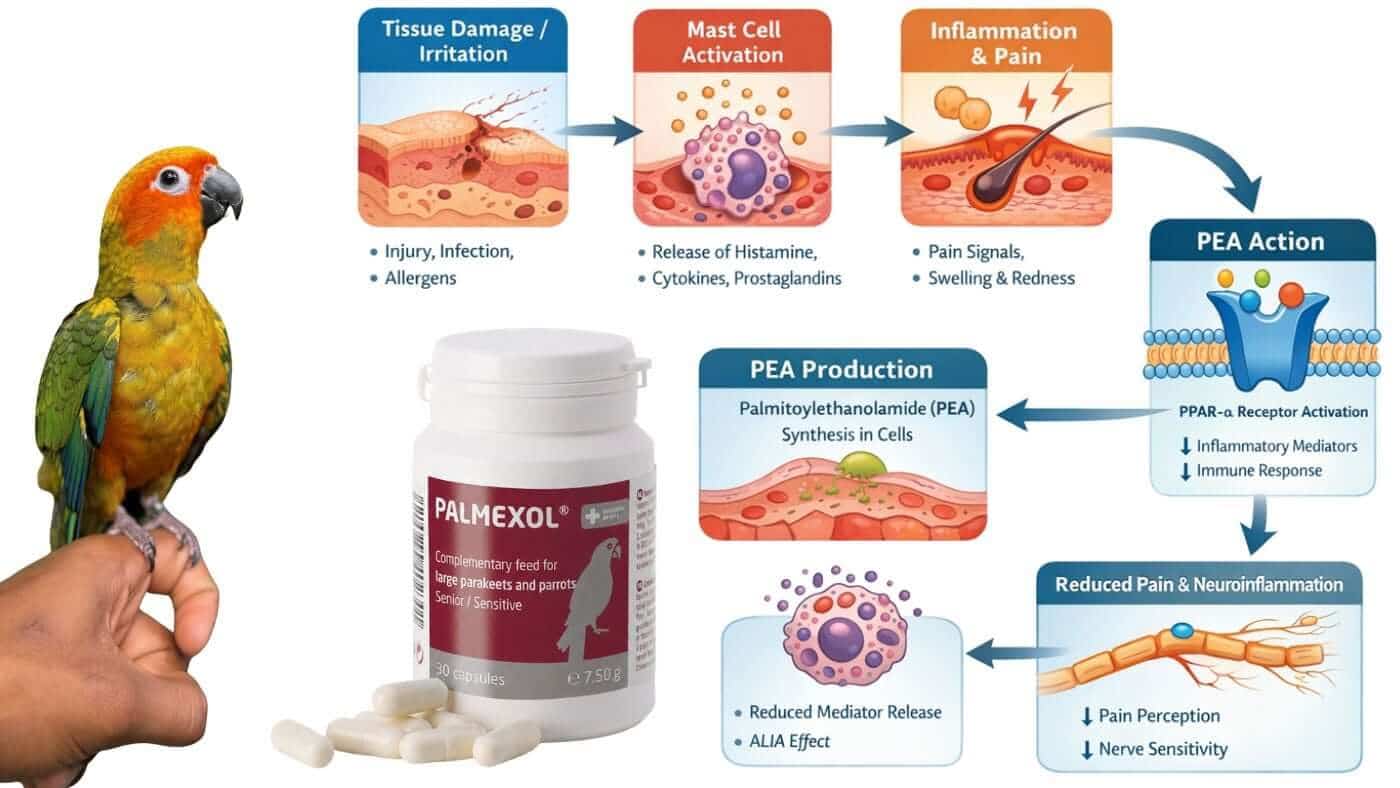
Palmexol contains palmitoylethanolamide, often shortened to PEA. PEA is a naturally occurring fatty acid amide found in body tissues and is involved in the body's own balancing processes.
In simple terms, it is designed to support the normal internal systems connected with comfort, mobility and physiological balance. This makes it a useful daily parrot supplement for senior and sensitive birds, especially those where joint comfort, movement and normal activity are important parts of their care routine.
Many bird owners begin looking for support when they feel their parrot is less comfortable, moving differently, or not as active as before. Palmexol fits into that space as a daily comfort and mobility support supplement. It is not a substitute for veterinary pain management, and if you believe your bird is in pain, injured, or unwell, you should speak to an avian vet. However, as part of a balanced routine, it can help support the everyday care of birds that need extra attention around comfort and normal activity.
How To Use Palmexol
It is simple to prepare and should be made fresh each day.
- Open one capsule.
- Empty the contents into 200 ml of clean drinking water.
- Mix well.
- Fill your bird's drinking bowls with the solution.
Important:
- Replace any leftover solution daily.
- Do not put the capsule shell in the water.
- Do not give the capsule directly to your bird and do not spray your bird with the solution.
- Always follow the recommended usage instructions and speak to your vet if your bird is already receiving medication or other supplements.
Palmexol As Part Of A Better Senior Parrot Care Routine
For older parrots, small changes in the home and cage setup can make daily life easier. Suitable perches, easy access to food and water, gentle enrichment and a calm routine all help support confidence and comfort.
Palmexol works best when used alongside these sensible care choices. The goal is not to force your parrot to be more active. The goal is to support normal activity and make daily movement feel easier and more manageable for your bird.
A senior parrot may benefit from lower perch options, stable surfaces, carefully placed bowls and a cage layout that does not require unnecessary climbing. Enrichment is still important, but it may need to be adapted to suit the bird's age, confidence and mobility.
For more advice on keeping parrots active and engaged, you can also read our guide on parrot mental stimulation.
When To Speak To An Avian Vet
Palmexol is a complementary feed, so it should not be used instead of proper veterinary care. Some signs need professional attention straight away.
Contact an avian vet if your parrot:
- Suddenly cannot perch properly.
- Falls or loses balance.
- Stops eating or drinking.
- Appears weak, fluffed up, or unusually quiet.
- Shows visible swelling or injury.
- Has a sudden or severe change in movement.
Parrots can hide problems well, so it is always better to act early if something does not seem right.
Conclusion: Palmexol Is Now Available From Parrot Essentials
Palmexol is a welcome addition to our parrot care range because it supports what many older and sensitive birds need most: comfort, mobility, normal activity and consistent daily care.
Used as directed, Palmexol can become part of a better routine for parrots that need extra support as they age or become more sensitive. Combined with suitable perches, good nutrition, fresh water, enrichment and veterinary guidance when needed, it offers a simple way to support your bird's everyday wellbeing.
Palmexol is now available from Parrot Essentials for bird owners looking for a practical parrot supplement for senior and sensitive parrots.
For more parrot care advice, product guides and helpful tips, visit our blog at Parrot Essentials Blog.
FAQs
What is Palmexol?
Palmexol is a parrot supplement and complementary feed developed to support comfort, mobility, physiological balance and normal daily activity in senior and sensitive parrots.
Is Palmexol suitable for senior parrots?
Yes, Palmexol is especially suited to senior parrots that may need extra daily support for comfort, movement and general wellbeing.
How do I use Palmexol?
Open one capsule and mix the contents into 200 ml of clean drinking water. Offer the prepared solution in your bird's drinking bowls and make a fresh solution each day.
Can I give the capsule directly to my parrot?
No. Do not give the capsule directly to your parrot and do not put the capsule shell in the water. Only use the contents of the capsule mixed into drinking water.
When should I speak to an avian vet?
Speak to an avian vet if your parrot suddenly cannot perch, loses balance, stops eating, appears weak, shows signs of injury, or has a sudden change in movement or behaviour.