Parrot Feather Plucking Diet: What to Change First
A balanced parrot feather plucking diet can support healthy skin and feather growth, but food alone rarely stops plucking. Start by reviewing what your parrot actually eats, improving nutritional balance gradually and consulting an avian vet to rule out underlying medical causes.
If your parrot has started chewing, damaging or pulling out its feathers, it's natural to wonder whether something is missing from its diet. Nutrition plays an important role in feather health, but identifying the problem is not always straightforward.
A parrot feather plucking diet should focus on balanced nutrition, consistent feeding habits and careful observation. Making several sudden changes or adding supplements without guidance may create more problems than they solve.
Here's how to review your bird's feeding routine and decide what to adjust first.
How Does Diet Affect Feather Plucking in Parrots?
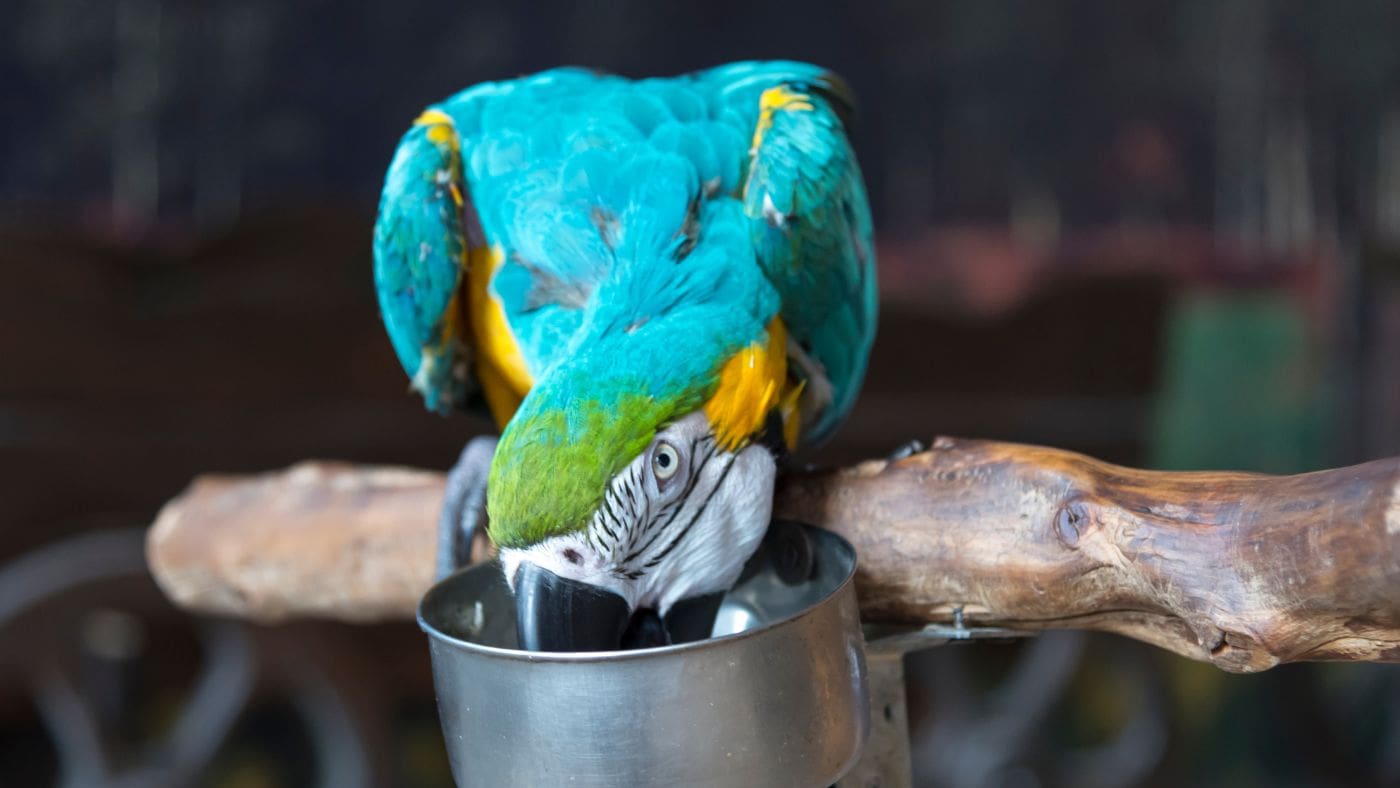
Feathers are made primarily of keratin, a protein that requires suitable amino acids for healthy growth. Vitamins, minerals and essential fatty acids also contribute to normal skin and feather condition.
When a parrot consistently receives an unbalanced diet, nutritional problems may contribute to poor feather quality, abnormal growth or skin problems. These issues can sometimes occur alongside feather destructive behaviour.
However, damaged feathers do not automatically mean your bird has a vitamin deficiency.
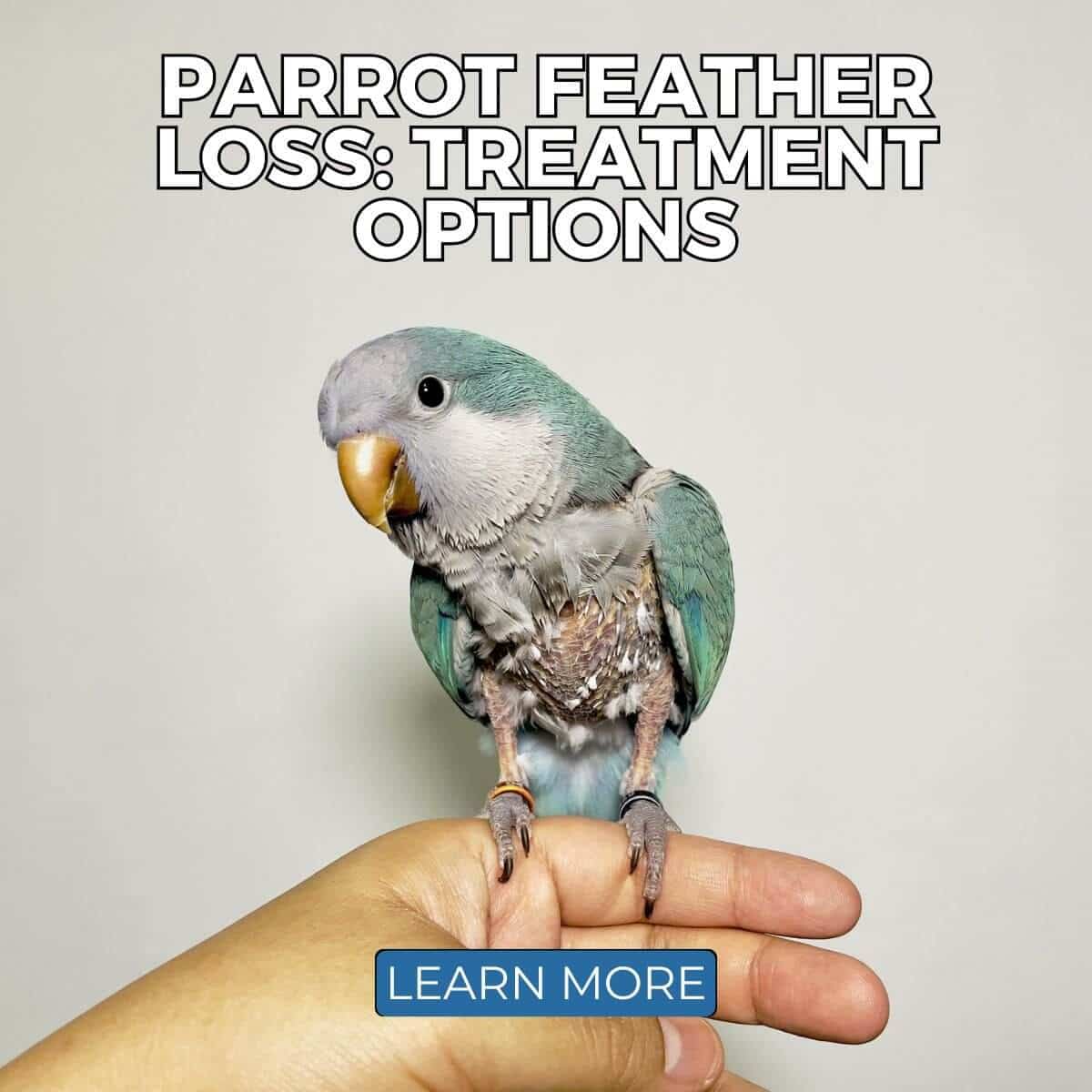
Feather plucking can also involve skin infections, pain, hormonal activity, environmental conditions, stress or other medical problems. Several factors may be present at the same time.
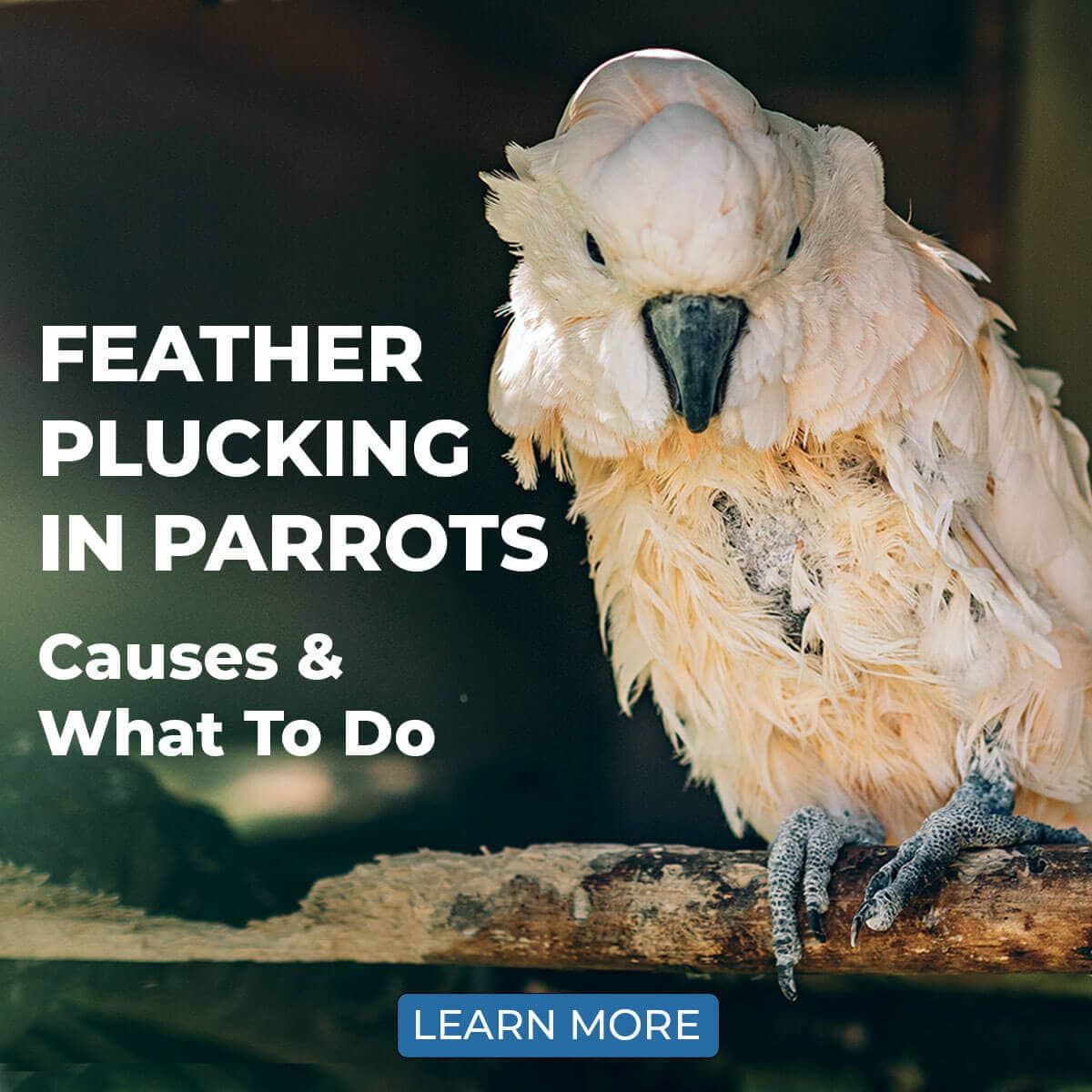
Our guide to feather plucking in parrots explores these wider causes in more detail.
What Should a Parrot Feather Plucking Diet Include?
Before buying new foods or supplements, look at the overall balance of your parrot's current diet. The aim is to provide consistent, species-appropriate nutrition rather than search for one ingredient that supposedly prevents plucking.
1. A Suitable Complete Parrot Food
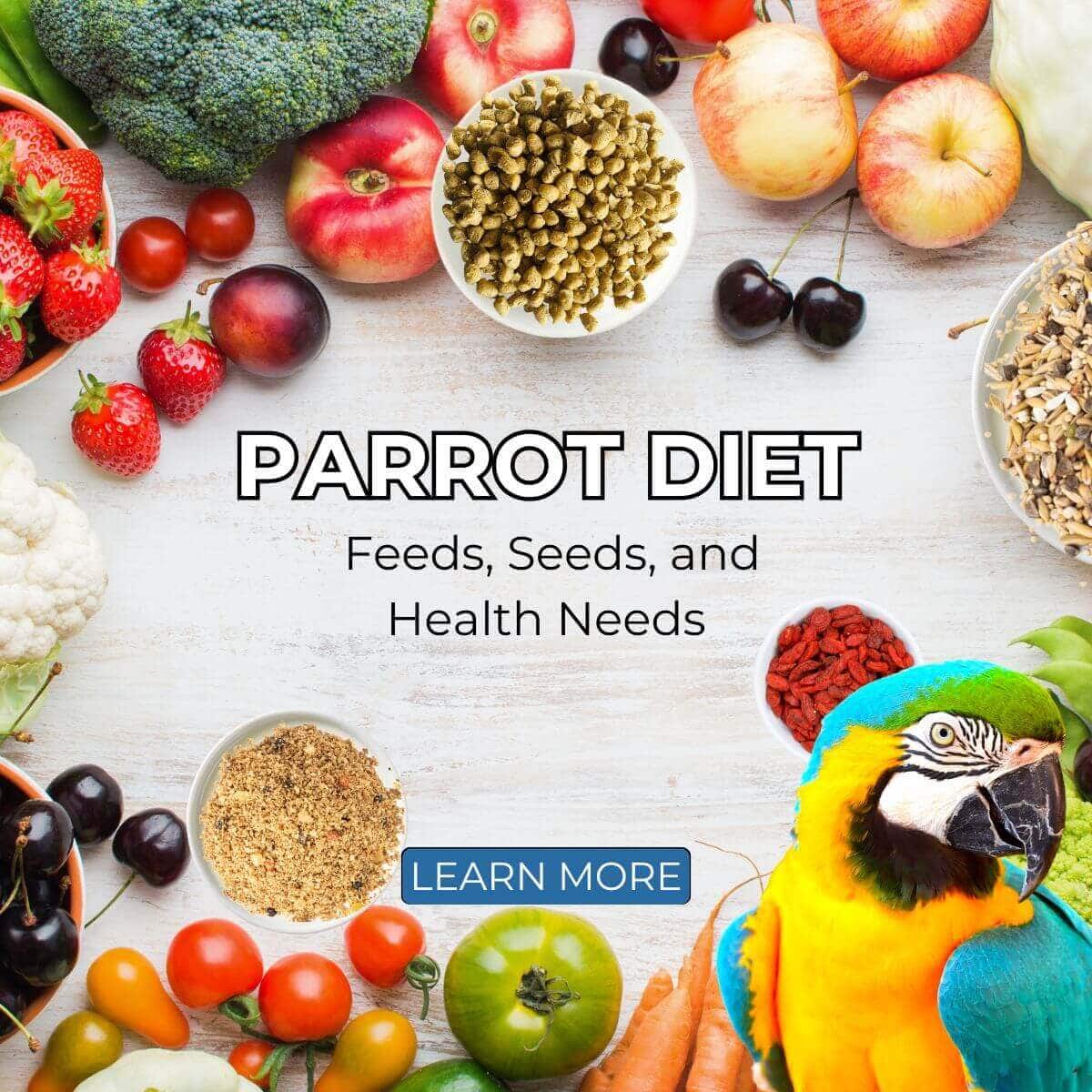
For many companion parrots, a good-quality, nutritionally complete pellet provides a reliable foundation for daily feeding.
Unlike traditional seed mixes, complete pellets are formulated to deliver a more consistent balance of nutrients. This helps reduce the risk of selective feeding, where a parrot repeatedly eats favourite seeds and leaves other ingredients behind.
Seeds can still have a place in a healthy diet. The concern is relying too heavily on a narrow selection of foods, particularly fatty favourites such as sunflower seeds.
Species matters too. Budgies, cockatiels and larger parrots have different feeding requirements, while lorikeets need specialised diets.
If you're deciding how to balance these foods, read our pellets vs seeds for parrots guide for more detailed advice.
2. Fresh Vegetables and Dietary Variety
Suitable fresh vegetables can contribute valuable nutrients and variety to your parrot's meals.
Consider offering:
- Carrots and sweet peppers for beta-carotene, which the body can convert into vitamin A.
- Suitable dark leafy greens for additional vitamins and minerals.
- Broccoli and other bird-safe vegetables for greater dietary variety.
- Small portions of appropriate fruit as part of a balanced feeding plan.
Introduce unfamiliar foods gradually and prepare them safely. The right proportions depend on your parrot's species, health and existing diet.
Remember that a colourful food bowl is not necessarily a balanced one. What matters is what your bird actually consumes.
3. Adequate Protein and Healthy Fats
Protein provides the building blocks needed for feather development. Essential fatty acids also contribute to normal skin function.
A suitable complete diet should account for these nutritional requirements, so additional high-protein foods or oils are not automatically necessary.
Excessive supplementation can be harmful. If your parrot's feathers appear unusually weak, brittle or abnormal, an avian vet can assess whether nutrition is contributing to the problem.
How to Change Your Parrot's Diet Safely
One of the biggest mistakes owners make is replacing an established diet overnight.
A parrot accustomed to seeds may not recognise pellets as food. Removing familiar meals too quickly can result in inadequate food intake, weight loss and additional stress.
Instead, make changes in manageable stages:
- Review the foods your parrot currently eats, including treats and snacks.
- Introduce a suitable complete food while keeping familiar foods available.
- Offer new vegetables in small quantities alongside accepted foods.
- Check whether pellets are actually being swallowed rather than simply crumbled or discarded.
- Monitor body weight using a suitable gram scale.
- Adjust the feeding plan gradually, ideally with guidance from an avian vet.
Never withhold familiar food to force a reluctant parrot to accept pellets. If your bird is losing weight or eating less than normal, seek veterinary advice promptly.
Keep a Parrot Food and Feather Plucking Diary
A simple diary can help you recognise feeding habits and identify patterns that might otherwise be missed.
Record the following each day:
- Food offered: Note the types and approximate quantities of pellets, seeds, vegetables and treats.
- Food eaten: Check leftovers and record which ingredients your bird selects or rejects.
- Body weight: Record regular weights under consistent conditions.
- Feather condition: Note any new feather damage, chewing or visible plucking.
- Behaviour and routine: Record sleep disruption, stressful events, changes in appetite and unusual behaviour.
For example, you might discover that your parrot eats pellets in the morning but ignores them when seeds are readily available.
You may also notice that feather chewing becomes more frequent after certain household disturbances, regardless of what your bird has eaten.
These observations can help your avian vet assess possible contributing factors. They cannot diagnose a nutritional deficiency or prove that a particular food causes plucking.
Should You Give Supplements to a Feather Plucking Parrot?
It's tempting to add vitamins, calcium or feather-support supplements when your parrot's plumage looks damaged. However, supplements should not be the automatic first step.
Complete parrot foods already contain a formulated combination of nutrients. Adding extra vitamins or minerals without assessing the existing diet may create an imbalance.
Some birds require additional nutritional support because of diagnosed deficiencies, illness or specific life stages. These decisions should be made with an avian vet.
For most owners, reviewing food quality, dietary variety and actual intake is a more sensible starting point than experimenting with several supplements.
When Feather Plucking Is Not About Diet
Even a parrot eating a carefully balanced diet can develop feather destructive behaviour.
Medical conditions, skin irritation, hormonal changes, environmental stress and inadequate opportunities for natural behaviour may all contribute.
For this reason, a new or worsening feather plucking problem deserves veterinary assessment rather than a diet-only approach.
Seek prompt veterinary attention if you notice:
- Bleeding, open wounds or damaged skin.
- Sudden or extensive feather loss.
- Reduced appetite, weight loss or unusual droppings.
- Lethargy, weakness or noticeable changes in behaviour.
- Persistent scratching or signs of discomfort.
Once medical concerns have been assessed, consider your parrot's daily environment. Predictable feeding times, suitable enrichment, adequate sleep and opportunities for foraging can all support general wellbeing.
Our stressed parrot guide explains how to recognise possible stress triggers and improve your bird's surroundings.
Can Calming Support Help Alongside Dietary Changes?
When a parrot starts plucking its feathers, nutrition is only one piece of the puzzle. Stress, boredom and changes in routine can also contribute to the problem. That's why we recommend looking at your parrot's daily environment alongside its diet.
Simple changes, such as providing more foraging opportunities, keeping a consistent sleep schedule and spending quality time with your bird, can make a real difference to its overall wellbeing. For parrots that are particularly sensitive to stressful situations, natural calming products can also be a useful addition to their care routine.
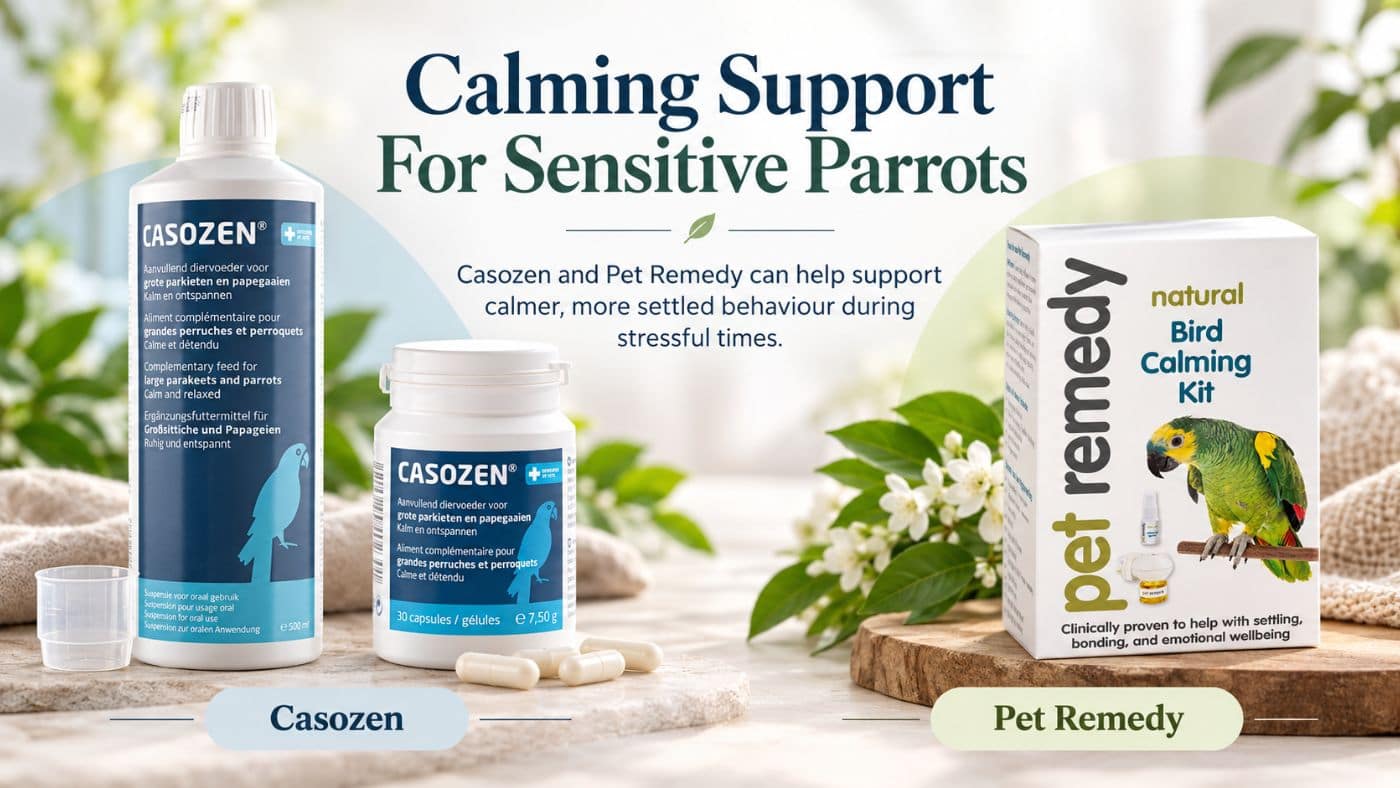
At Parrot Essentials, we recommend two options worth exploring:
- Casozen Natural Calming Support: Developed specifically for birds, Casozen is designed to support calmer behaviour during stressful periods. It's available in capsule and liquid formulations and can be a practical option for parrots struggling with changes in their environment or routine. It's particularly relevant when stress appears to be contributing to feather picking.
- Pet Remedy Calming Solutions: Pet Remedy takes a different approach, using a low-concentration blend of natural oils, including valerian and vetiver, to support a calmer environment. Its range includes sprays, wipes and diffusers, making it particularly useful to consider during potentially stressful situations such as travel, household changes or disruptions to your parrot's usual routine.
Which option is more suitable depends on your parrot and the situations you're trying to manage. Casozen is a bird-focused supplement, while Pet Remedy provides environmental calming support. Always follow the individual product guidance, especially when using scented products around birds.
Neither is a replacement for addressing the underlying cause of feather plucking. The best approach combines good nutrition, a stimulating environment, a predictable routine and appropriate veterinary care. Calming support can be one part of that wider plan.
How Long Does Feather Improvement Take?
Improving your parrot's diet does not mean damaged feathers will immediately return to normal.
New feather growth depends on the bird's moulting cycle, overall health and whether feather follicles remain healthy. Continued chewing or plucking can also damage new feathers.
Rather than expecting rapid regrowth, monitor your bird's nutritional intake, body condition and feather-damaging behaviour over time.
If feather damage continues despite dietary improvements, return to your avian vet for further assessment rather than repeatedly changing foods.
Final Thoughts on a Parrot Feather Plucking Diet
A healthy parrot feather plucking diet starts with balanced, species-appropriate nutrition and a clear understanding of what your bird actually eats.
Review seed intake, introduce suitable complete foods gradually, offer varied vegetables and keep a simple food and behaviour diary. Avoid guessing at nutritional deficiencies or adding supplements without professional guidance.
Most importantly, remember that feather plucking is a complex problem. Good nutrition supports healthy feathers, but lasting improvement may also require medical treatment, environmental changes and behavioural support.
Start with careful observation, make gradual improvements and work with your avian vet to give your parrot the best possible care.
FAQs
Can a poor diet cause feather plucking in parrots?
Yes. Poor nutrition can contribute to unhealthy feathers and skin problems that may be associated with feather plucking. However, medical conditions, stress and other factors must also be considered.
What is the best food for a feather plucking parrot?
For many companion parrots, a suitable nutritionally complete pellet, supported by appropriate vegetables and controlled amounts of other foods, provides a good foundation. The ideal diet depends on the species and individual bird.
Can too many sunflower seeds cause feather plucking?
An excessively seed-heavy diet can contribute to nutritional imbalances, but sunflower seeds themselves are not a proven direct cause of feather plucking.
Will changing my parrot's diet stop feather plucking?
Not necessarily. Improving nutrition may address a contributing factor, but feather plucking can involve medical and behavioural causes. A veterinary assessment is essential.
Should I give my feather plucking parrot extra vitamins?
Not without appropriate advice. Complete diets already provide formulated nutrients, and unnecessary supplementation can create imbalances. An avian vet can assess whether additional nutritional support is required.