African Grey Feather Plucking: Causes and How to Help
African Grey feather plucking can be caused by stress, boredom, nutritional problems or underlying illness. The best way to help is to identify the cause, address any medical concerns and provide a stimulating environment, a balanced diet and a reassuring daily routine.
If you share your home with an African Grey, you'll know just how intelligent and full of personality these parrots are. They notice everything, learn routines incredibly quickly and can develop some very strong opinions about how things should be done!
But what happens when your normally happy Grey starts chewing its feathers or develops a bald patch on its chest? Naturally, it's worrying. And if you've already tried introducing new toys, changing the food or spending more time together without seeing an improvement, you might be wondering what else you can do.
The good news? There are plenty of ways to help. The trick is understanding what's behind the behaviour rather than simply trying to stop it.
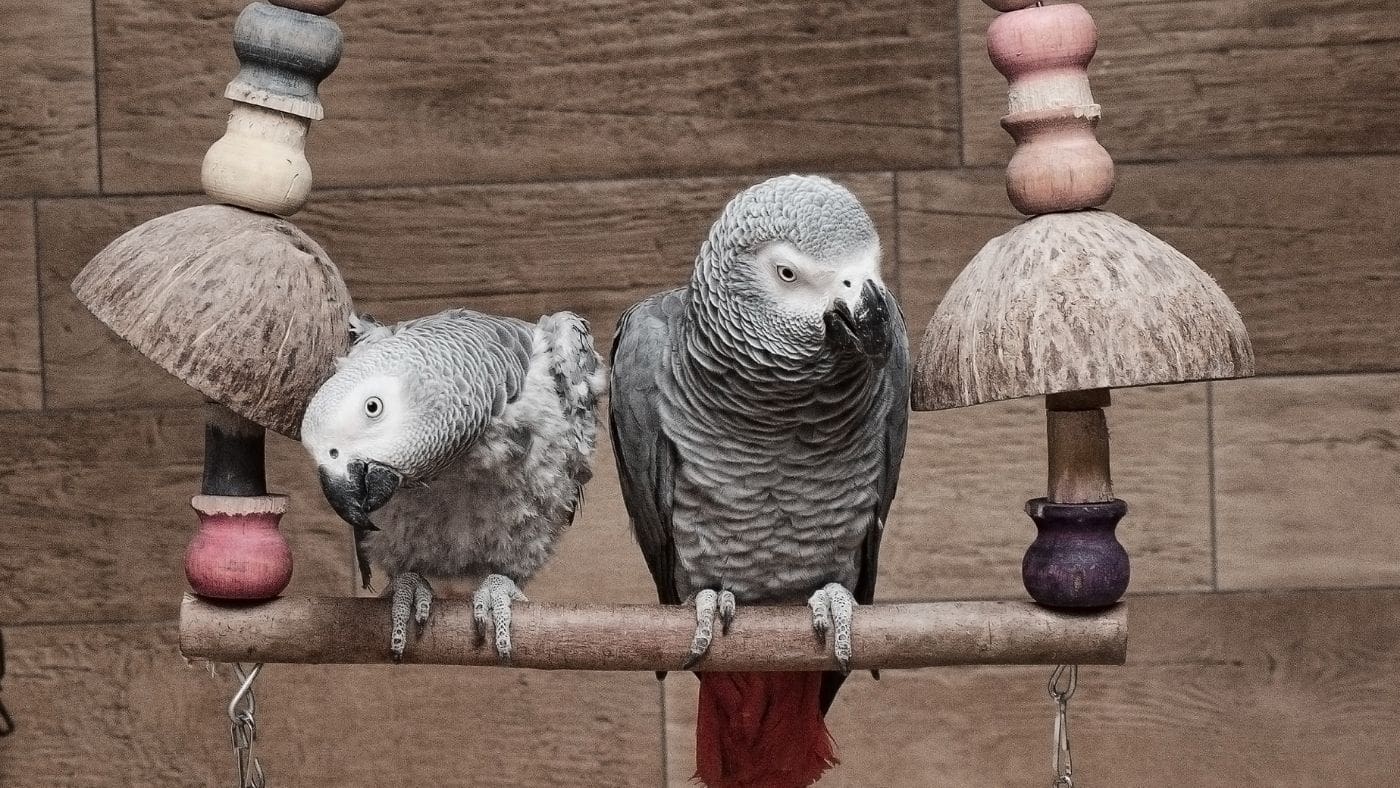
Why Do African Greys Pluck Their Feathers?
First things first: not all African Greys pluck their feathers. Plenty go through life with beautiful plumage and never develop the habit.
Understanding African Grey feather plucking starts with looking at your bird's daily life. Is your Grey getting enough mental stimulation? Has something changed at home? Or could an underlying health problem be causing discomfort?
However, African Greys are among the parrot species frequently associated with feather destructive behaviour. Their intelligence, social needs and sometimes cautious approach to unfamiliar situations can make certain individuals more vulnerable to stress.
Let's look at a few reasons why.
They're Incredibly Intelligent
African Greys aren't the sort of parrots that are happy sitting around doing nothing all day. They're natural problem-solvers, and their minds need just as much exercise as their bodies.
Imagine spending every day in the same room, eating from the same bowl and looking at the same handful of toys. Sounds pretty boring, doesn't it?
For a Grey that enjoys exploring and solving puzzles, a lack of stimulation can become a real problem. Some birds respond by screaming, becoming destructive or repeatedly chewing their feathers.
They Can Be Sensitive to Change
Ever moved your African Grey's favourite perch and received a look of complete disapproval? You're certainly not alone!
Some Greys are wonderfully adventurous. Others prefer familiar surroundings and need a little encouragement before accepting something new.
Changes that can unsettle an African Grey include:
- Moving house or rearranging the cage.
- A family member returning to work or spending less time at home.
- Introducing another pet or welcoming a new family member.
- Building work, fireworks or unfamiliar noises.
- Sudden changes to feeding, playtime or bedtime.
Of course, change doesn't automatically cause feather plucking. The important thing is to recognise how your individual bird responds and give it time to adjust.
They Need Companionship and Independence
African Greys are social parrots that enjoy being involved in family life. Many love chatting with their owners, watching everyday activities and joining in whenever something interesting happens.
However, companionship doesn't mean entertaining your bird every minute of the day.
In fact, teaching your African Grey to play independently is one of the best things you can do. A parrot that knows how to entertain itself is better equipped to cope when you're busy or temporarily out of the house.
How to Recognise African Grey Feather Plucking
Finding a few feathers at the bottom of the cage isn't necessarily a reason to worry. Parrots naturally lose and replace feathers during moulting.
Feather plucking is different. You might notice your African Grey:
- Repeatedly chewing or pulling at its feathers.
- Developing thinning patches around the chest, legs or wings.
- Damaging newly growing feathers.
- Spending unusually long periods picking at one area.
- Developing broken, frayed or uneven-looking plumage.
Some Greys chew their feathers without removing them completely, while others pull them out. Severe cases can progress to skin damage.
Remember, feather loss isn't always caused by plucking. If you're unsure what you're seeing, our complete guide to feather plucking in parrots explains the different signs and possible causes.
Before Anything Else, Check Your African Grey's Health
We can't stress this enough: if your African Grey suddenly starts damaging its feathers, arrange a check-up with an experienced avian vet.
It's tempting to blame boredom or anxiety, particularly if something has recently changed at home. However, feather plucking can also be associated with skin infections, nutritional deficiencies, pain, hormonal problems and other medical conditions.
Parrots are remarkably good at hiding illness, so even a bird that appears cheerful and continues talking may have an underlying health problem.
Your vet can investigate potential causes and help you decide what needs attention.
If your Grey is bleeding, damaging its skin, refusing food or becoming unusually weak, seek veterinary attention urgently.
How to Help an African Grey With Feather Plucking
So, your African Grey has started plucking. What can you actually do at home? When it comes to African Grey feather plucking, there's rarely one simple solution. We've found that focusing on daily enrichment, predictable routines and positive interaction is a much better approach than constantly introducing new changes.
Once any medical problems are being addressed, we recommend concentrating on a few key areas. You don't need to buy a cage full of new equipment or completely change your routine overnight. In fact, for a nervous Grey, that could make things worse!
1. Turn Mealtimes Into Foraging Time
One of our favourite ways to keep an African Grey occupied is through foraging.
Wild parrots spend a substantial part of their day searching for food. Our pet birds, on the other hand, often have everything conveniently delivered in a bowl. Great service, but not particularly exciting!
Try making your Grey work a little for its favourite treats:
- Wrap a small treat in plain, bird-safe paper.
- Hide food inside a simple foraging toy.
- Offer vegetables on a bird-safe skewer.
- Place small food rewards in different accessible locations.
- Introduce puzzle toys that encourage problem-solving.
Don't make things too difficult at first. Show your parrot where the reward is and gradually increase the challenge as it gains confidence. Always make sure your bird can still access enough food.
Foraging gives your African Grey something productive to focus on and encourages natural behaviour. It's an excellent addition to the daily routine, whether your bird plucks its feathers or not.
2. Give Your Grey a Routine It Can Rely On
African Greys can be surprisingly particular about their schedules. And while you don't need to run your household like clockwork, a little consistency goes a long way.
Try keeping feeding times, play sessions and bedtime reasonably predictable.
Sleep is especially important. Many parrots benefit from around 10 to 12 hours of quiet, uninterrupted rest each night, depending on their individual needs.
If your Grey is constantly disturbed by the television, lights or people walking past its cage, review the sleeping arrangements.
Need help establishing a better routine? Have a look at our 7-day routine for calming a stressed parrot.
3. Keep Those Clever Minds Busy
Foraging is fantastic, but it's only part of the picture.
African Greys also benefit from toys they can chew, shred, investigate and manipulate. Natural wood toys, bird-safe shredding materials and appropriately sized puzzle toys are all useful additions.
Here's a tip: instead of filling the cage with ten new toys, rotate a few familiar favourites and introduce new ones gradually.
Some African Greys are suspicious of unfamiliar objects. If yours is one of them, try placing a new toy near the cage and allowing your bird to investigate it at its own pace.
Short positive training sessions are another excellent way to provide mental stimulation. Even five minutes of target training or practising familiar tricks can give your bird something enjoyable to concentrate on.
4. Encourage Independent Play
Does your African Grey call for you every time you leave the room?
It's lovely to have such a close bond, but a parrot that depends entirely on your attention may find being alone difficult.
Start by encouraging your bird to enjoy a favourite toy or foraging activity while you're nearby. Reward relaxed, independent play and gradually help your Grey become comfortable entertaining itself.
That doesn't mean ignoring your parrot. Quality time, conversation, exercise and social interaction are still essential.
The goal is a confident bird that enjoys your company without needing constant entertainment.
5. Don't Forget Diet and Bathing
Healthy feathers need proper nutrition, and African Greys are no exception.
A varied, balanced diet built around appropriate complete foods, vegetables and other suitable ingredients helps provide the nutrients needed for healthy skin and feather growth.
If your Grey eats mostly seeds, it's worth reviewing the diet. However, avoid suddenly replacing familiar foods, especially when your bird is already stressed.
Our parrot feather plucking diet guide explains what to change first and how nutrition fits into the bigger picture.
Bathing is another simple thing worth considering. Some African Greys absolutely love a gentle shower, while others prefer a shallow dish or a light mist.
Let your bird choose what it enjoys. Regular bathing opportunities can support feather care, but forcing a nervous parrot into water is never a good idea.
Can Calming Products Help an African Grey That Plucks?
Stress can play a significant role in African Grey feather plucking, particularly when a bird struggles with changes in its surroundings. That's why we recommend considering calming support alongside improvements to your parrot's everyday environment.
At Parrot Essentials, we recommend looking at two established calming ranges for birds: Casozen and Pet Remedy. Both are designed to support parrots during stressful situations, but they take different approaches.

Casozen Natural Calming Support
Casozen is developed specifically for pet birds and is one of our recommended options when stress appears to be contributing to unwanted behaviour.
Available in capsule and liquid formats, Casozen is designed to support calmer behaviour without sedation. It's a practical option to explore for an African Grey that becomes particularly unsettled by changes in routine, unfamiliar surroundings or other stressful situations. Casozen is intended to support your bird's normal behaviour rather than simply making it sleepy.
Of course, calming a stressed parrot and addressing an established plucking habit aren't exactly the same thing. Casozen isn't a cure for feather plucking, but supporting a calmer daily routine can be a useful part of a wider care plan.
Pet Remedy Calming Solutions
Another range we recommend is Pet Remedy, especially when environmental disturbances are a concern.
Pet Remedy uses a specially developed blend containing a low concentration of valerian and other essential oils. The range includes calming sprays, wipes and a plug-in diffuser kit.
Unlike Casozen, Pet Remedy offers environmental calming support, making it worth considering when your Grey is unsettled by visitors, travelling or changes around the home.
We particularly like the flexibility of the range, with different formats for different situations.
Remember that parrots have sensitive respiratory systems. Always follow the manufacturer's bird-specific instructions, never spray products directly onto your parrot and check with your avian vet before introducing airborne calming products.
Keep Track of Your African Grey's Progress
Here's something we strongly recommend: keep a simple diary.
You don't need anything fancy. A notebook or notes on your phone will do perfectly well.
Record when your Grey plucks, what was happening beforehand and whether anything in the household has changed. Include appetite, sleep, new activities and any improvements you notice.
Take photographs of the affected areas every week or two so you can compare feather condition over time.
Why bother? Because patterns aren't always obvious. You might discover that your bird plucks more after a noisy evening, when left alone for longer periods or following particular changes to its routine.
Share these observations with your avian vet. They can be incredibly useful when working out what needs to change.
Will an African Grey's Feathers Grow Back?
In many cases, yes! Recovery from African Grey feather plucking takes patience. Even when the underlying problem has been addressed, damaged feathers won't necessarily be replaced immediately. Healthy regrowth depends on the condition of the follicles and your bird's natural moulting cycle.
And here's something important to remember: progress isn't just about how many feathers grow back.
If your African Grey starts playing more, shows greater interest in foraging, sleeps better or spends less time chewing its feathers, those are encouraging changes too.
Don't be discouraged if your bird has an occasional setback. Long-standing feather plucking can be difficult to resolve completely, even when you're doing everything right.
African Grey Feather Plucking: Final Thoughts
African Grey feather plucking can be frustrating and upsetting, particularly when you can't immediately work out what's causing it. But remember, your parrot isn't doing it to be difficult or to get on your nerves.
Start by checking for medical problems, then look at the everyday things that make a difference: a balanced diet, plenty of foraging, interesting toys, good sleep and a reassuring routine.
If your Grey is particularly sensitive to stressful situations, suitable calming support can also be a helpful addition.
Most importantly, get to know what works for your individual bird. Some African Greys adore challenging puzzles, while others are happiest shredding a piece of paper or spending a quiet afternoon chatting with their favourite person.
After all, that's part of what makes living with these remarkable parrots so rewarding. No two Greys are quite the same!
Have you helped an African Grey through feather plucking? We'd love to hear what worked for your feathered friend. Share your experience in the comments!
FAQs
Why is my African Grey plucking its chest feathers?
The chest is one of the easiest areas for an African Grey to reach. Plucking may be related to stress, boredom, pain, skin irritation or other medical conditions. An avian vet can help identify the cause.
Can African Grey feather plucking be stopped?
Many African Greys improve with the right veterinary care, enrichment and routine changes. However, long-standing feather plucking can be difficult to eliminate completely.
What toys are best for an African Grey that plucks?
Foraging puzzles, natural wood toys and bird-safe shredding materials are excellent choices. Focus on activities your parrot enjoys rather than simply adding more toys.
Can calming products help an African Grey stop plucking?
Calming products such as Casozen and Pet Remedy are designed to support parrots during stressful situations. They may complement a wider feather plucking management plan, but they don't treat underlying medical causes or guarantee the behaviour will stop.
How long does it take for an African Grey's feathers to grow back?
Feather regrowth depends on the moulting cycle and follicle health. Some birds regrow feathers successfully, while repeated plucking can cause lasting damage.