Natural Remedies for Feather Plucking in Birds: What Can Help?
Feather plucking can be one of the most frustrating problems for parrot owners, especially when you can't work out what's causing it. The good news? There are several natural remedies for feather plucking that can help your feathered friend feel calmer and more comfortable, from simple changes to their daily routine to enrichment activities and calming support. Let's look at what really helps and where to start!
As parrot owners, our first instinct is to help. Should we introduce more toys? Change the diet? Try a calming supplement? Or perhaps our feathered friend simply needs more attention?
Well, the answer isn't always straightforward. Feather plucking can have several causes, from medical conditions and skin irritation to boredom, frustration and anxiety. And while there's no miracle remedy that works for every bird, there are plenty of things you can do to make your parrot's life happier and more comfortable.
Let's explore the natural approaches we recommend, what actually makes a difference and where calming products such as Casozen and Pet Remedy fit into the picture.
Can Natural Remedies Really Help Feather-Plucking Parrots?
The good news is that natural remedies for feather plucking can make a real difference when stress, boredom or an unsuitable environment are contributing to the problem. The trick is finding out what your particular parrot needs rather than trying everything at once.
A parrot that pulls its feathers because of an underlying skin infection needs very different help from one that's struggling with a stressful household environment.
That's why an examination with an avian vet should always be your first step, especially if the behaviour has started suddenly. Once medical causes have been investigated, you can work on improving your bird's environment and daily routine.
And don't underestimate those everyday changes! Something as simple as introducing a new foraging activity or establishing a quieter bedtime can make a real difference to a stressed parrot's quality of life.
Natural Remedies for Feather Plucking Worth Trying
1. Give Your Parrot Something Better to Do
Of all the natural remedies for feather plucking, providing more enrichment is one of our favourite places to start. Parrots are incredibly intelligent birds, and giving those busy beaks something interesting to do can help reduce boredom and encourage healthier daily habits. Imagine spending most of your day sitting in the same room with nothing particularly interesting to do. No puzzles, no activities, nothing to explore. Sounds pretty boring, doesn't it?
Unfortunately, that's exactly what life can look like for some companion parrots.
In the wild, parrots spend hours searching for food, chewing branches, exploring and interacting with their flock. Our pet birds still have these instincts, and they need opportunities to express them.
That's where enrichment comes in!
We particularly recommend:
- Foraging toys: Encourage your bird to search for treats rather than finding everything waiting in a food bowl.
- Shredding toys: Bird-safe paper, cardboard and natural shreddable materials provide satisfying activities for busy beaks.
- Wooden chew toys: Great for parrots that enjoy chewing and destroying things. And let's face it, that's most of them!
- Training and puzzle games: Short, rewarding sessions can keep your parrot mentally engaged and build confidence.
Here's one of our favourite tips: don't make foraging difficult straight away. Start by hiding a favourite treat somewhere obvious, perhaps inside a loosely folded piece of paper. Once your parrot understands the game, gradually introduce more challenging activities.
Also, remember that some parrots are suspicious of new toys. If yours is nervous, place the toy nearby and give your bird time to investigate rather than immediately hanging it inside the cage.
2. Make Your Parrot's Routine More Predictable
Parrots can be surprisingly sensitive to changes in their surroundings. A new pet, different working hours, unfamiliar visitors or even moving the cage to another room can be enough to unsettle some birds.
Of course, you can't prevent every change in life. But you can make your parrot's everyday routine more predictable.
Try keeping mealtimes, play sessions and bedtime fairly consistent. Make sure your bird has somewhere comfortable to retreat when things get busy, and avoid forcing interactions when it clearly wants some peace and quiet.
Pay attention to the little things, too. Is your parrot frightened by something outside the window? Does the hoover send it into a panic? Is another pet constantly approaching the cage?
Sometimes the best natural remedy is simply removing a source of stress you hadn't previously noticed.
For more practical ideas, have a look at our 7-Day Routine for Calming a Stressed Parrot.
3. Don't Overlook a Good Night's Sleep
We all know how miserable we can feel after a bad night's sleep. Parrots are no different!
Most companion parrots benefit from around 10-12 hours of quiet nighttime rest, although requirements vary between species and individual birds.
The problem? Many of our feathered companions share our living spaces. That means televisions, lights, conversations and people moving around long after the bird should be sleeping.
If your parrot sleeps in a busy room, consider whether it's genuinely getting enough uninterrupted rest.
A consistent bedtime, suitable darkness and a quiet sleeping area can make a big difference. Some birds benefit from a separate sleeping cage, while others feel most comfortable in their familiar enclosure.
Whatever arrangement you choose, introduce changes gradually. The goal is to make bedtime relaxing, not turn it into another stressful experience.
4. Encourage Bathing and Healthy Preening
Here's something many parrot owners already know: some birds absolutely love bath time, while others act as though you've personally offended them by offering a shallow bowl of water!
Regular opportunities to bathe are important for maintaining healthy feathers and supporting normal preening behaviour.
Try offering a shallow bathing dish or a gentle mist of clean water, depending on what your bird enjoys. Never force a reluctant parrot to bathe.
Bathing can help keep feathers clean and comfortable, but it won't treat an underlying infection, painful skin condition or established behavioural problem.
And please be careful with homemade treatments. You'll find plenty of online suggestions involving essential oils, coconut oil and various herbal mixtures. Just because something is natural doesn't mean it's suitable for a parrot's sensitive skin or respiratory system.
When in doubt, stick to clean water and ask your avian vet before applying anything to your bird's feathers or skin.
5. Spend Quality Time Together
Parrots are intelligent, social animals. While some are perfectly happy entertaining themselves for part of the day, they still need meaningful interaction and opportunities to exercise their minds.
But quality time doesn't necessarily mean constant cuddles!
Try teaching your bird a new trick, practising target training or simply sitting nearby while it explores a favourite toy.
Positive reinforcement works particularly well because your parrot learns that interacting with you leads to good things.
One thing we'd strongly discourage is shouting at or punishing a bird for plucking. Your parrot isn't doing it to annoy you, and stressful reactions can make an already difficult situation worse.
Instead, reward healthy activities, respect your bird's boundaries and focus on building confidence.
Not all natural remedies for feather plucking involve changing your bird's surroundings. When anxiety is part of the problem, additional calming support may also be worth considering, particularly alongside a consistent routine and plenty of enrichment.
Can Casozen Help a Parrot That Plucks Its Feathers?
Now, what if you've improved your parrot's environment, introduced more enrichment and established a good routine, but your bird still seems anxious?
This is where additional calming support may be useful.
One option we recommend considering is Casozen, a natural, non-sedating calming supplement developed for birds.
Casozen is available in liquid and capsule formats and is designed to support birds experiencing stress and anxiety. It's particularly relevant when everyday situations, changes in routine or unfamiliar experiences leave your parrot unsettled.
Why might that matter for feather plucking?
Well, if anxiety is contributing to your bird's feather-damaging behaviour, helping it feel calmer may make it easier to establish healthier routines and encourage positive activities.
That's the role we see for Casozen: additional support alongside good parrot care, rather than a replacement for it.
Always follow the product's current instructions and discuss suitability with your avian vet, particularly if your bird has existing health problems.
You can also read our guide to using Casozen for more information about introducing it into your parrot's routine.
What About Pet Remedy for Feather-Plucking Birds?
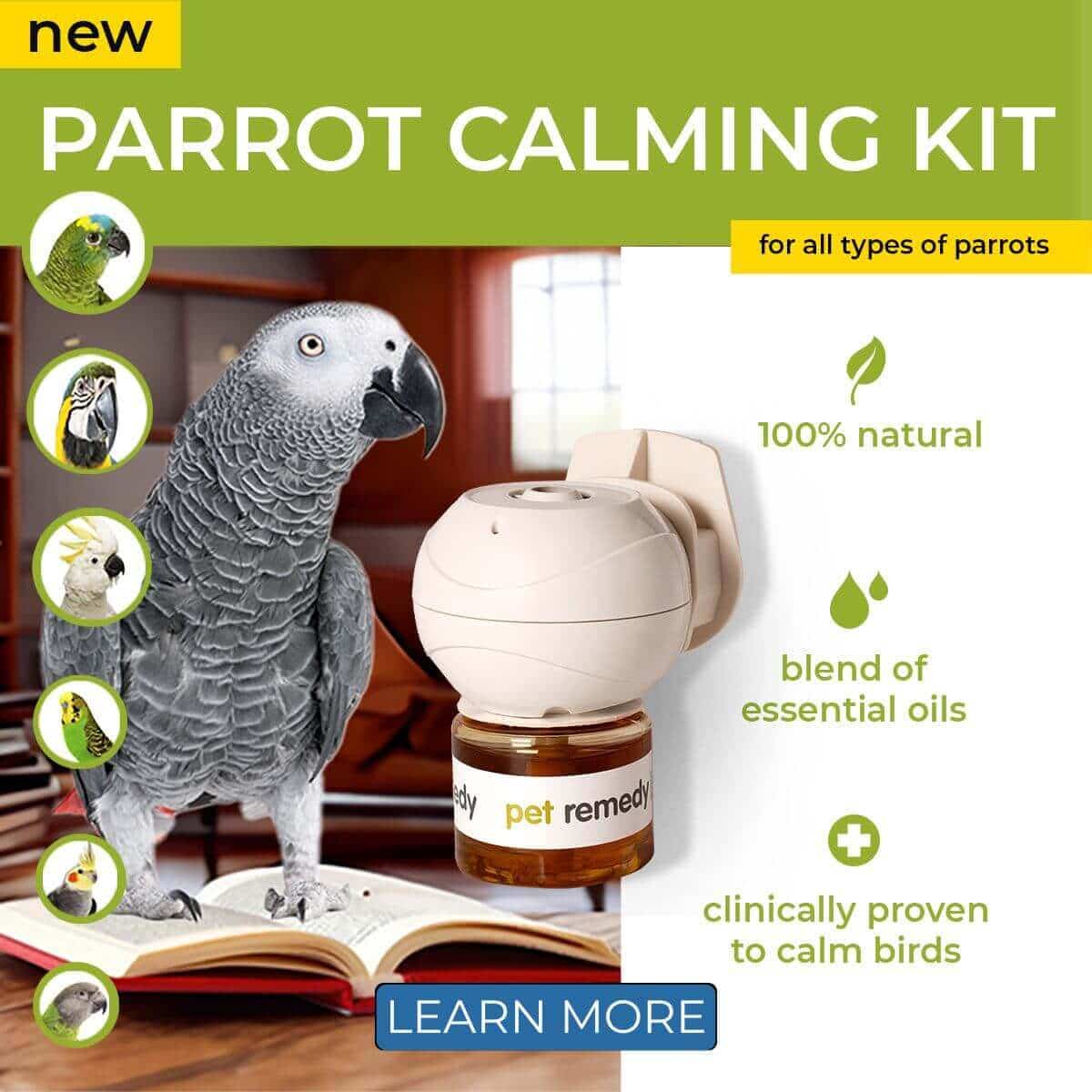
Another product range we're familiar with at Parrot Essentials is Pet Remedy, which focuses on environmental calming support.
Its range includes plug-in diffusers and calming sprays, formulated using a blend containing valerian, vetiver, sweet basil and clary sage oils.
Pet Remedy is designed to help pets cope with stressful situations, such as unfamiliar surroundings, household changes and other disturbances.
For parrots whose feather plucking appears linked to environmental stress, the aim is to support a calmer atmosphere while you work on addressing the factors that are upsetting your bird.
However, we wouldn't expect Pet Remedy alone to resolve established feather-plucking behaviour. Even the manufacturer's guidance distinguishes between helping birds feel calmer and addressing the underlying behavioural problem.
Never spray calming products directly onto your parrot, and don't assume that using several calming products together will necessarily produce better results.
How Long Will It Take for Your Parrot to Stop Plucking?
We wish there were a simple answer to this one! One thing to remember about natural remedies for feather plucking is that patience matters. Even when you've found the right approach, established habits can take time to change, and healthy feathers won't necessarily grow back overnight.
Some parrots improve when the underlying problem is addressed, while others continue plucking long after the original trigger has disappeared.
Feather plucking can become an established behaviour, particularly when it's been happening for months or years. And even when the behaviour improves, new feathers may not appear immediately.
Our advice? Don't measure every bit of progress by the number of feathers you see growing back.
Look for other positive changes. Is your bird exploring more? Enjoying its toys? Sleeping better? Showing fewer signs of anxiety?
Keep a simple record of plucking episodes and take occasional photographs to monitor feather condition. This information can also help your avian vet evaluate progress.
Be patient, but don't ignore worsening symptoms. Bleeding, open wounds, appetite changes, lethargy or sudden feather loss need prompt veterinary attention.
Don't Forget the Importance of a Healthy Diet
We can't talk about healthy feathers without mentioning nutrition!
Feathers are made primarily from protein, and growing them requires appropriate nutrients. A poor or unbalanced diet can affect feather quality and overall health.
That doesn't mean giving your parrot extra vitamins or switching to an expensive food will automatically solve the problem.
What matters is providing a balanced diet suited to your bird's species and individual requirements.
We've already covered this topic in detail in our article Does Diet Affect Feather Plucking in Parrots?, including which nutritional problems can contribute to feather damage.
Final Thoughts: Helping Your Parrot Feel Better Naturally
When it comes to natural remedies for feather plucking, there's no single solution that works for every parrot. But that doesn't mean you're powerless to help!
Start with the basics: a proper veterinary assessment, plenty of interesting activities, a predictable routine, restful sleep and a comfortable environment.
If stress is part of the picture, calming support such as Casozen or Pet Remedy may be worth considering alongside those everyday improvements. Choose products based on your bird's individual needs, and remember that managing anxiety is only one part of addressing feather destructive behaviour.
Most importantly, get to know what makes your own parrot feel safe, relaxed and engaged. Every bird has different preferences, and what works brilliantly for one may not suit another.
Feather recovery can take time, and some birds may never regain a completely normal plumage. But a happier, more confident parrot who enjoys its daily activities? That's progress worth celebrating!
FAQs
What are the best natural remedies for feather plucking in birds?
Improving sleep, reducing environmental stress, offering foraging activities and establishing a consistent routine are useful starting points. An avian vet should investigate medical causes before feather plucking is treated as behavioural.
Can a parrot stop feather plucking naturally?
Some parrots show improvement following environmental and behavioural changes, particularly when stress or insufficient stimulation contributes. However, long-standing feather plucking may require ongoing management and veterinary treatment.
Does bathing help parrots that pluck their feathers?
Regular bathing supports normal preening and feather condition. It may improve comfort, but bathing alone cannot resolve feather plucking caused by illness, pain or behavioural problems.
Can Casozen help a feather-plucking parrot?
Casozen is a non-sedating calming product for stressed birds. It may be considered when anxiety contributes to feather plucking, although clinical evidence that it stops feather destructive behaviour is lacking.
How long does it take for damaged parrot feathers to grow back?
Regrowth depends on the bird's moulting cycle, the extent of damage and whether the follicles remain healthy. Repeated damage can sometimes prevent normal regrowth, so an avian vet should assess persistent feather loss.