Must-Have Parrot Accessories: Food Bowls, Lighting & More
Table of Contents
- Feeding Bowls And Food Stations: Parrot Accessories That Support Better Feeding
- Parrot Lighting: An Often-Overlooked Accessory
- Bonus Parrot Accessories Worth Considering
- How To Build The Right Parrot Accessory Kit For Your Species
- Where To Buy Parrot Accessories In The UK
- Final Thoughts On Choosing Parrot Accessories
- FAQs
The must-have parrot accessories covered here include suitable feeding bowls, foraging food stations, bird lighting, travel carriers, carefully chosen hideaways and calcium or mineral accessories, all selected according to your parrot's species, size and behaviour.
Once you've covered the obvious cage essentials, there are other accessories that can make a surprisingly big difference to your parrot's everyday setup. Some improve feeding and hygiene, some encourage natural behaviour, while others are things you may not appreciate until you actually need them.
The challenge is knowing what is genuinely useful and what is simply another accessory taking up space.
Let's look at the parrot accessories worth considering beyond the basics, starting with something your bird uses every single day.
Feeding Bowls And Food Stations: Parrot Accessories That Support Better Feeding
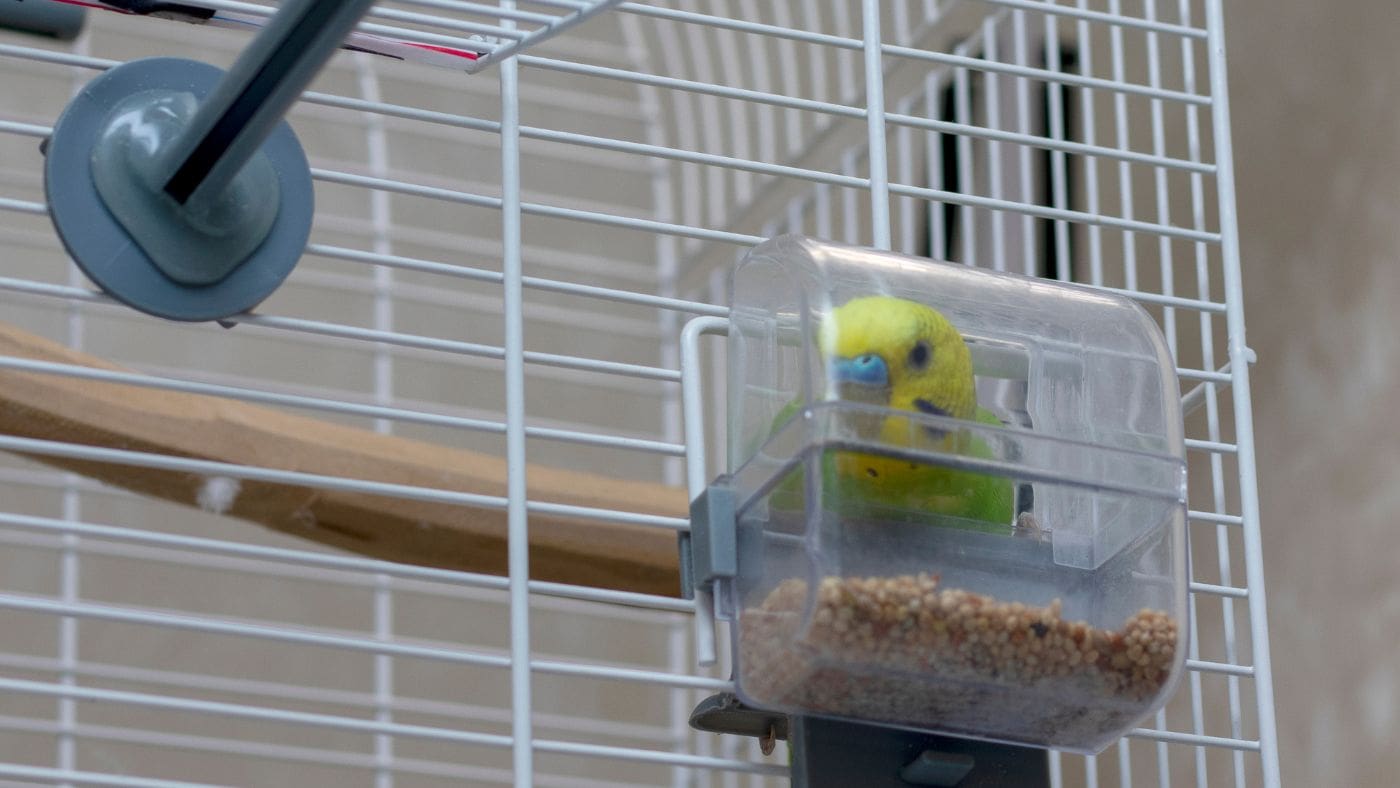
A food bowl sounds like the simplest purchase you'll make for your parrot. In reality, choosing the right one can make feeding, cleaning and portion management much easier.
The first consideration is size. Your bird should be able to access the contents comfortably without the bowl being unnecessarily large or deep.
Placement matters too. Position bowls where they are easily accessible but, where possible, not directly underneath a favourite perch. Otherwise, freshly changed food and water can quickly need changing again.
Removable bowls are particularly practical because they make daily washing much easier.
Stainless Steel Feeding Bowls
Stainless steel is one of the most practical choices for everyday parrot feeding. It is durable, easy to clean and doesn't have the porous surface found in some other materials.
A simple option is our Stainless Steel Parrot Feeding & Water Bowl, available in Small, Medium and Large. The different sizes cover everything from Budgies and Cockatiels through to African Greys, Amazons and large Macaws, so you can choose a bowl that actually suits your bird rather than simply buying the biggest one available.
If your parrot has a talent for rearranging everything attached to their cage, the Stainless Steel Parrot Feeding Bowl with Clamp provides another option, with a secure cage attachment and three sizes available.
Whatever bowl you choose, wash food and water bowls thoroughly rather than continually adding fresh food or water on top of what is already there.
Ceramic And Acrylic Feeding Bowls
Ceramic bowls can be useful in certain setups, particularly when you want a heavier freestanding bowl that is difficult to move.
The condition of the ceramic matters. Check bowls regularly and replace them if they become chipped or cracked.
Acrylic feeding accessories can offer useful designs that aren't always possible with a conventional bowl. They can work particularly well for specialised feeders or feeding stations.
However, parrots chew. Inspect acrylic accessories regularly, particularly if your bird has decided that the feeder itself is considerably more interesting than its contents.
Foraging Feeders And Enrichment Food Stations
Not every piece of food has to arrive in an open bowl.
Foraging feeders give your parrot something to work out before reaching the reward. Depending on the design, your bird may need to turn, lift, pull or manipulate part of the feeder.
This can turn part of an ordinary meal into an enrichment opportunity without necessarily adding extra treats.
The trick is to start easy. Let your parrot see you place a favourite food inside and make the first few attempts simple. Once your bird understands that interacting with the feeder produces a reward, you can gradually introduce more challenging options.
Even something as straightforward as a Vegetable & Cuttlefish Bone Holder can change how food is presented, while more advanced foraging feeders can make your parrot work harder for selected foods.
Choose the feeder according to your parrot's size and ability. What presents an interesting puzzle to a Budgie may take a Macaw approximately three seconds to solve.
Parrot Lighting: An Often-Overlooked Accessory
Lighting isn't usually the first thing that comes to mind when shopping for parrot accessories, but bird-specific lighting deserves consideration, particularly for parrots living predominantly indoors.
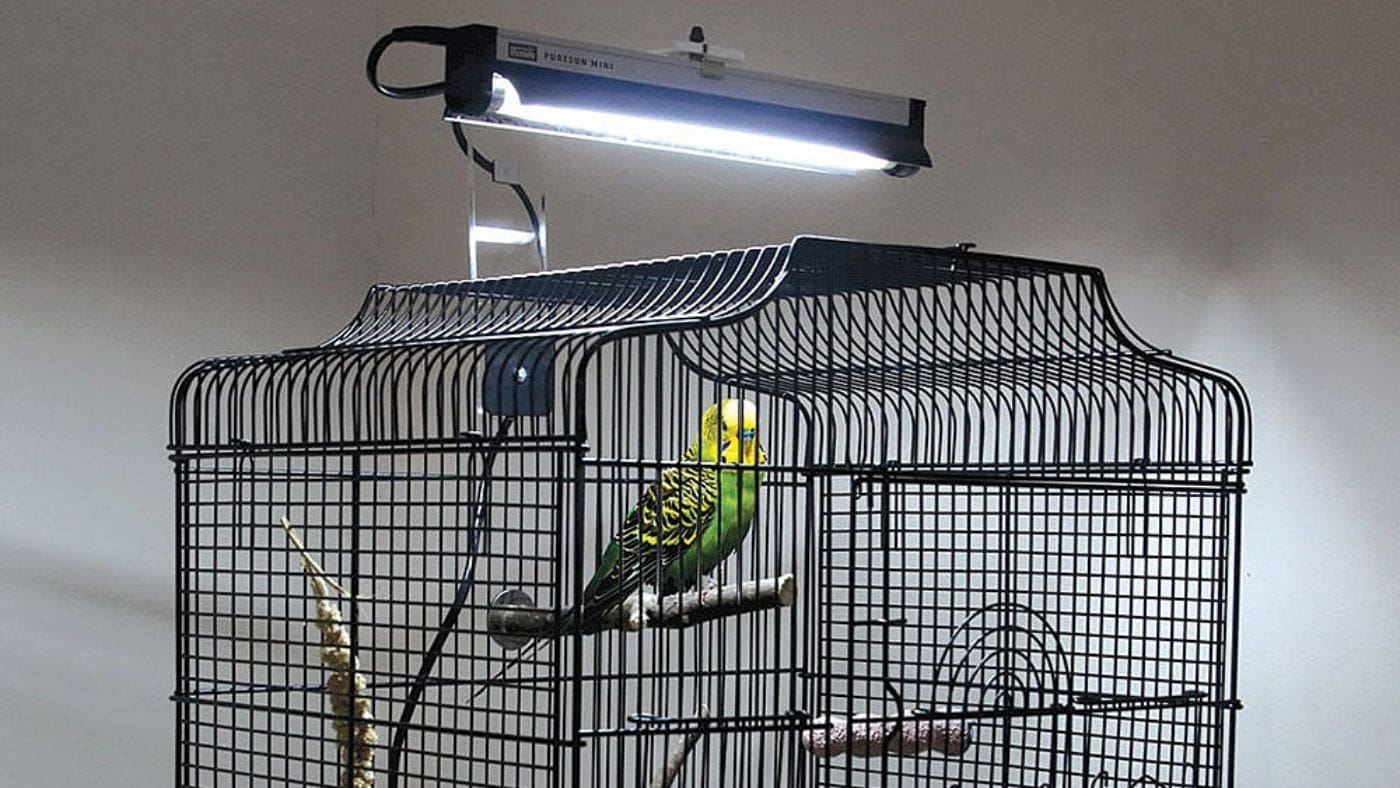
Avian lighting is not simply about making the cage brighter. Bird-specific lamps may provide UVA and UVB wavelengths depending on the product, so they are different from ordinary household bulbs.
What Is Full-Spectrum Lighting And Why Is It Used For Parrots?
Birds perceive light differently from humans, including wavelengths within the UVA range.
UVB exposure is associated with vitamin D3 synthesis, which plays a role in calcium metabolism.
However, simply buying a lamp labelled for birds isn't enough. Correct use matters.
The Arcadia PureSun Compact Lighting Kit for Parrots and Birds combines an avian UV lamp and reflector in one setup, making it a practical choice for providing UVA and UVB lighting for indoor parrots.
Another option is the Avian Sun Compact UV Bird Lamp, which provides UVA and UVB and is designed specifically for birds.
Pay attention to the manufacturer's recommended distance between the lamp and your bird, positioning, daily use and replacement schedule. UV output can decline over time even when the bulb still appears to produce visible light.
Natural daylight through a window shouldn't automatically be considered a substitute either. Ordinary window glass filters much of the UVB radiation.
More light isn't necessarily better. Your parrot still needs a predictable day and night cycle with an appropriate period of darkness and rest.
Bonus Parrot Accessories Worth Considering
Once feeding and lighting are sorted, there are a few other accessories that may be worth adding depending on your parrot and lifestyle.
These aren't necessarily things every bird needs sitting in the cage permanently. Some solve a specific problem, while others become useful at particular times.
Travel Carriers And Portable Bird Cages
A carrier is one of those accessories that's easy to postpone buying until the exact moment you desperately need one.
A veterinary appointment isn't the ideal time to start working out how you're going to transport your parrot.
Choose a carrier appropriate for your bird's size, with secure closures and adequate ventilation. Your parrot needs enough room to sit comfortably, but a travel carrier shouldn't be unnecessarily large.
It is also worth introducing the carrier before you need it. Let your parrot investigate it at their own pace and build positive associations with going inside. A carrier that appears only before a car journey or veterinary visit can quickly become something your bird learns to avoid.
For longer journeys, consider how you'll safely manage food and water as well.
Parrot Hideaways, Tents And Sleeping Huts
Hideaways are one accessory where we'd choose according to the individual bird rather than automatically adding one to every cage.
For birds that enjoy climbing, chewing and investigating sheltered areas, something such as a Seagrass Tent Natural Parakeet & Parrot Toy can provide a natural-material option.
However, dark, enclosed spaces can encourage nesting or territorial behaviour in some parrots, so pay attention to how your individual bird responds.
Fabric designs also need regular inspection. If your parrot starts chewing the material or creates loose fibres, remove the accessory rather than waiting for it to become heavily damaged.
A suitable sleeping position and consistent period of uninterrupted darkness may provide everything your parrot needs for a comfortable night's rest without an enclosed hut.
Cuttlefish Bone, Mineral Blocks And Beak Conditioning Accessories
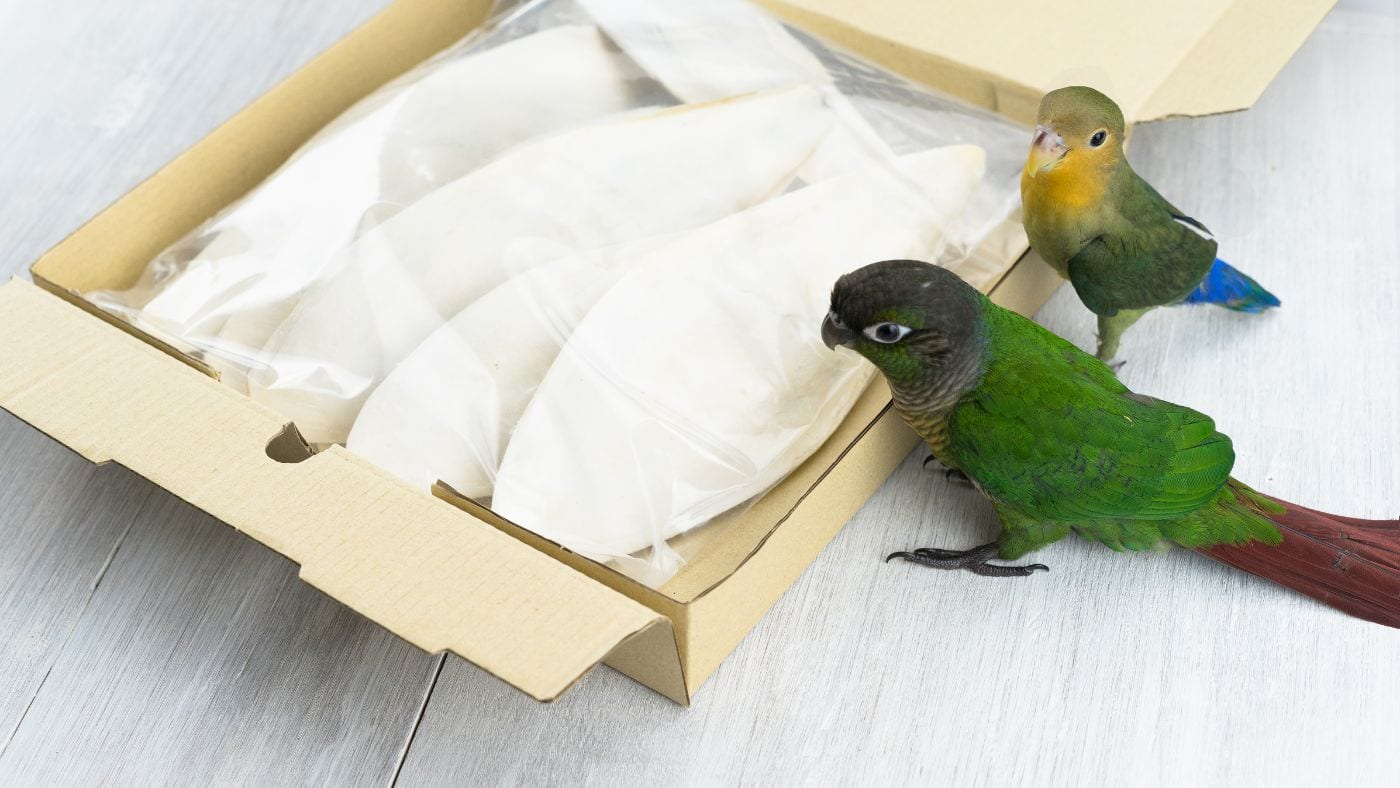
Cuttlefish bone and mineral blocks are familiar parrot accessories, especially for Budgies, Cockatiels and other smaller birds.
Depending on the product, they can provide calcium and other minerals while also giving your bird something to peck and gnaw.
Rather than treating every mineral source as interchangeable, choose according to your bird. Our range includes mineral blocks for parrots and birds in different forms and sizes.
A Vegetable & Cuttlefish Bone Holder can also help secure cuttlefish bone rather than leaving it loose in the cage.
These products shouldn't be treated as a shortcut around good nutrition. Your parrot's overall diet still matters, and mineral accessories should complement rather than compensate for an unsuitable diet.
How To Build The Right Parrot Accessory Kit For Your Species
There isn't one universal shopping list that works equally well for a Budgie and a Macaw.
Size affects almost everything, from the depth of a feeding bowl to the strength of a carrier. Behaviour matters just as much.
Use species recommendations as your starting point, then adjust according to the individual bird you actually live with.
Don't assume that small birds need less enrichment. The accessories simply need to be appropriately sized and usable by a smaller beak and body.
A highly active Caique may interact with feeding accessories very differently from a Cockatiel, so don't rely on size alone when choosing.
Pay particular attention to hardware and attachments. A fitting that is perfectly adequate for a smaller parrot may not last long once a large parrot decides to investigate it with their beak.
Where To Buy Parrot Accessories In The UK
The easiest way to shop for parrot accessories is to start with your bird rather than the product.
Ask what you're actually trying to improve. Do you need bowls that are easier to remove and clean? A way to make feeding more interesting? Appropriate UV lighting for an indoor bird? A secure carrier for vet visits? Or a suitable mineral source?
At Parrot Essentials, you can shop feeding bowls, bird lighting, hideaways, travel accessories and mineral products for different parrot species and sizes. That makes far more sense than trying to make one accessory work for every bird.
And don't feel that you need everything at once. We'd rather see a parrot with a few well-chosen accessories that are actually useful than a cage full of products that don't suit the bird.
Final Thoughts On Choosing Parrot Accessories
The most useful parrot accessories are the ones with a clear purpose. Good feeding bowls make everyday care easier, foraging feeders turn food into an activity, appropriate lighting can support an indoor setup, and a secure carrier means you're prepared when travel becomes necessary.
Cuttlefish bone, mineral accessories and carefully considered hideaways can also have a place depending on your individual bird.
Start with your parrot's species and size, but don't stop there. Watch how your bird eats, interacts and responds to new things. The best accessory kit isn't the one with the most products. It's the one built around the parrot living in front of you.
FAQs
What are the most useful parrot accessories?
Useful parrot accessories include suitable food and water bowls, foraging feeders, bird lighting where appropriate, a secure travel carrier, and suitable calcium or mineral accessories. The best choices depend on your parrot's species, size and individual behaviour.
Are stainless steel bowls good for parrots?
Yes. Stainless steel bowls are a practical choice because they are durable, easy to clean and available in sizes suitable for different parrots. Removable bowls can also make daily washing much easier.
Do parrots need UV lighting?
Parrots kept predominantly indoors may benefit from appropriately used avian lighting that provides UVA and UVB. Correct positioning, distance and replacement intervals are important, so always follow the manufacturer's instructions for the specific lamp.
Are foraging feeders good for parrots?
Foraging feeders can make feeding more engaging by encouraging your parrot to manipulate, lift, turn or investigate something to reach food. Start with an easy challenge and gradually increase the difficulty as your bird learns how the feeder works.
Do parrots need cuttlefish bone or mineral blocks?
Cuttlefish bone and mineral blocks can provide opportunities for chewing and, depending on the product, additional calcium or minerals. They should complement an appropriate diet rather than be relied upon to correct poor nutrition.