How to Use Casozen: Dosage, Introduction and Long-Term Support
Knowing how to use Casozen correctly is simple: dilute the recommended amount in your parrot's drinking water, prepare a fresh solution daily and monitor their progress. Casozen can provide calming support during stressful events or as part of a longer-term care routine.
Anyone who shares their home with a parrot knows how quickly a small change can upset their routine. A house move, a new family member, noisy neighbours or even moving their cage to another room can leave a normally confident bird feeling nervous and unsettled.
And when stress continues, it can be difficult to watch. Your parrot might become unusually vocal, reluctant to interact, more reactive or begin damaging their feathers. Naturally, you want to help them feel comfortable again.
At Parrot Essentials, we recommend Casozen as a practical calming-support option for parrots experiencing stressful situations. Developed for birds and designed for easy administration through drinking water, it can fit into an established daily care routine without the need to handle your parrot for each application.
Whether you're using Casozen for the first time or considering continued support, here's how to prepare it correctly, introduce it confidently and get the most from your parrot's calming routine.
What Is Casozen and When Should You Use It?
Casozen is a natural calming supplement developed for pet birds. Its formulation is designed to support calmer behaviour without deliberately sedating your bird, making it an option for owners who want to help their parrots cope with stressful experiences while remaining active and engaged.
We particularly recommend considering Casozen during situations such as:
- House moves, rehoming or changes to familiar surroundings.
- Fireworks, building work or other unavoidable loud noises.
- Travelling, boarding or preparing for veterinary appointments.
- Introducing changes to household routines or flock arrangements.
- Periods of persistent nervousness or stress-related behaviour.
- Behavioural support plans for birds experiencing stress-related feather picking.
One thing we always encourage owners to remember is that parrots respond to stress differently. An African Grey might become quieter and withdrawn, while a conure may call repeatedly or become unusually clingy. Understanding your bird's normal personality helps you recognise when something isn't quite right.
Casozen is designed to support your parrot through these challenges, but identifying and addressing the cause of their stress remains just as important.
How to Use Casozen: Correct Dosage and Preparation
One of the reasons we like Casozen is that administration is straightforward. Both the capsule and liquid formulations are mixed with drinking water, so there is no need to catch your parrot, force open their beak or interrupt their normal routine.
However, each formulation has its own dilution instructions, and getting these right matters.
Using Casozen Capsules
Casozen Capsules are a convenient choice, particularly if you're starting with the smaller 10-capsule pack or preparing for a temporary stressful period.
Follow these steps:
- Measure 200ml of fresh, clean drinking water.
- Carefully open one Casozen capsule.
- Empty the entire capsule contents into the water.
- Mix thoroughly until the powder is evenly dispersed.
- Pour the prepared solution into your parrot's clean drinking bowl.
- Replace the solution with a freshly prepared mixture every day.
Always use the correct capsule option for your bird and follow the instructions supplied with your pack. Do not dilute a capsule in more than 200ml of water or give its contents directly to your parrot.

Using Casozen Liquid
Casozen Liquid 500ml is another convenient option, especially for owners who prefer measuring a liquid rather than opening capsules.
Preparation is equally straightforward:
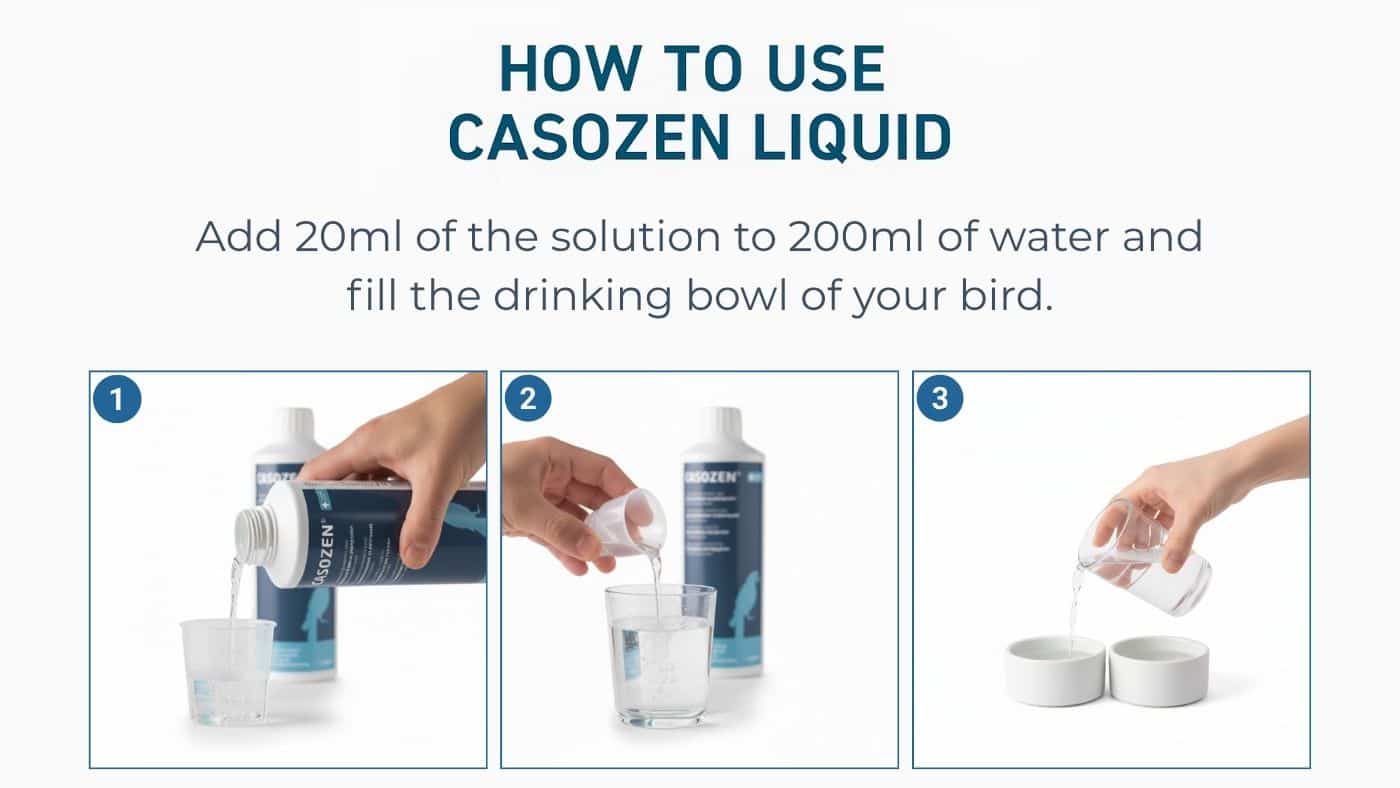
- Measure 20ml of Casozen Liquid using the supplied measuring cap.
- Add it to 200ml of fresh drinking water.
- Mix thoroughly to distribute the supplement.
- Offer the prepared solution in your parrot's usual drinking bowl.
- Discard any remaining solution at the end of the day and prepare a fresh batch the following morning.
Never give Casozen Liquid undiluted directly into your bird's mouth or spray it onto their feathers. It is specifically intended to be diluted in drinking water.
Our advice is to make preparing Casozen part of your morning feeding and cleaning routine. That way, it's easy to remember, and your parrot continues to enjoy the consistency they are familiar with.
How to Introduce Casozen Without Upsetting Your Parrot
Some parrots will accept a change to their drinking water without a second thought. Others are much more suspicious, especially birds that already feel nervous or unsettled.
If your parrot is particularly cautious, keep the introduction as familiar as possible.
- Use their usual drinking bowl rather than introducing a new one at the same time.
- Prepare Casozen during your normal morning care routine.
- Keep feeding times, play sessions and bedtime consistent.
- Check that your bird is drinking normally after the change.
- Avoid introducing several new supplements or major changes simultaneously.
We wouldn't recommend changing the dilution to tempt a reluctant bird into drinking. Instead, pay attention to their response. If your parrot refuses the prepared water, make sure they have access to fresh plain water and speak with your avian vet about the best approach.
Remember, the goal is to make calming support a comfortable part of everyday care, not another experience your bird finds stressful.
What Changes Should You Look for After Starting Casozen?
When your parrot has been struggling with stress, it's understandable to hope for a noticeable improvement straight away. But the most meaningful changes are not always dramatic.
We encourage owners to pay attention to the little things that tell them their bird is becoming more comfortable.
Perhaps your parrot begins playing with a favourite toy again. Maybe they spend less time pacing along their perch, seem less startled by familiar household noises or become more willing to approach you voluntarily.
These everyday behaviours can tell you much more than simply looking for a quieter bird.
Watch for changes in:
- How comfortably your parrot rests and settles throughout the day.
- Their willingness to explore, play and forage.
- Reactions to familiar people, noises and daily activities.
- Normal social interaction and confidence around you.
- Repetitive behaviours, nervous movements or excessive calling.
- Feather preening and picking behaviour, where relevant.
We also recommend keeping brief notes, particularly if your bird has been unsettled for some time. Even a few observations each week can help you notice improvements that might otherwise go unnoticed.
Our parrot body language guide can also help you recognise when your bird is relaxed, excited, nervous or uncomfortable.
Can You Use Casozen Long Term?
Yes, Casozen is designed to be suitable for longer-term calming support as well as temporary stressful situations. This is particularly useful because not every source of stress disappears after a few days.
Consider a recently rehomed African Grey. Their new family may be providing excellent care, but adjusting to unfamiliar voices, surroundings and routines can still take time. Similarly, a parrot that has spent months feeling anxious may need ongoing support while their owner gradually rebuilds confidence through consistent care and positive experiences.
In situations like these, Casozen can be considered as part of a longer-term support plan rather than something reserved only for occasional stressful events.
There is no universal timeframe for behavioural improvement. Some parrots settle more readily once their surroundings become predictable, while others need considerable time and careful management.
If you are planning extended use, particularly for persistent behavioural difficulties, discussing your bird's progress with an avian vet is a sensible part of responsible care.
The aim is not simply to continue a supplement indefinitely. It's to help your parrot build and maintain a more comfortable, confident daily life.
Helping Casozen Work Alongside Good Parrot Care
We always remind parrot owners that even a well-chosen calming supplement is only one part of looking after an anxious bird.
For example, if your parrot becomes nervous whenever you leave the house, Casozen may be a useful addition to their support routine. But they will also benefit from learning that time alone can be safe and enjoyable, with suitable foraging activities, predictable departures and opportunities to develop independence.
Likewise, if your bird struggles with sudden household noise, providing a quieter resting area and protecting their sleep routine will make their environment more comfortable.
Our advice is to concentrate on the things that make the biggest difference to everyday wellbeing:
- Provide a dependable routine with consistent feeding and sleeping times.
- Offer suitable toys, chewing activities and foraging opportunities.
- Allow your parrot to choose when they want to interact rather than forcing attention.
- Keep their environment comfortable, secure and appropriately stimulating.
- Introduce unfamiliar experiences gradually and reward relaxed, confident behaviour.
For more structured guidance, our 7-Day Routine for Calming a Stressed Parrot
When Should You Speak to an Avian Vet?
Understanding your parrot's behaviour is an important part of responsible ownership, and sometimes what looks like stress may have a medical explanation.
For example, feather plucking can be associated with stress, but skin irritation, pain and other health problems must also be considered. Similarly, a bird that suddenly becomes unusually quiet, aggressive or withdrawn may be experiencing discomfort rather than simply reacting to their surroundings.
If you notice unexplained weight loss, reduced appetite, breathing changes, unusual droppings, persistent lethargy or feather damage involving wounds or bleeding, contact an avian vet promptly.
Casozen is a calming-support supplement, not a replacement for investigating illness or treating an underlying medical condition.
Final Thoughts: How to Use Casozen With Confidence
Learning how to use Casozen properly doesn't have to be complicated. Choose the appropriate formulation, follow the correct dilution instructions, prepare fresh drinking water every day and pay attention to how your parrot responds.
We recommend Casozen because it offers a practical way to introduce calming support into everyday parrot care, whether you're preparing for a stressful event or helping a nervous bird through a longer adjustment period.
Above all, remember that you know your parrot's personality, habits and favourite routines better than anyone. Those everyday observations are invaluable when deciding what helps them feel comfortable.
With patience, thoughtful care and the right support, you can help your parrot feel more secure and confident in their surroundings.
FAQs
What is the correct Casozen dosage for parrots?
For Casozen Capsules, mix the contents of one capsule into 200ml of fresh drinking water. For Casozen Liquid, mix 20ml into 200ml of water. Always follow the instructions on your particular pack.
Can I use Casozen every day?
Yes, Casozen is designed for daily calming support. Prepare a fresh solution each day and monitor your parrot's response. For ongoing behavioural concerns, we recommend reviewing continued use with an avian vet.
Is Casozen suitable for African Greys, conures and cockatiels?
Casozen is marketed for a wide range of pet birds, including African Greys, conures, cockatiels, Amazons, macaws and budgies. Choose the appropriate product option and follow its instructions.
How long does Casozen take to work?
There is no guaranteed timeframe. Every parrot responds differently, and improvements in stress-related behaviour can depend on their environment, individual temperament and the underlying cause of their anxiety.
Can Casozen help a parrot that plucks its feathers?
Casozen is formulated to support stressed birds, including those displaying stress-related feather picking. However, feather plucking can have several causes, so an avian veterinary assessment is important before treating it as a behavioural problem.